
By Bruce Saller
ADVANCE CONTRIBUTOR
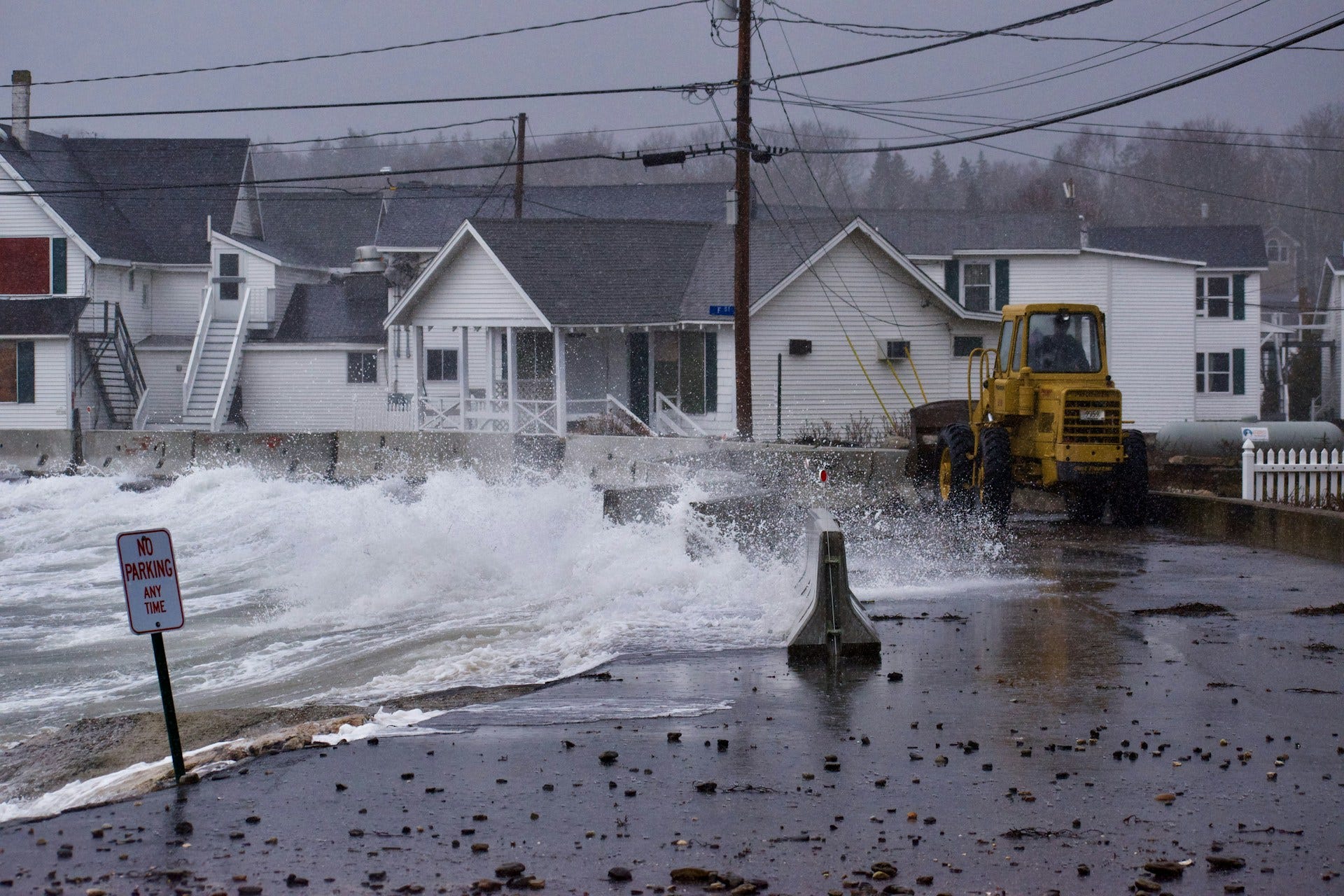
The Intergovernmental Panel on Climate Change has been developing potential climate scenarios since 1990, revising them every few years. You can find their latest projections HERE, in the 42-page Climate Change 2023 Synthesis Report. None of them look good.
The report lays out five Shared Socioeconomic Pathway scenarios, with varying degrees of probability, which we’ll summarize for you here.
From best case to worst they are:
1. Temperature rise of 1.5°C by 2100. The world achieves net zero carbon emissions by 2050.
2. Temperature rise of 1.8°C by 2100. The world achieves net zero carbon emissions around 2075.
3. Temperature rise of 2.7°C by 2100. The world reduces carbon levels without achieving net zero before 2100.
4. Temperature rise of 3.6°C by 2100. CO2 levels continue to increase, doubling by 2100.
5. Temperature rise of 4.4°C by 2100. CO2 levels continue to increase, doubling by 2050—less than 25 years from now.
Scenario 1 is the “Do everything possible” case. Scenarios 2 and 3 assume reductions of current carbon emissions at different rates. Scenario 4 predicts a slowing rate of carbon emission growth, but with CO2 levels continuing to rise.
Scenario 5 is the “Do nothing” or “Business as usual” projection in which carbon levels continue to increase at the 1990 rate, leading to catastrophic heatwaves, widespread crop failure, ecosystem collapse, and rapid sea-level rise.
An organization called the Scenario Model Intercomparison Project, however—one of the scientific groups that provides input to the Intergovernmental Panel on Climate Change—is now recommending changes to the scenarios, including removal of #5.
In the Intercomparison Project’s revised recommended scenarios, the new #5 predicts a temperature rise of “only” 3.7°C by 2100. The good news is that they believe we’ve made enough progress in reducing carbon emissions that the old worst-case scenario is no longer plausible.
The bad news is that the report still estimates that on our current path the temperature will rise 2.7-3.3°C by 2100 (between 5 and 6°F hotter than now), reaching 4°C higher around 2200.
This is well above the Paris Climate Agreement target of 1.5°C, and puts us on course for a sea level rise of 3-4.5 feet by 2100, which would have significant financial impacts.
So, though we may have avoided the worst-case scenario, we still have much more work to do—a lot more—to prevent the projected catastrophic temperature and sea level rises.
***
Bruce Saller is a retired systems engineer with degrees in electrical engineering and computer science.