Bruce Saller, ADVANCE CONTRIBUTOR

Dominion electric bills went up again effective July 1, and you can expect additional increases in 2027. Here’s how it breaks down, and how the rapid installation of data centers in Virginia is driving energy costs up—and up by a lot—for the average consumer:
The two main cost components of residential bills are the base rate and the fuel factor. The base rate covers Dominion’s construction and maintenance costs, overhead and profit. The fuel factor covers the cost of purchased electricity and fuel.
The fuel factor is adjusted every year based on how much Dominion spent on purchased electricity and fuel vs. how much was collected. The costs for last year were more than Dominion collected, and the fuel factor should have increased by 2.179 cents/kilo-watt hour. This would have resulted in the average monthly bill increasing by $22. This is in addition to the 9 percent base rate increase approved last November. (The last Dominion base-rate increase was 34 years ago, back in 1992.)
Rather than face customer outrage, Dominion proposed increasing the rate by .8 cents and issuing bonds to cover the remainder of their own rising cots. The State Corporation Commission agreed with Dominion’s proposal so the average customer’s bill “only” went up $8/month effective July 1.
In January, we will begin paying another $2 a month for 30 years to cover the interest on the bonds. The fuel factor charge is now 3.765 cents per kilo-watt hour vs. 2.045 cents in 2021.
So why are our rates rising after decades of stability?
This chart from Dominion’s latest Integrated Resource Plan shows how their projected growth rate changed from 1 percent in 2021 to 6 percent in 2023 due to the rapid installation of Data Centers.
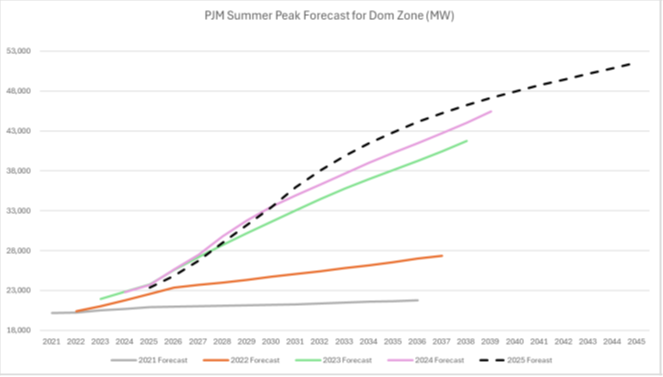
The bottom line is Dominion can’t add that much generating capacity that fast. Keeping pace with the rapidly rising demand would have required building the equivalent of 1.25 Lake Anna generators every year. So, Dominion has been buying electricity to cover the shortage. We’ve gone from importing 20 percent of our electricity in 2020 to importing 40 percent in 2024, and are paying a higher rate for each kilo-watt-hour purchased.
Our regional electricity conglomerate, PJM, held an auction to purchase electricity for this year, and the rates were 22 percent higher than last year. So next year’s fuel rate increase should be similar or larger than this year’s.
So how can we reduce our electricity rates? A new rate class for businesses that use more than 25 million watts (i.e. data centers) has been approved by the State Corporation Commission and goes into effect in January. (No details yet on the rate or impact on other rates).
A new state panel, the Commission on Data Center Accountability, has been created to study the impacts of data centers, and submit a report to the legislature in November. The hope for many of us is that the Commission will recommend rates for data centers that allow our energy costs to return to their 2021 levels.
***
Bruce Saller is a retired systems engineer with degrees in electrical engineering and computer science.