
By Michael Aubrecht, ADVANCE COLUMNIST
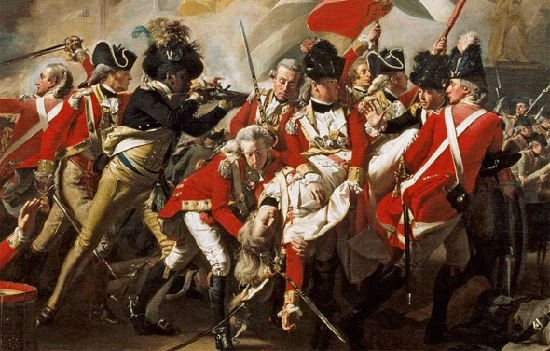
More than half a million African Americans lived in the Thirteen Colonies at the outbreak of the Revolution. Some were free; many were enslaved. As the patriot call to fight for liberty grew, the British government sought to undermine the expanding Continental Army by soliciting both free and enslaved African Americans.
Perhaps it is understandable why many of them did side with the British. As historian James Walker writes in his article “Myth, History and Revisionism: The Black Loyalists Revisited,” “The overriding motive of the escaped slaves and the one that was shared by free blacks who became loyalists, was for security in their freedom.”
Whereas General George Washington initially barred further recruitment of African Americans after he took command of the Continental Army in June of 1775, John Murray—the 4th Earl of Dunmore and Royal Governor of Virginia—formally called on slaves in Virginia to side with the British that November. His proclamation stated:
“And I hereby further declare all indented servants, Negroes, or others, (appertaining to Rebels,) free that are able and willing to bear arms, they joining His Majesty’s Troops as soon as may be, for the more speedily reducing this Colony to a proper sense of their duty, to this Majesty’s crown and dignity.”
Governor Murray was keenly aware of this offer’s effect. Not only would extra manpower bolster the British troops in Virginia—at that point cut off from reserves in Boston—but the arming of slaves would terrify many colonists. Planters abandoned their military posts to protect their families and property from the threat of a slave insurrection.
In response to the Governor’s decree, the Representatives of the People of the Colony and Dominion of Virginia issued their own counter-proclamation in December 1775:
“WHEREAS Lord Dunmore, by his proclamation, dated on-board the ship William, off Norfolk, the 7th day of November 1775, hath offered freedom to such able-bodied slaves as are willing to join him, and take up arms, against the good people of this colony, giving thereby encouragement to a general insurrection, which may induce a necessity of inflicting the severest punishments upon those unhappy people, already deluded by his base and insidious arts; and whereas, by an act of the General Assembly now in force in this colony, it is enacted, that all Negro or other slaves, conspiring to rebel or make insurrection, shall suffer death…They may return in safety to their duty, and escape the punishment due to their crimes, we hereby promise pardon to them…”
Patriot newspapers voiced paranoia and called for citizens to practice vigilance and increase security. Restrictions on slave privileges, such as meeting in groups or conducting worship services, were immediately tightened. The Virginia Gazette published a stern warning to all slaves: “Be not then…tempted by the proclamation to ruin your selves.” The publication also called Lord Dunmore a hypocrite, being a slaveholder himself, and ordered all servants to “cling to their masters.”
These responses did little to prevent approximately 300 slaves from joining Lord Dunmore’s “Ethiopian Regiment” by December of 1775. They were outfitted in exceptionally striking uniforms embroidered with the phrase “Liberty to Slaves.” An estimated 800 men eventually joined the regiment, which saw some military action in Virginia at the battles of Kemp’s Landing and Great Bridge before smallpox took a deadly toll on the soldiers.
The Ethiopian Regiment was disbanded in 1776. Three years later, British General Henry Clinton issued the Philipsburg Proclamation, which granted “every negro who shall desert the rebel standard full security to follow within these lines any occupation which he shall think proper.”
This declaration, which was directed toward all slaves in what would become the United States, instigated a resurgence of enlistees, many of whom were ironically put to work on captured plantations to grow food for the British Army. Regardless of whether they had been free or previously enslaved, black Loyalists fought with great courage and determination.
One who stood out was known as Colonel Tye. This former slave from Monmouth County, New Jersey, had served in the Ethiopian Regiment and fought for the British at the Battle of Monmouth. More notable, though, was the fact that he led a group of white and African American guerrillas in his home state and New York on behalf of the British for most of 1779-1780, during which he and his men stole livestock, freed slaves, and captured and executed Patriots.
In September 1780, Tye was wounded while attempting to capture a Continental Army captain, and later died of infection. Of course, the Loyalist cause itself would eventually die. In 1782, many black Loyalists fled to one of the last British strongholds in the United States: New York City. Once a provisional treaty was signed by Great Britain and the United States in November of that year, General Washington—under orders from Congress—demanded that before the British evacuated the city, they had to return all slaves who had been owned by Americans.
A black Loyalist and former slave named Boston King later wrote about his reaction to the news:
“…the horrors and devastation of war happily terminated and peace was restored between America and Great Britain, which diffused universal joy among all parties; except us, who had escaped from slavery and taken refuge in the English army; for a report prevailed at New-York, that all the slaves, in number 2,000, were to be delivered up to their masters altho’ some of them had been three or four years among the English. Many of the slaves had very cruel masters, so that the thoughts of returning home with them embittered life to us.”
To Washington’s dismay, British General Guy Carleton insisted that both Dunmore’s and Clinton’s proclamations should be honored—that is, former slaves should be given “certificates of freedom” and allowed to leave New York City if they could prove that they had served with the British during the war. In the end, and after many meetings between Americans and a British review board, several thousand slaves were allowed to join free black and white Loyalists in departing New York City. A majority of these black Loyalists eventually settled in what are now Canada’s Maritime provinces—Nova Scotia, New Brunswick, and Prince Edward Island.
Today, many proud descendants of these soldiers still reside in Canada and maintain the memory of their ancestors, even as the rest of the world seems to have forgotten the cause and struggle of the black Loyalists.
***
Michael Aubrecht is a historian, author, documentarian, and lecturer. You can find out more about his work, including his new book project on Virginia Loyalists During the Revolutionary War, at his website The Naked Historian.

Mr. Aubrecht continues to shine light on the ways the early Black and White communities of our continent were woven together.
This is wonderful. It reminds me of Alan Taylor's eye-opening book, The Internal Enemy: Slavery and War in Virginia. Enslaved people were buffeted between the hopes of promises of freedom and the cruel opportunism of officials on both sides. I look forward to reading more of your work.