
By Martin Davis
EDITOR-IN-CHIEF
Email Martin
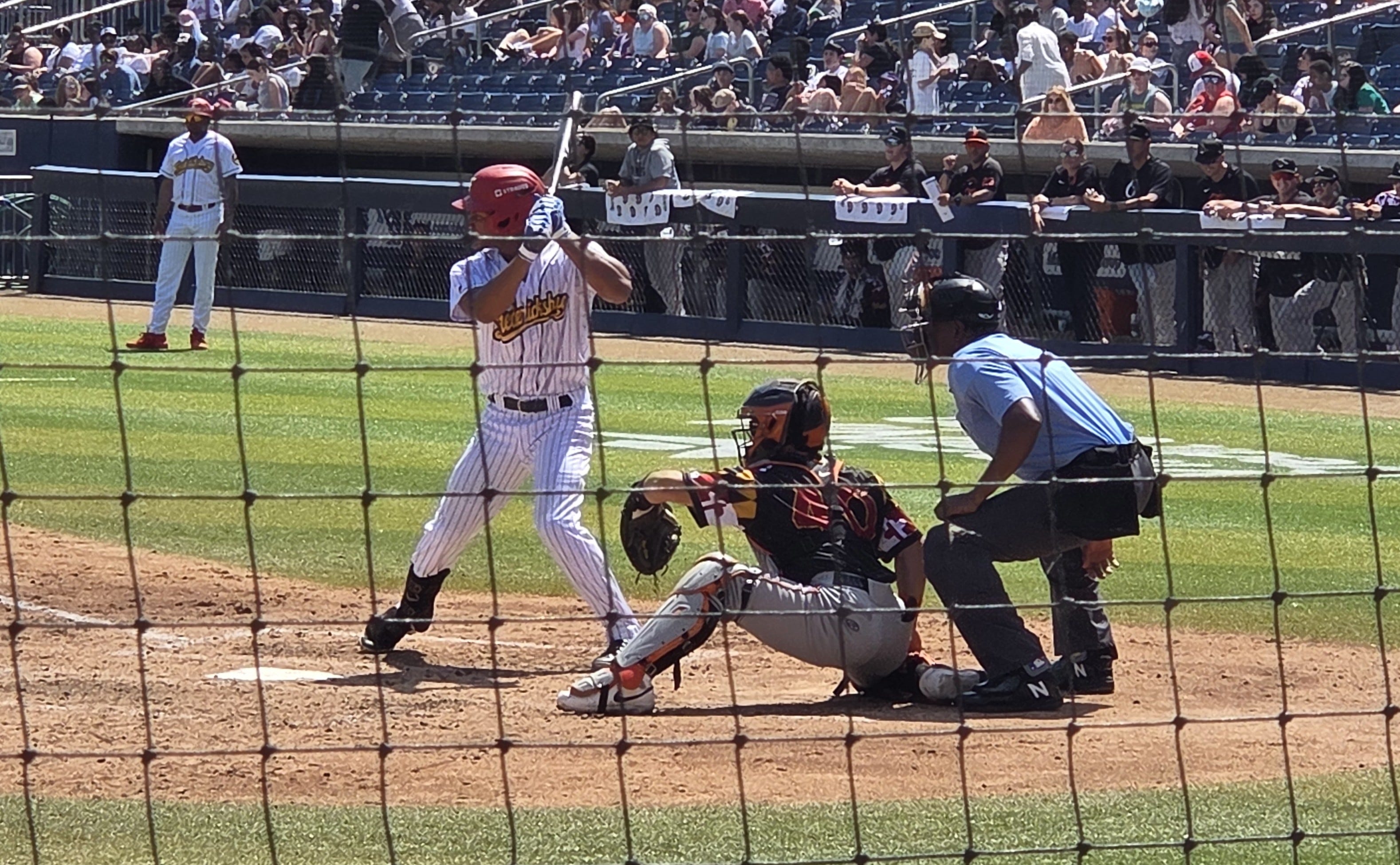
Nearly four-score years ago today in 1947, Jackie Robinson broke the color barrier in professional baseball when he played his first game with the Brooklyn Dodgers.
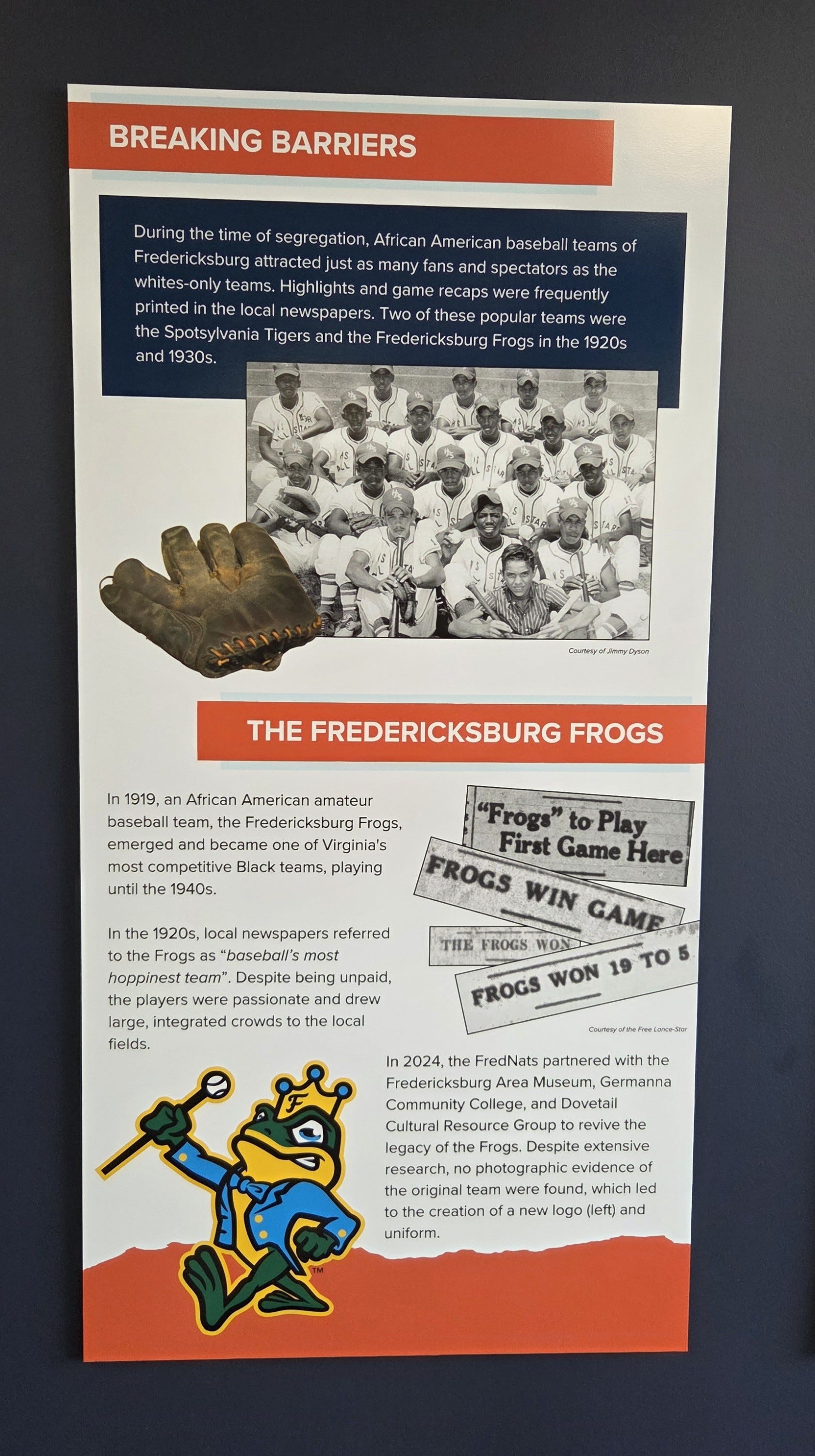
At Virginia Credit Union Stadium on Wednesday, the Fredericksburg Nationals honored the day by donning the green and white uniforms of the Fredericksburg Frogs, an all-Black baseball team that played from 1919 to the early 1940s. It was a tip of the hat to all the Black ballplayers in this region before Robinson, who never had a chance to play in one of America’s Green Cathedrals. It was also the first of five games this year that the Nats will play as the Frogs.
While professional baseball would be integrated moving forward, America was not, and Black baseball continued to thrive for several decades.
Nats’ President Seth Silber and community activist Eunice Haigler are working to recover the full history of Black baseball in the Fredericksburg region by researching and documenting the great players and teams both prior to 1947, and since.
That recording of post-Jackie Robinson Black baseball in Fredericksburg and surrounding counties began following Wednesday’s game with the Delmarva Shorebirds, which the Frogs dropped 7-5.
Silber and Haigler pulled together several of the surviving stars of the post-Robinson era who graced the many baseball diamonds in Caroline, Fredericksburg, Spotsylvania, and Stafford counties where all-Black teams played regularly on Saturdays and Sundays until the early 1970s.
Hashmel Turner, whose father “Shorty Shortstop” was one of those players, explained that the Civil Rights movement had yet to successfully bring integration to life in Virginia. So at rough-cut baseball fields like at Walker’s Inn in Stafford and more than a dozen others across the region in the 1950s and ‘60s, Black baseball thrived.
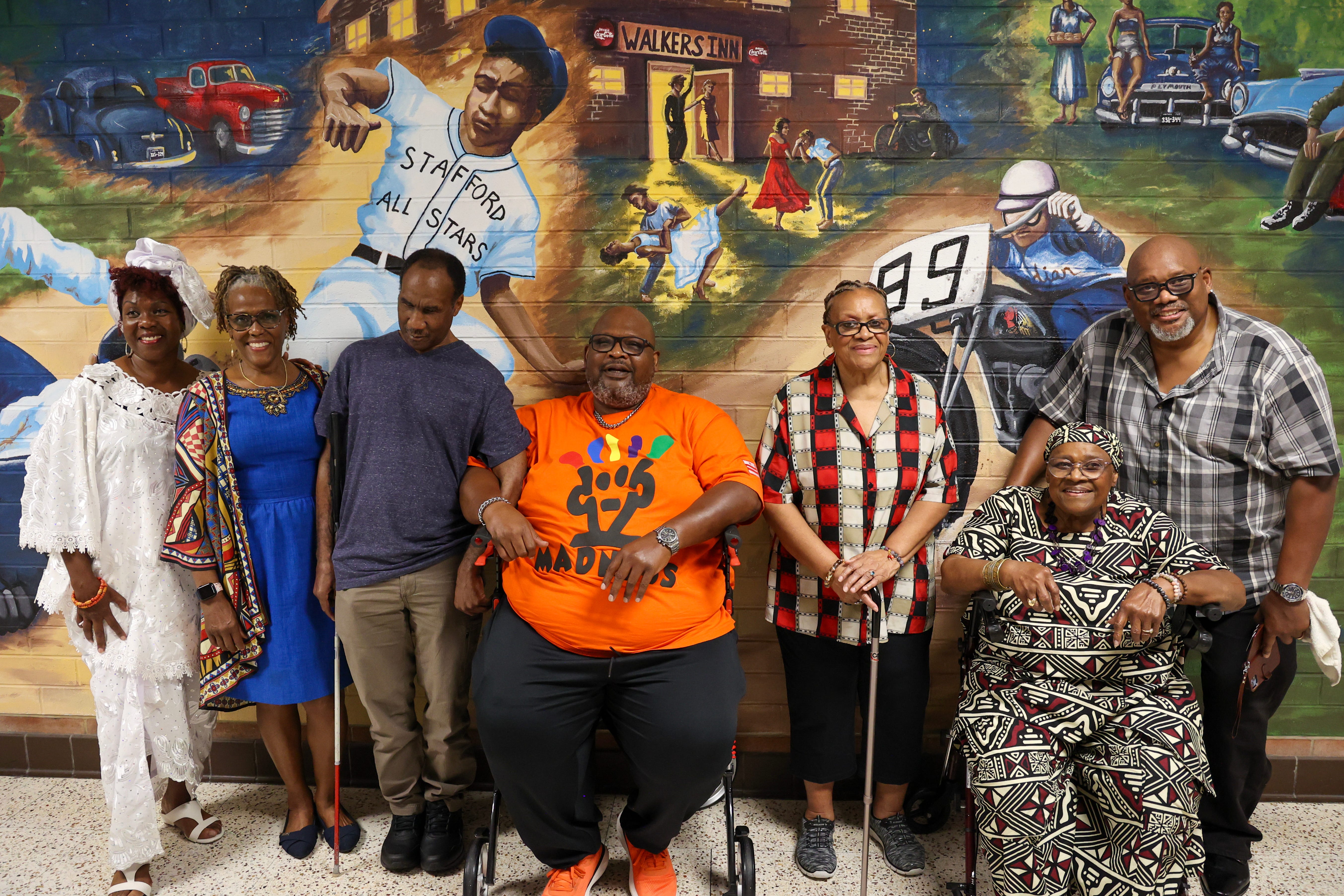
And the game had its stars.
The Spotsylvania Yellow Jackets featured a pitcher by the name of Emmet Wright, who was in attendance at the ballpark Wednesday and for the post-game discussion. According to players who faced him, Wright — who played for the Spotsylvania Yellow Jackets — could “throw 95 mph” and his team went unbeaten for two years. “You couldn’t hit him,” one player said.
While the exact number of teams isn’t known, players at the event referenced as many as 10 teams in each of the surrounding counties, with names like the Red Robins and the Hornets.
When the weekends came, the community turned out. And the teams had “something to show,” remembers Bruce Tyler.
The competition between the teams was keen, and the rivalries ran red-hot at times.
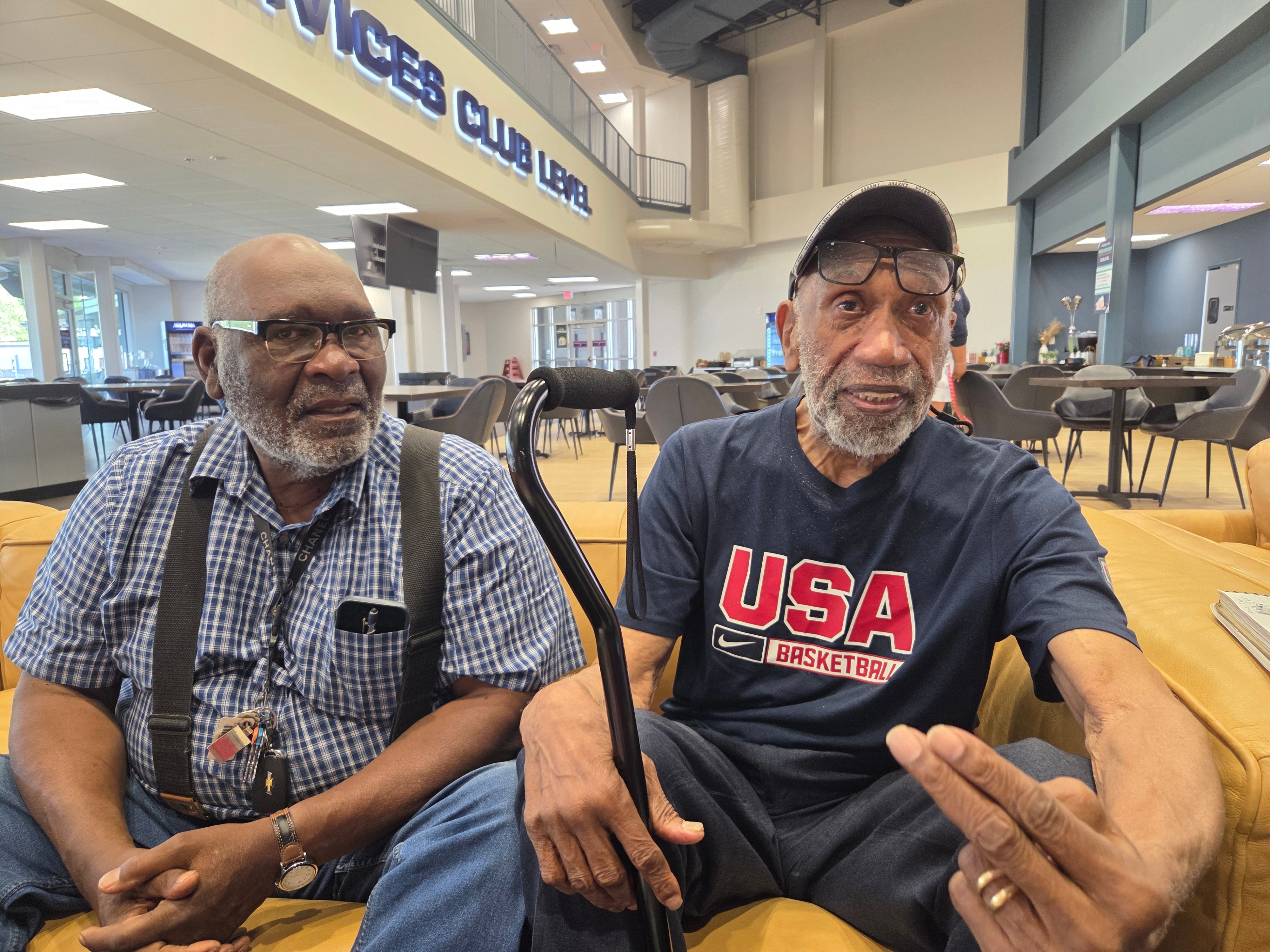
One player recalled that the owners of Walker’s Inn had a powerful team, and the owner did not like to lose. He said that a team might beat the Walker Nine once, but it wouldn’t happen a second time.
The inn’s owner would go and pay $100 to a pitcher and bring him in to secure the win in the rematch. And on the off chance that Walker’s team did lose, a couple of the players recalled, the fans would say, “You might win the game, but you ain’t winning the fight” after the game.
That sounds harsher than things really were.
Bruce Tyler remembers that the games were really “all about camaraderie and love; that’s all we had.”
His cousin Reginald Tyler also played. He remembered that “after the games, no matter who won, [the team owner] would bring out barrels of beer and food and feed everybody.” There wasn’t a lot of money to be made, but baseball is what stitched the Black community together.
The era began coming to an end in the early 1970s. One of the players remembers that softball became popular with people, allowing more folks to be involved. Basketball was also gaining in popularity, and it was a game that could be played alone or with just one other person and cost less than baseball to play.
Further, as integration took hold, the Black community enjoyed more mobility, which took them far from the local fields to other opportunities — and sometimes to bigger baseball stadiums. Al Bumbry of Fredericksburg was among the best-known to make it to the Major Leagues from this area.
Today’s post-game discussion about the history of Black baseball in the region was just the beginning, as Silber and Haigler look to find more players and records, as well as identify the fields of dreams where, in spite of everything that conspired to keep Black Virginians down, they found community and joy.
Walking out of the stadium after the event, I caught up with Wright. Touching his right arm I asked, “You still got that fastball?”
He said, “you bet, and a curveball too.”
Thanks to Silber and Hagler, it won’t be forgotten.


Local Obituaries
To view local obituaries or to send a note to family and loved ones, please visit the link that follows.
