
By Hailey Waurio, ADVANCE CONTRIBUTOR
[Hailey Waurio is a senior year at Chancellor High School in Spotsylvania County, Virginia. She’s writing about this school year periodically for The Advance.]
When I first began high school, I pictured my experience being just like the movies: Fighting over lunch tables, getting bullied for my glasses, maybe even bickering with my teammates. But in reality, it’s not all that simple. On Wednesdays, we might not wear pink, but there’s definitely a standard.
The clique culture of Chancellor High isn’t always in plain sight. If I walked into the cafeteria for lunch, I wouldn’t exactly think I’d been recast in Mean Girls.
Now, don’t get me wrong, school has a rulebook; whether it’s about who sits where or who talks to whom, we as students try to stick to it. Truthfully, I don’t always notice the divisions among our student body, but that doesn’t mean it’s not there. Regardless if it’s band kids or the football team, the divide maybe overlooked, but the tension stays just as steady.
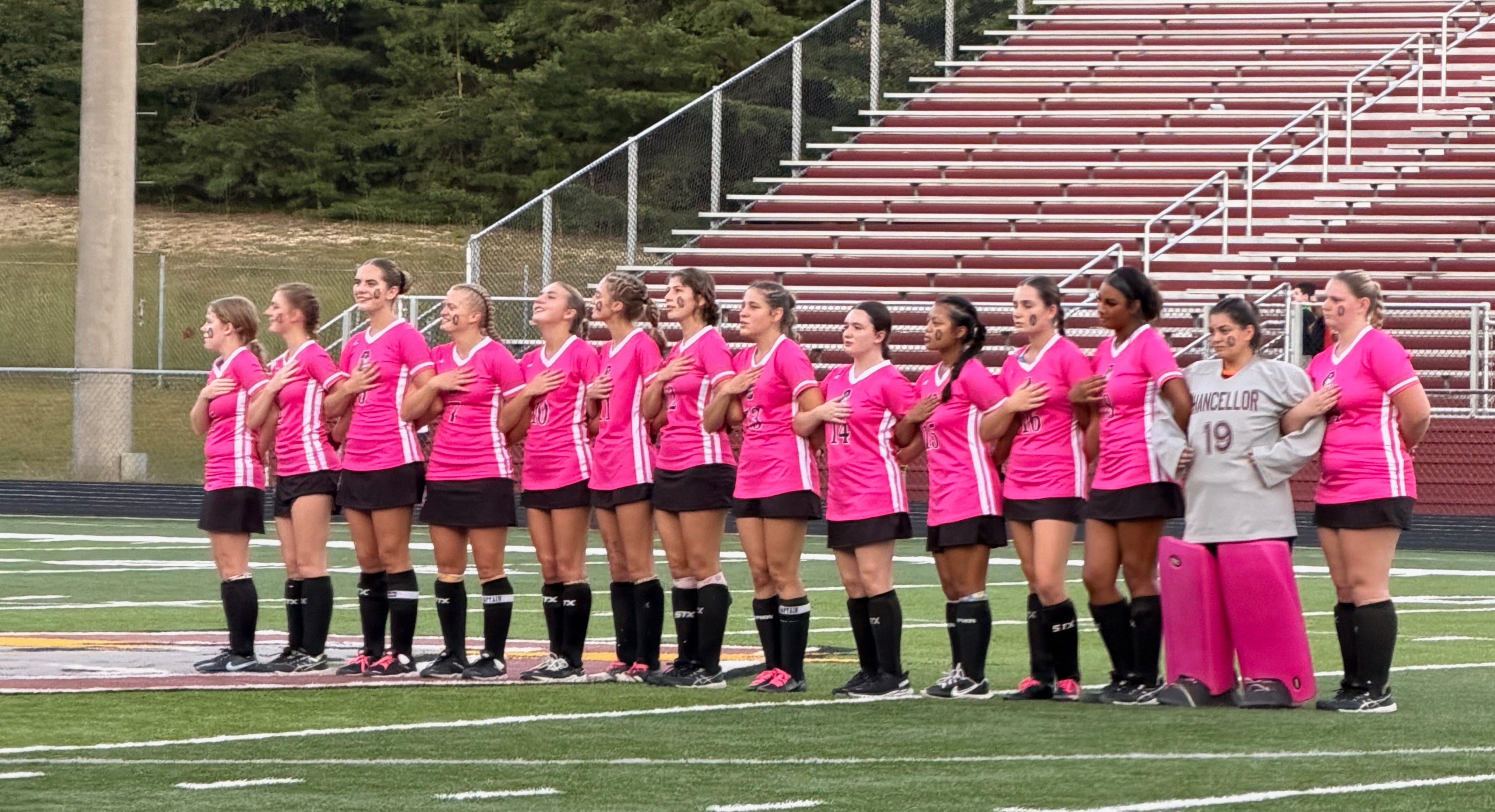
For my field hockey team, on the field, we like to think of ourselves as a unified, tight-knit squad. We all wear the same shoes, the same uniforms, and we all run the same horrible sprints every practice.
But off the field?
There are the seniors who have played together for years, and the quiet underclassmen who are worried about making mistakes—two varying groups who tend to disagree. Heck, even the coaches can get involved in our petty squabbles.
Most of the time, we get through season okay. It takes a lot to separate us indefinitely. People naturally gravitate towards their friends and people they feel comfortable with, and that’s perfectly fine.
However, throw in the pressure of senior year, and things can get slightly more… complicated.
Now, we don’t have a Burn Book we throw out into the middle of the pitch whenever someone takes away our starting position, nor do we have a Regina George. Well, mostly. (I’m looking at you, Trinity.) But we do argue, and fight, and... well, things get said.

It’s easy to watch a character like Regina or like Cady in Mean Girls, and think, “I would never do that,” but you can’t always be so sure. Being in the center of high school attention can make anyone fit those roles perfectly. Somebody starts over you, just committed collegiately, or, god forbid, taps in a goal you were surely about to bury?
The problem with everyone staying in their own groups means that we build walls up around them, because they feel safe.
Those small groups make way for miscommunication, which can create major chemistry problems. Let’s say two people from either group are arguing. It might show up in a missed pass on the field. If someone feels left out during a weekend hangout, that tension would breathe down our necks during Monday’s practice.
I’ll be the first person to admit handling team drama is easier said than done. I try my best to stay out of the crossfire, to be the person who jokes around with the freshmen, who can laugh with the seniors, and just focus on playing hockey. High school, however, has a way of pulling you into things.
Looking back on my years at Chancellor, I realized that the most dangerous thing about being in a clique isn’t getting in a dramatic fight; it’s how the subtle ones matter. Cliques engrain the thought that just because you’re an athlete, you can’t hang out with the theater kids; or maybe, because you’re a senior, you can’t be best friends with anyone younger than you (shout out to my girl Garcia). It almost feels as though we’re locked into a fixed version of ourselves right at the age when we’re supposed to be figuring out who we actually are—and can be.
Now that it’s our final year, the perspective shifts. With only around 230 days until graduation, the whole concept of social rankings starts to look a little ridiculous. In a few months, nobody will care who sat with who, or who had the most followers on social media (Cough, Trinity). We’re all going to be starting different chapters of our lives soon enough, and with different people.
Whether that’s on a college campus, in a trade program, or jumping right into the workforce, the invisible separations in high school won’t follow us across the stage.
We seniors, especially my fellow athletes, have a choice. We can spend our last year staying inside our comfortable little bubbles, and letting our fear of standing out stop us from taking on new friendships. Or we can use our experience to show the underclassmen what it actually means to branch out.
For me specifically, that means making the effort to bridge the gaps on my team. It means making sure the underclassmen know their voices matter just as much as my own. It’s realizing that being a good teammate, and friend, is more important than sticking strictly to my bubble. It’s about making space for everyone, which is what Charger Hockey is really about.
Senior year’s already full of emotional ends, so we don’t need to waste any of our precious time playing roles in some high school drama—and I don’t mean the theater kind. The best way to make it through isn’t by pretending those cliques will disappear overnight; it’s by facing the reality that graduation won’t give us a clean Hollywood wrap up.
There won’t be a dramatic moment where we all come together in our last pep rally and hold hands, and there certainly won’t be a clear sky waiting for us at the end of practice. The truth is, some of those cliques will stay unbroken until the last whistle, some fights will go unresolved, and tension will sit heavily on the bench until the last game.
And that’s fine. Senior year doesn’t need a picture-perfect sunset to be meaningful. Learning to navigate the crummy days is the real challenge. We don’t need a storybook ending to leave our mark. We just need to lace up our cleats, pull on our jerseys, and keep showing up for each other.

Good work, Hailey. Keep writing! Maybe next time about what its like for seniors with varying backgrounds and life experiences deciding what to do after graduation.