

By Shaun Kenney
COMMENTATOR
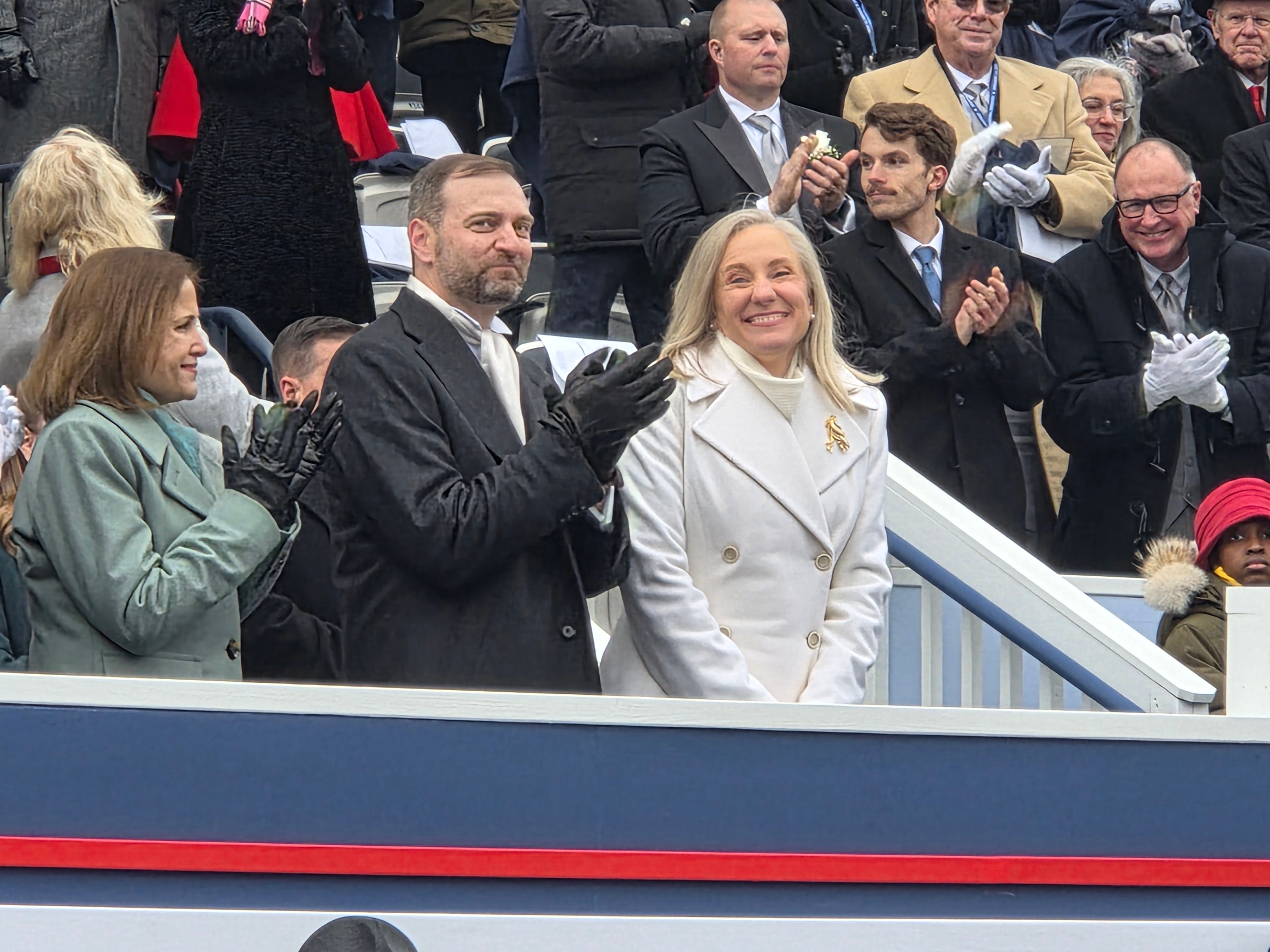
We are about two weeks into the gubernatorial reign of Her Excellency, and the fur is already beginning to fly.
Virginia Republicans presently find themselves in their worst position since the 1970s and are already latching on to several of the most outrageous bills of the Democratic-controlled General Assembly, from firearm confiscation to massive tax increases. Making matters worse, Trump-style redistricting — which we were all told was fascism — sailed through both chambers and barring legal challenges will appear on the ballot to upend democratically approved non-partisan redistricting in April.

Of course, for Republicans who are cramming facts into a hypothesis, all of this are reasons to confirm the inevitable from the Henrico Hillary. For Democrats, this is what Virginia voted for and any weakness in the face of the Trump White House and a Republican Congress is a betrayal of the base. Calls from Republicans regarding fair play are instantly consumed in a funeral pyre of perceived transgressions in Washington and a reminder that Democrats won and Republicans lost.
Vae victus — woe to the conquered.
In Virginia, it used to be fashionable to talk about the Virginia Way, a manner of governance that respected the rules of fair play and balance in the face of change. Of course, it was all too fashionable to resurrect such things as Virginia Republicans rode the wave of change during the 1980s and 1990s.
New to power and committee leadership and in an era where Ronald Reagan and Tip O’Neill could still get together once a week without being considered traitors or slouches, the old Byrd Machine — wounded but never gone — would carefully advise Republicans and preserve the process which worked so well for Democrats since Reconstruction.
Today, merely being seen with a member of the party opposite can end a political career, and nowhere is this more of an acute problem than on the left. As one bon mot put it, the left looks for traitors while the right looks for converts.
Gone are the days where legislators, lobbyists, and even activists could enjoy a wide pool of friends to their left and to their right. Given the present near-supermajority in the House of Delegates, little reason to do so by Virginia Democrats whose memories still remain raw from the time the shoe was on the other foot.
Of course, the party out of power always sings from the hymnal of caution, while the party in power adopts the chorus of speed. Moving fast and breaking things has a certain energy all of its own. Yet sadly, the lessons depend on the viewpoint. If process is your engine, then speed is the enemy of good form. If change is your engine — whether you are Elon Musk or a junior member of the Democratic backbench in Richmond — then that’s the sole reason why you are there.
Government is not a business for damn good reason. While businesses and corporations’ sole interest is a return on investment to owners and shareholders alike, the government should ideally work towards the common good — not the perceived highest good of any temporary majority. Change must be sustained to be real.
Governor Spanberger inherited a massive surplus along with a backbone of solid business investment whose continued presence in Virginia is tempered only by the willingness of Virginia Democrats to invite them to stay. Give Glenn Youngkin credit for two things. Despite the bills in the drawer on Medicaid, Youngkin left behind a massive cash surplus to tackle those problems alongside a litany of serious business investments willing to play ball in Virginia.
The series of bills coming out of the Virginia Democratic backbench shouldn’t scare a soul. Virginia Democrats did this last time they had a majority — they scare the hell out of the public with an eight only to dial them all back to twos and threes come crossover, knowing that if they had started in the middle that would become the new extreme. Classic move that gives the Democrats room to maneuver in the realm of what is either possible or tolerable.
Yet Spanberger’s perceived moderation will be put to the test quickly. Given the generic ballot in Virginia and elsewhere, Virginia may very well move to a 9-2 delegation without redistricting. Is upending non-partisan redistricting worth the squeeze? Perhaps not.
Then comes the bills in the drawer.
The prophecies on taking federal dollars for Medicaid expansion are now coming true and Virginia will have to pick up the tab to the tune of $660 million — perhaps more? — in the biennial budget before economic growth can catch up.
Virginia’s public education system needs an overhaul, and while Youngkin could not implement many of his reforms, there is broad consensus that it needs to be done — comprehensively and with additional resources from the state government rather than the limited toolbox localities have to provide.
The state referenda unshackling the abortion industry, removing the prohibition on same-sex marriage from the Virginia Constitution, and the automatic restoration of rights for felons are perhaps not the litmus test they may seem for Spanberger. One imagines she has opinions on all three; one imagines none of them would satisfy a conservative.
Yet despite Spanberger’s personal convictions as a progressive, there is something about the tone and tenor of political discourse that we have lost in Virginia as the provincials (that’s us) imitate the metropole (that’s Washington).
Spanberger’s inaugural speech should have been listened to as an invitation to civility rather than the opening rounds of a cage match. Will there be disagreement? Most certainly.
Yet permit me to make one observation. Spanberger was not elected to be a moderating force. Moderation merely takes an extreme and makes it less so, and for those who have known Spanberger as an elected official understand, Spanberger is no moderate in that sense. Rather, Spanberger — much like Youngkin, McDonnell, Warner, and the inestimable Doug Wilder — was elected to be a centrist.
Governors can do a lot of things and fix a lot of problems with economic growth. Some issues — 2A restrictions, social justice questions, “defunding the police” efforts, going after homeschool parents, treating school choice like a pariah — all get in the way of making public education excellent, creating great jobs, promoting small business growth, fixing roads, and making everything a bit more affordable.
Insofar as Spanberger is a centrist, there will be no distractions to fulfilling her primary campaign promise: making Virginia more affordable for working families.
Apart from that, Virginia Republicans can and should give Spanberger as much latitude as possible. As an example, referring any car tax repeal for a JLARC study is 100% the right call precisely because the tax on personal property is so deeply entwined with how cash strapped local governments are funded. Speed on that would be traumatic; caution and good process take time to get it right.
Of course, Spanberger walks a tightrope here. More radical elements of her party are demanding a wholesale revocation of the last 25 years of Republican leadership in Richmond now that the revivification of the old Byrd Machine is on the horizon.
Whether this new era of Democratic leadership is exacting or reconciliatory remains to be seen. Like the old ancien regime, most Democrats appear to have learned and forgotten nothing.
Yet Spanberger has an opportunity to give leadership and redefine what it means to be a Virginia Democrat. If it is the technocrat, the business leader, a pro-education governor who sees the benefits of charter schools and private schools without sacrificing Virginia’s duties to a quality public education, if it recognizes that the pendulum at VMI and UVA (and George Mason) needs to stop rocking rather than get a push (or putsch?), if Spanberger’s leadership sees the value in small business growth and has the confidence to allow for diversity of thought, if this new governor is ready to keep Virginia communities safe (may I recommend a JLARC study of enhanced earned sentencing credits?) then there are tremendous opportunities for a series of policies that can or should approximate consensus.
Virginians of both parties would be well served to allow Spanberger to become the very best version of herself without listening to the siren song of partisan politics. Most especially for Republicans, working with Spanberger and encouraging centrist solutions just might help pave the way out toward a 21st century party of the middle class without compromising our core. The danger for Democrats is that they will govern as Democrats and not Virginians — and insofar as they are choosing to imitate the very worst versions of Trump via redistricting, they are certainly not letting us down.
Let’s face it — a strong dose of civility is the antidote to the spirit of the times. Fighting incivility with an incivility of our own is not just pointless but revealing. As Alexsandr Solzhenitsyn reminds us, the lie can come into the world and even conquer the world, but not through me — and hopefully, dear reader, not through you. Caveat lector.
If Spanberger can temper her left, that will be the key to keeping conservatives in superposition rather than switching them to something more hardened, provided Spanberger can keep her radicals in check. In short, she might just revive the Virginia Way, and if she truly has national aspirations, then Spanberger would be well served and well advised to gently — and sometimes sternly — turn back her own radicals and focus on first things.
It’s early, but things that begin well tend to end well. For myself, I’m giving Spanberger the chance few on the left would ever give a Republican. The good news is that there are still Virginians among the secular religions after all — and finding one another to defend the honorable middle is a worthwhile task indeed.
Shaun Kenney is an Advance co-founder and member of the Board of Trustees.





Local Obituaries
To view local obituaries or to send a note to family and loved ones, please visit the link that follows.

Support Award-winning, Locally Focused Journalism

The FXBG Advance cuts through the talking points to deliver both incisive and informative news about the issues, people, and organizations that daily affect your life. And we do it in a multi-partisan format that has no equal in this region. Over the past year, our reporting was:
First to break the story of Stafford Board of Supervisors dismissing a citizen library board member for “misconduct,” without informing the citizen or explaining what the person allegedly did wrong.
First to explain falling water levels in the Rappahannock Canal.
First to detail controversial traffic numbers submitted by Stafford staff on the Buc-ee’s project
Our media group also offers the most-extensive election coverage in the region and regular columnists like:
And our newsroom is led by the most-experienced and most-awarded journalists in the region — Adele Uphaus (Managing Editor and multiple VPA award-winner) and Martin Davis (Editor-in-Chief, 2022 Opinion Writer of the Year in Virginia and more than 25 years reporting from around the country and the world).
For just $8 a month, you can help support top-flight journalism that puts people over policies.
Your contributions 100% support our journalists.
Help us as we continue to grow!


This article is published under Creative Commons license CC BY-NC-ND. It can be distributed for noncommercial purposes and must include the following: “Published with permission by FXBG Advance.”
Writer plays centrism card convincingly for most of the piece but just could not help himself with that little barb at Dems in the last paragraph. Reminded me of the tale with the scorpion—it is my nature.
Shaun,
Thank you for a thoughtful and well‑argued piece. As someone who is not originally from Virginia but has spent the better part of my professional life in Pennsylvania, Georgia, Texas, Maryland, Alabama, and now Virginia since the early 1990s, I read your column through a slightly different lens—but I arrive at much the same place.
Over those years, I have served under presidents of both parties and, until two years ago, seldom participated in the electoral process beyond voting. What has always struck me, wherever I’ve lived, is how similar most people’s core wants really are: decent work, safe communities, good schools, some measure of economic security, and a sense that the system isn’t rigged against them. Politically, they often differ—sometimes bitterly—but compromise was the glue that kept things functioning and kept our disagreements within what felt like normal bounds.
Today, that glue is badly weakened. We live in a political culture saturated with fear, anger, and resentment, and under those conditions it is very easy for both leaders and voters to drift toward the extremes. That is precisely why, as you argue, genuine centrism—governing from the broad middle with an eye to stability and shared interests—is so important right now. The polling you reference tracks with what I see: the largest “party” in America is now independents, and the appetite for moderation and problem‑solving is real.
I agree with your central thesis: we should give Governor Spanberger the chance to govern as a centrist, and we should expect and encourage her to keep the focus on affordability, competent governance, and a renewed “Virginia Way” of civility and compromise. Let’s follow your advice and create space for that kind of leadership.
At the same time, I don’t think “support centrism” can mean turning a blind eye to extremism or genuine danger from any party. Being in the middle does not require moral blindness. Voters still have an obligation to draw lines, to reject those who traffic in chaos and bad faith, and to vote their conscience—even if that means splitting tickets or withholding support from a party that has moved too far from democratic norms.
If Spanberger—and leaders in both parties—can model the kind of steady, pragmatic, humane politics you describe, a lot of us in the broad center will gladly meet them there.