By Phil Huber, ADVANCE COLUMNIST
In every job I have held, strategic planning required the same discipline: take an honest look at your organization, examine the environment around it, and decide what to do next. Success could be as misleading as failure if we misunderstood what produced it.
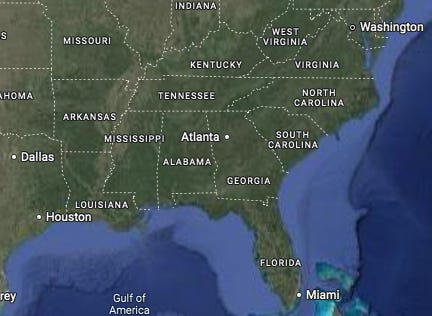
That experience shapes how I view Democrats’ Southern victories in this month’s midterms. National reporting has asked whether the party can sustain those gains. I want to know whether Democrats understand what produced them—and will do the planning necessary to build on them.
On Sunday, Mississippi Sen.-elect Scott Colom called for greater Democratic investment in his state and opportunities to demonstrate that the party can deliver for the rural South. His message deserves attention beyond Mississippi.
The results warrant more than celebration. They warrant a sustained regional strategy. But one favorable election does not establish a lasting realignment.
The starting point should be a SWOT analysis: strengths, weaknesses, opportunities and threats. Strengths and weaknesses concern the organization itself. Opportunities and threats concern the world outside it. Confuse the two, and favorable circumstances can masquerade as organizational excellence.
Look inward first
Democrats have strengths to build upon: successful candidates, experienced organizers and a broader set of competitive states. Their Southern gains provide campaigns to study, not simply victories to applaud.
In August, the Democratic National Committee announced a Southern States Resource Hub supporting organizing, voter registration, fundraising, data and communications. Democrats are not starting from zero. The question is whether that investment will produce durable local capabilities.
An honest internal assessment would inventory functioning local committees, paid organizers, volunteer networks, donor bases and potential candidates. It would distinguish organizations operating throughout the year from campaigns assembled shortly before Election Day.
It would also examine weaknesses without defensiveness.
Where did investment arrive too late? Where were promising candidates overlooked? Which organizations depend on exhausted volunteers? Which spending decisions reflected outdated assumptions about what was winnable?
Reporting that national Senate campaign spending in Mississippi arrived late makes those questions timely. But a surprising victory does not automatically prove earlier decisions were unreasonable. Accountability requires examining what decisionmakers knew, not substituting hindsight for analysis.
It also requires distinguishing state-party support from candidate, congressional committee and outside-group spending.
Planning becomes theater when responsibility remains vague.
Then look outward
External assessment requires equal candor.
In a six-state Southern analysis, NPR found turnout fell from 2024 by 19 percent in counties Kamala Harris carried, compared with 26 percent in counties Donald Trump carried. Those are county-level patterns, not evidence that individual Republicans became Democrats.
Lower turnout in Republican-leaning counties is not proof of lasting Democratic allegiance.
Black voter participation and concern about voting rights were also central to the breakthroughs. An explanation focused exclusively on economic messaging would overlook an essential part of the electorate and its motivations.
The opportunity is to broaden support without neglecting those who made these victories possible.
The threats include a Republican turnout rebound, changing economic conditions and opposition campaigns that learn from defeat. Democrats should test their plans against those possibilities rather than assume this election’s conditions will persist.
A strategy that works only when opponents stumble is not much of a strategy.
Virginia offers a test
Governor Abigail Spanberger offers a useful governing framework: Focus on affordability, then make implementation work. Speaking Friday at a Democratic strategy conference, she warned that good policies can be endangered when they are not set up for successful implementation.
That distinction matters.
Passing legislation is an accomplishment for government. Making it work is an accomplishment for the public.
Virginia should not become a template imposed on every Southern state. Instead, Democrats elsewhere should study what works, what falls short and why as Spanberger’s administration implements its agenda.
Make the plan durable
The assessment should produce decisions, not another binder.
Democrats should identify where stronger organization could make the greatest difference, specify what support will remain between elections and assign responsibility for measurable progress.
That means recruiting candidates for local and state offices, not simply searching for the next Senate star. It means maintaining relationships when no national campaign is paying attention. It means protecting voting rights while addressing household costs, rather than treating those commitments as competing choices.
A regional commitment need not produce identical campaigns.
In my experience, a useful strategic plan connects ambition with resources, responsibility and review. It asks who will do the work, with what support, and how we will know whether it is succeeding.
Democrats have reason to take the South seriously—and uncertainty about what this election means.
Both belong in the assessment.
The task is to build organizations and governing records strong enough to compete when the political weather changes.
That would be a strategy.
***
Phil Huber is a retired Army Reserve colonel and former federal civil servant who writes about civic education, public accountability and national security. He lives in Fredericksburg.