
By Ranjit Singh, ADVANCE ENVIRONMENTAL COLUMNIST
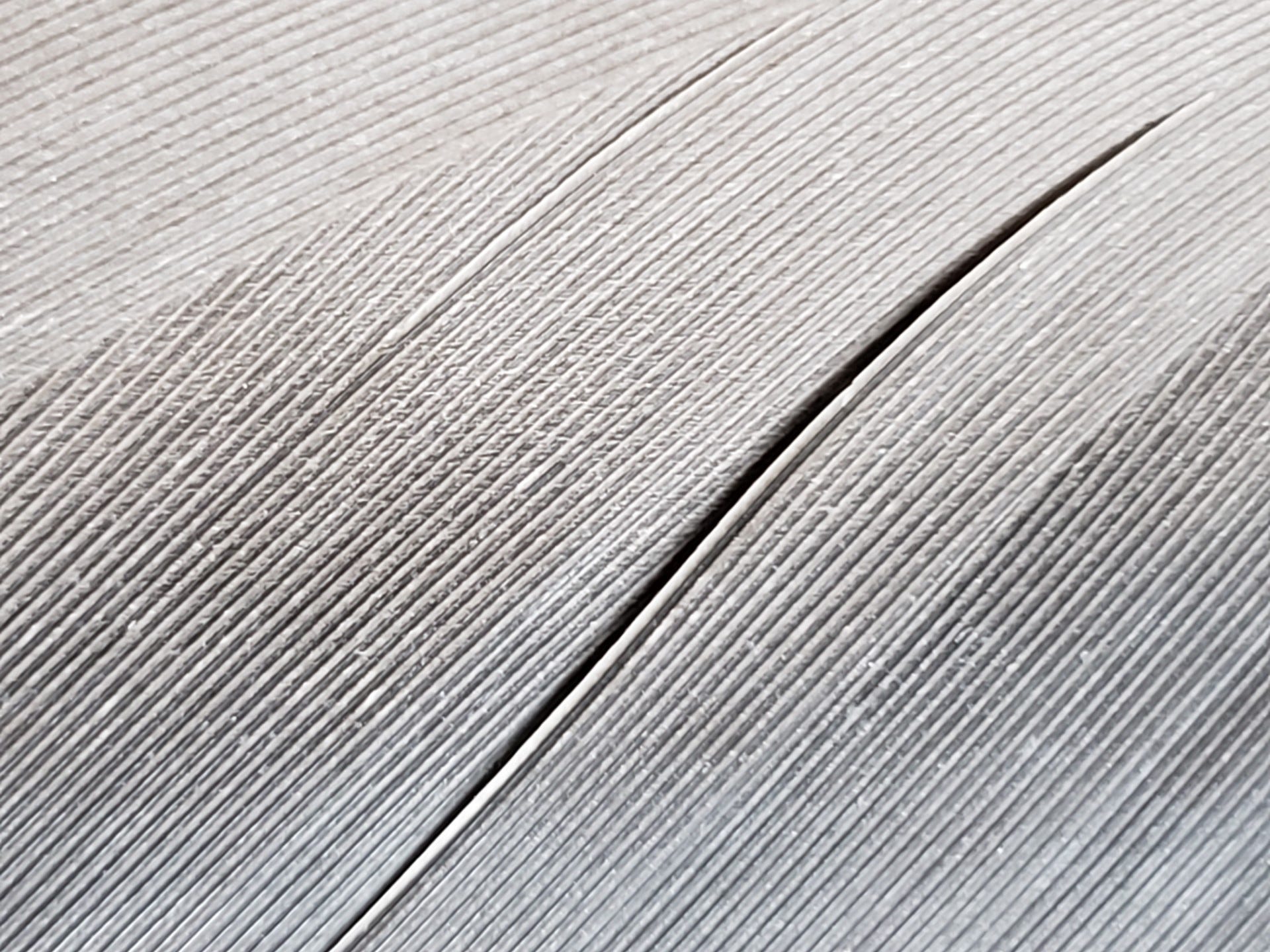
Take a look at the picture above. I took it a while back on a really old Samsung smartphone.
What do you see?
Gray corduroy pants?
A field of grain, taken from an airplane window? A pattern detail from an ancient pottery sherd?
A bit like a fingerprint, too, but too linear and orderly.
I love the intrinsic beauty and elegance of this pattern. Longitudes, with a slight overlay. Nothing seems random; there’s an intentionality here. Some might even say a consciousness.
Now try this pic:
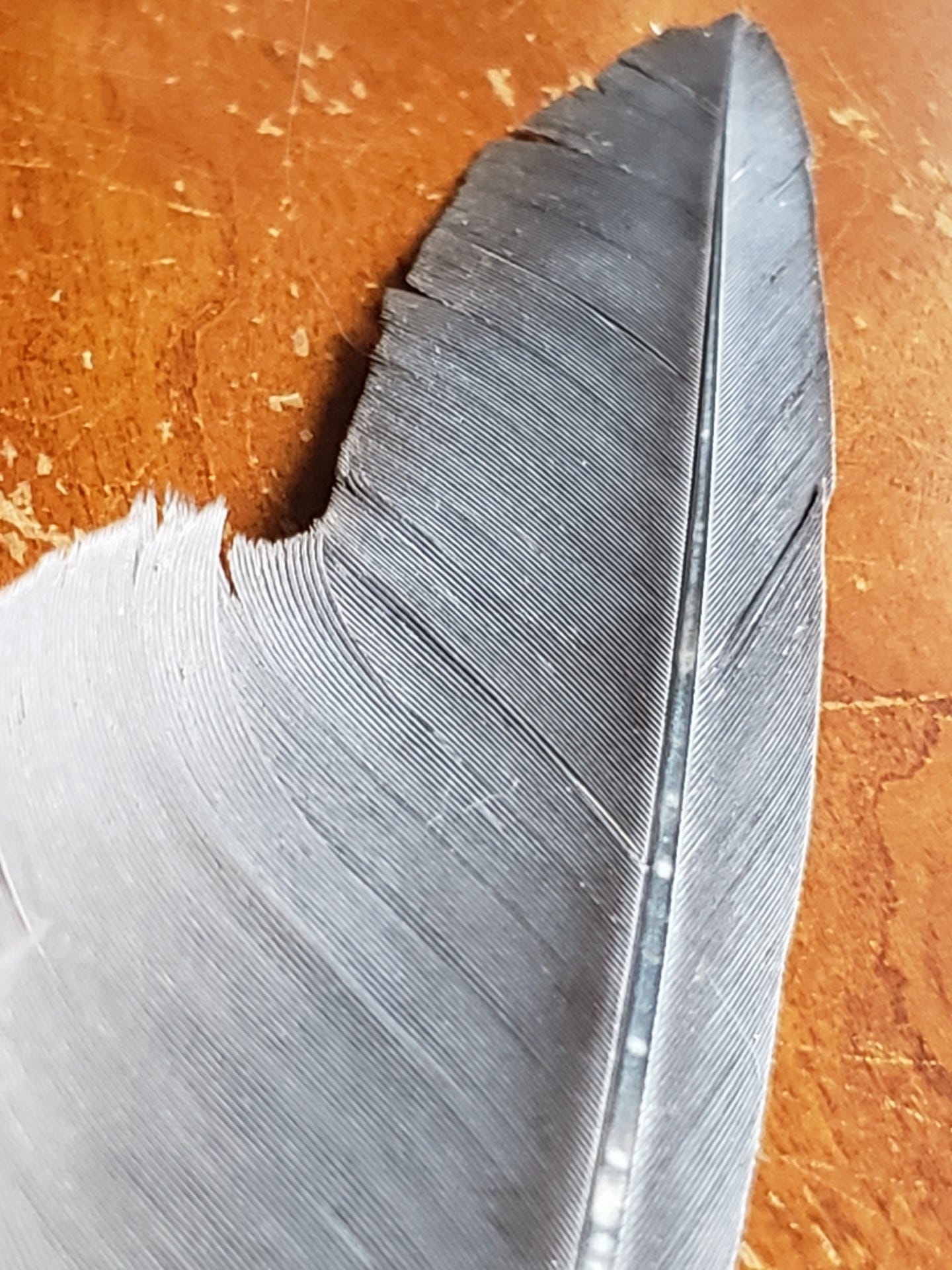
Here, it’s obvious what we’ve been looking at: a feather. Still gray in color, but shaped like a sail in the wind. Its functionality is clear — a tight weave, supported by a light but sturdy spar, forming a curving airfoil to provide lift.
Nearly identical to a human sailboard.

And, unlike a sailboard, the feather offers protection from cold and water. It is a magnificent design. Simple but sophisticated.
This feather is the product of evolutionary processes and a good dose of randomness. Like the prized violins made by Stradivarius, one is tempted to ask: “How could it possibly be improved upon?”
It probably can’t.
And finally, this:
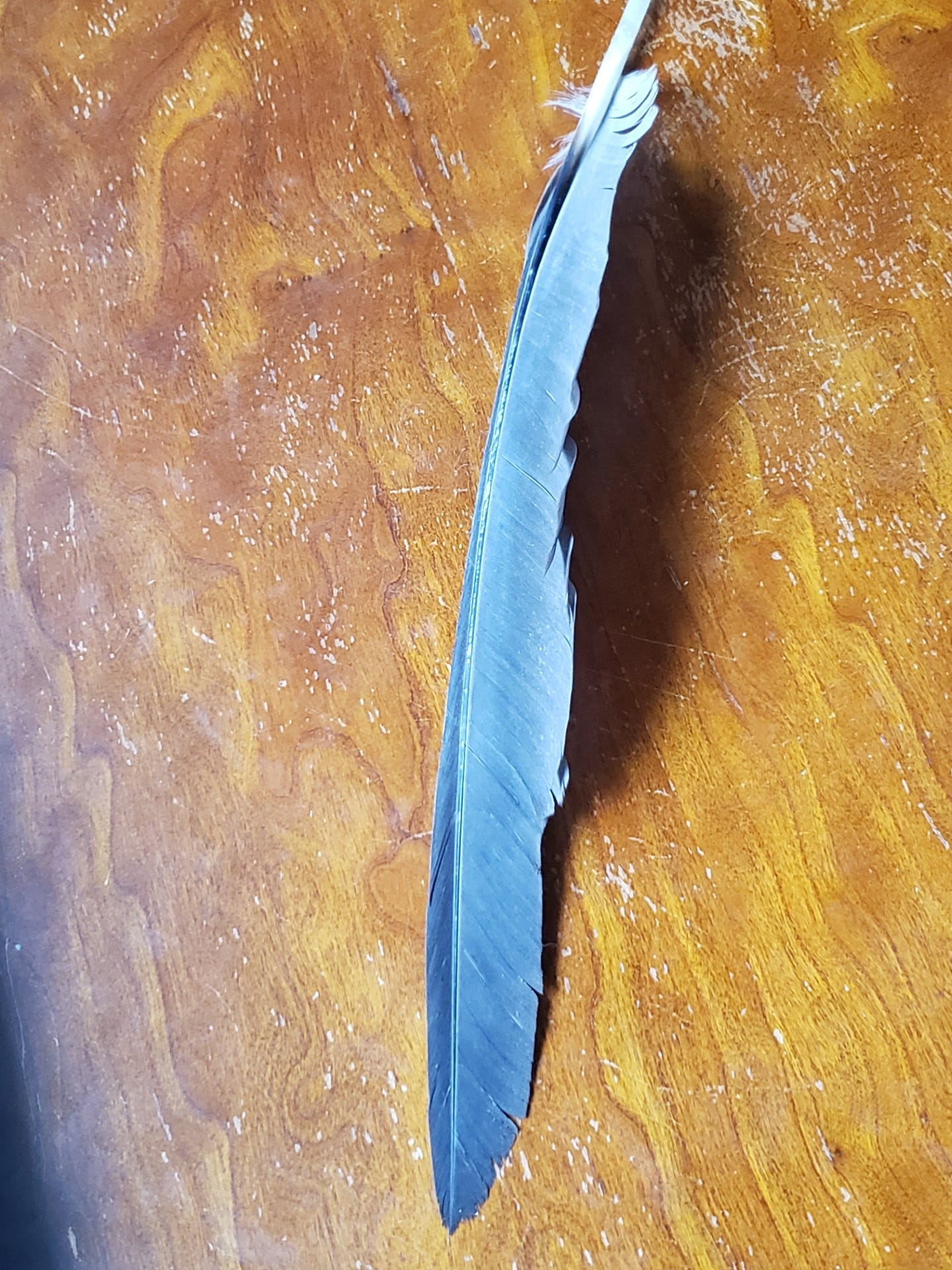
Now, from this vantage point, even the species of bird becomes clear.
I found this foot-long Great Blue Heron feather while traipsing the broad marshes of Potomac Creek. I love how the color—an illusion, really—changes dependent on one’s viewing position.
How does the bird’s feather trick our eyes?
In part, this is due to structural coloration.
Structural coloration originates in the feather’s tiny barbules. These barbules (minute filaments projecting from the feather’s barbs) capture pockets of air that scatter light. The result is intense blue colors. Blue jays play the same tricks—and if you’ve met one, you know all the jays are tricksters.
And because this feather is actually gray, you might feel you’re being lied to.
But nature isn’t dishonest in that way. Rather, we trick ourselves.
Remember as a kid looking at something—a leaf, say—through a magnifying glass or microscope, then marveling at how unrecognizable it became compared to when you looked at the thing in your hand, as a whole? But that micro view, once obtained, also gave the object coherence. It helped the whole thing make sense. Or, in the case of animal camouflage, it explained how a large creature seems to disappear.
By closing in to the point of disorientation, we grasp some of what makes this bird extraordinary. We understand the “blue” heron better.
As I observe the creek next door to better understand the enveloping world.
And here’s another thought: With the impressionist Edouard Manet, we can see that there really are no lines to this heron feather. Only shades, colors, and textures brushing against each other. Yet our eyes expect to see lines, and so they call them into existence where there aren’t any.
Don’t believe me? Go ahead—try to find a true line in these three feather pictures that (when you think about it) isn’t just shadow or the junction or overlay of different colors or materials.
Perhaps that’s why, when my boys were small, my illustrator brother encouraged them to “Color outside the lines.” Don’t trick yourself into a limited perspective.
The close study of natural life is a wonderful antidote against misguided expectations and other intellectual straight-jackets.
That’s it, in a nutshell.
(And— nutshells —aren’t those fascinating structures?)
***
I really shouldn’t end this post without a quick word about our protagonist.
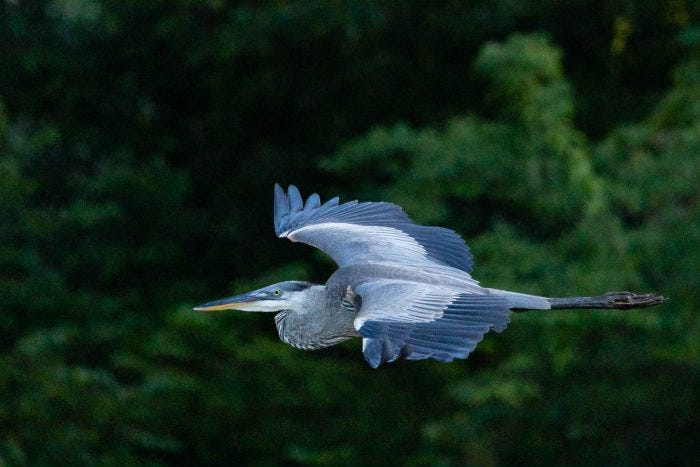
The great blue heron is one of the more notable denizens of Potomac Creek. It’s a big and iconic presence in many coastal and riverine areas. As I wrote elsewhere, herons act a bit like endearing philosopher birds, at least until you hear their ungodly, Hollywood-pterodactyl croaks. Those startling sounds can carry considerable distances.
Fortunately, there’s a very large heron rookery—one of the biggest on the East Coast—located right on the creek, within Crow’s Nest Natural Area Preserve.
Most years, I join other adventurous souls in late January or February to count the heron nests. (I missed it this year because I had to teach a class.) It’s hard work. Often, someone slips and plunges into the icy water. In consolation, a tree is ceremoniously named after them; I’ve avoided this honor thus far.
But that’s our way of monitoring the heron population. Leafless winter allows us to spy the empty nests of last summer without being intrusive. That’s how we estimate the health of the rookery and nature preserve.
Did you know Great Blue Herons love apartment-style living high up in the white bones of sycamore trees?
Check out this pic. What does it suggest about heron behavior, the bird’s likes and dislikes?
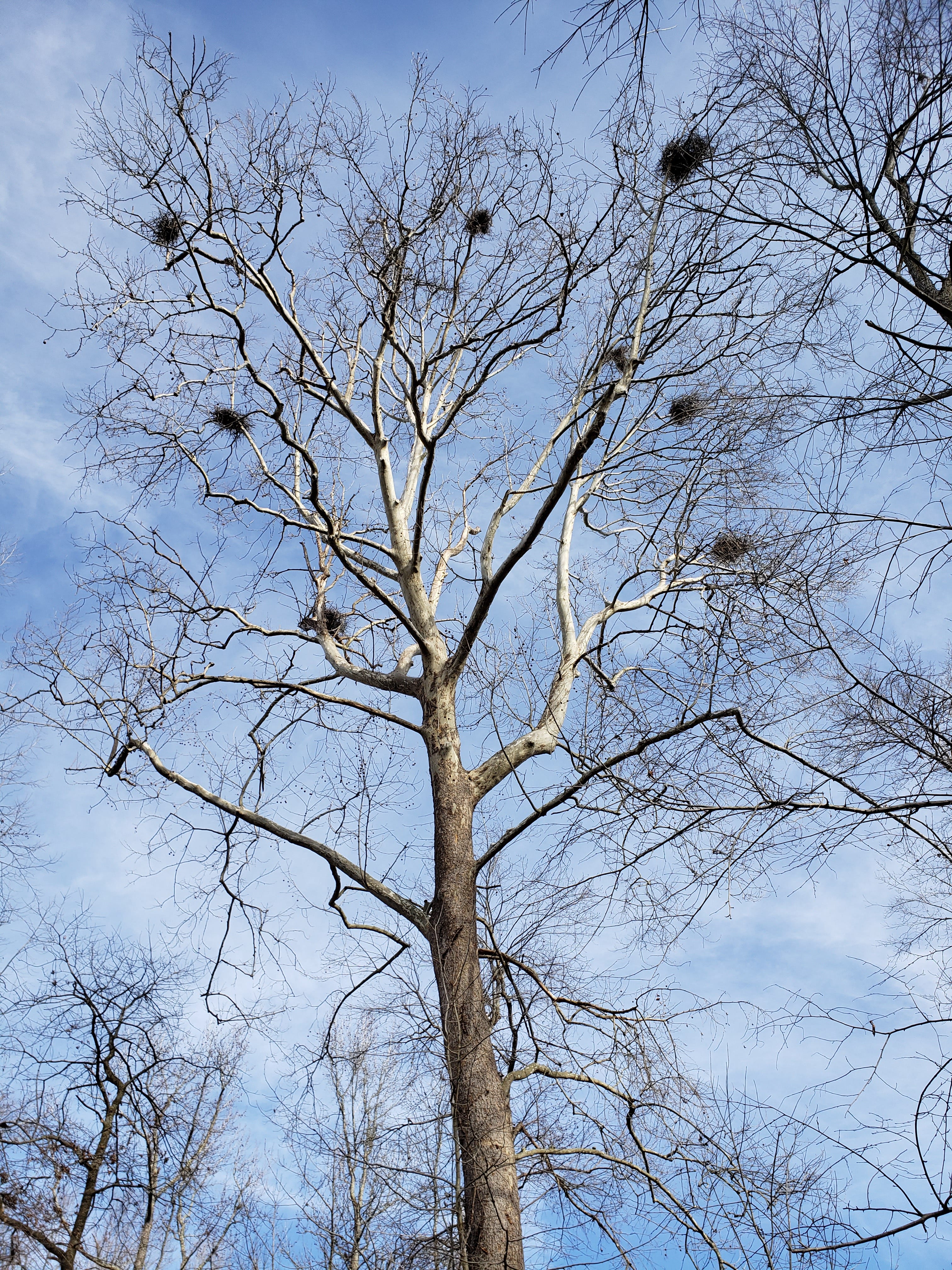
What a view! And what a racket when all those springtime heron babies appear!
***
Ranjit Singh teaches in the Department of Political Science and International Affairs at the University of Mary Washington. He’s also an active environmentalist. His “No Lines in Nature” Substack, where this essay originally appeared, blends history, science, and philosophy to explore our relationship with the natural world world. You can find it HERE.

Lovely the feather on the winter floor. And lovely even more on the wing in spring.
Sings.