
By Phil Huber, ADVANCE COLUMNIST
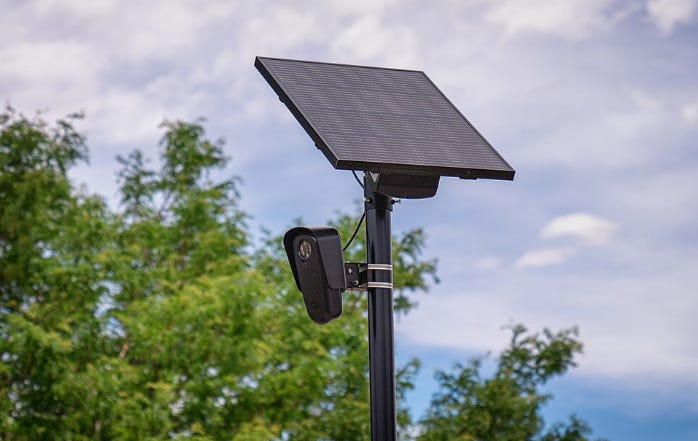
[EDITOR’S NOTE: “Flock Cameras in Our Community: Public Safety, Privacy, and Civil Liberties,” an open forum sponsored by the League of Women Voters, will be held tonight, Monday, August 17, 6 p.m. at Curitiba Art Café, 919 Caroline Street, Fredericksburg. Featured speakers are Michael Reno, assistant director of UMW’s Center for AI and the Liberal Arts, and Fredericksburg Chief of Police Betsy Mason. Flock automatic license-plate reader cameras are already in use locally, yet many residents still have questions about what they collect, how their information can be used, and how communities should balance public safety with privacy and civil liberties. Michael Reno will lead the conversation, and Betsy Mason will answer questions about police and city practices and policy.]
***
In a recent column, I argued that America needs an “AI FAA”: a national regulator for artificial intelligence modeled in purpose—not necessarily in structure—on the Federal Aviation Administration.
The FAA was not created to stop Americans from flying. It was created because aviation brought enormous promise and real risk. Aircraft became faster, more complex, more important, and more dangerous than a patchwork of company promises, and local rules could safely govern. The public needed enforceable standards, independent oversight, investigation of failures, and clear responsibility when things went wrong.
Artificial intelligence now presents a similar challenge. It can help doctors find disease, improve emergency response, protect infrastructure, and make public services work better. But it can also identify, track, profile, predict, and influence people at a scale no earlier government or corporation could achieve.
The national debate over Flock camera systems shows why an AI FAA is no longer an abstract idea.
Flock’s license-plate-reader cameras can be useful public-safety tools. They can help police find a missing child, recover a stolen car, identify a vehicle tied to a violent crime, or provide leads after an emergency. Those are legitimate purposes.
But public-safety benefits do not erase civil-liberties concerns. A network of cameras that records vehicles, locations, and times can build a searchable record of a person’s movements. It can reveal where someone works, worships, seeks medical care, attends a political meeting, visits family, or joins a protest.
That is not just a question about Flock. It is a question about the larger system being built around Flock.
America is building a panoptic infrastructure: an interlocking network of license-plate readers, facial-recognition systems, phones, location data, commercial data brokers, social-media records, biometric tools, cloud platforms, satellites, and AI models. Each system may collect information separately. Their power grows when the data can be combined, searched, analyzed, and acted upon together.
I call that emerging architecture Panspectra.
Panspectra is not one machine, one company, or one government database. It is the growing ability to observe human life across the full range of modern activity. Its parts may be bought by local police departments, installed by private businesses, run by federal agencies, collected by technology companies, or sold by data brokers. But once those parts connect, the distinction between separate systems matters less than their combined power.
AI is the force multiplier. No human officer can personally review millions of camera images, travel records, purchases, posts, and other data points. An AI system can sort them in seconds, identify patterns, flag unusual behavior, and generate leads. That may assist lawful investigations. It may also turn ordinary citizens into permanent subjects of automated suspicion.
The danger is not that every police officer, analyst, or elected official intends to abuse this power. The danger is that technology makes broad surveillance normal. Data collected for one purpose can be kept for another. A system installed to recover stolen cars can become a tool for tracking political activity. A database built for local use can become available to agencies far beyond the original community. An algorithm meant to assist a human decision can slowly become the real decision-maker.
Fredericksburg is already part of this national conversation, though it is only one example of a much larger issue. The city approved Flock license-plate-reader cameras, and public-records reporting found that, beyond city-owned equipment, Fredericksburg police can access a larger and changing network of Flock-connected private surveillance systems. That does not prove wrongdoing. It shows how surveillance capacity grows: one local contract, one private camera, one data-sharing agreement, and one software upgrade at a time.
The same pattern appears in national security.
Ukraine has reportedly asked for broader permission to use Elon Musk’s Starlink satellite network to support drone operations against Russian ballistic-missile launchers deeper inside Russia. Ukraine faces a real threat from weapons fired from Russian territory. At the same time, expanded attacks inside Russia bring real escalation risks. Musk has so far refused Ukraine’s request.
The military question can be debated. The governance question is clear. A private company and its owner may be in a position to decide whether an American ally can use a critical battlefield communications system in a particular way. Orbital communications, intelligence, AI-assisted targeting, and drones are now part of modern war. Yet decisions involving escalation, alliance policy, military need, and civilian safety can depend heavily on private infrastructure and private judgment.
That is Panspectra at the level of war.
The same issue is unfolding at home. The White House has developed a voluntary process for reviewing the cybersecurity risks of the most advanced AI models before release. For now, reports indicate that it focuses on certain closed, proprietary models and exempts open-weight models. But the treatment of open models is already being debated, because increasingly capable models can be downloaded, changed, and used outside the control of the original developer.
The administration’s framework is a start, but it is narrow. It is voluntary. It focuses mainly on cybersecurity. It does not create mandatory licensing or required approval before release. It also leaves major questions about privacy, discrimination, surveillance, manipulation, political influence, job loss, and responsibility after deployment.
There is another question the public should ask: Who is doing the reviews?
The White House is not a technical testing laboratory. The process reportedly involves the National Security Agency, the Cybersecurity and Infrastructure Security Agency, the National Institute of Standards and Technology, the National Cyber Director, Treasury, and other national-security officials.
That is a serious effort. But the framework has not been fully disclosed. The public does not know whether the federal government has enough independent technical talent, computing power, test data, and evaluation tools to assess frontier models without relying heavily on the companies that build them.
If the regulated companies provide the models, the access, the evidence, and much of the scarce expertise, then a “government review” can become an industry consultation behind closed doors.
That is not an argument against working with industry. Government must use private expertise. But a regulator cannot be truly independent if it depends on the companies it regulates to explain, test, and validate their own systems.
Flock, Starlink, and frontier AI may sound like separate stories. They are not. In Fredericksburg, the issue is who governs the growing ability to search a person’s movements. In Ukraine, it is who controls privately owned satellite systems that can shape battlefield decisions. In Washington, it is whether government can independently assess powerful AI models before they are released into public life.
In every case, the larger question is whether democratic government will establish durable rules before private platforms, vendor contracts, and voluntary arrangements become the real constitution of the digital age.
That is why America needs a Federal Panoptic Systems Administration, or FPSA.
Its purpose would not be to operate cameras, collect personal data, or direct police investigations. Its purpose would be to regulate the systems that do. Just as the FAA establishes rules before aircraft enter crowded airspace, the FPSA would establish rules before high-risk technology becomes part of daily American life.
The FPSA should classify systems by risk. Low-risk uses should not face the same burden as systems used in policing, elections, employment, housing, credit, health care, education, critical infrastructure, military operations, biometric identification, or brain-computer interfaces.
For high-risk systems, the agency should require independent testing for accuracy, bias, cybersecurity, and civil-rights impact before broad deployment. It should set national rules for data retention, data sharing, secondary use, public notice, audit logs, and meaningful human review. It should investigate abuse and serious failures. It should be able to suspend or decertify systems that cannot meet legal, technical, and constitutional standards.
Some practices should simply be banned: mass tracking of law-abiding Americans, secret political or ideological scoring, and systems that make life-changing or lethal decisions without meaningful human responsibility.
This is not an argument against technology, law enforcement, national defense, or American innovation. It is an argument for constitutional government.
Flock is one eye. Starlink is another. Frontier AI models are another. Panspectra is the larger system that emerges when these tools are connected, normalized, and left without strong public rules. A Federal Panoptic Systems Administration is the national institution America needs before that system becomes too essential—and too powerful—to govern.
***
Phil Huber is a retired Army Reserve colonel, federal civil servant and consultant who writes on civic education. He lives in Fredericksburg.
For more conversation about Flock cameras, check out this New Dominion Podcast episode with Cory Blanch and Shaun Kenney.

Phil, this is exceptionally well written, informative and timely. All your articles are, but this goes beyond the norm of providing useful information. You propose a solution(s) to deeply concerning problems. The creation of an agency (independent, lets hope, from the political machinations of a meddling president) that establishes rules, ensures the rules are followed, and provides to government and to the public an assessment of how well the industry and its individual players meet the goals inherent in the agency's charter. I hope your FPSA can gain traction and sees a wide audience.