
By Phil Huber, ADVANCE COLUMNIST
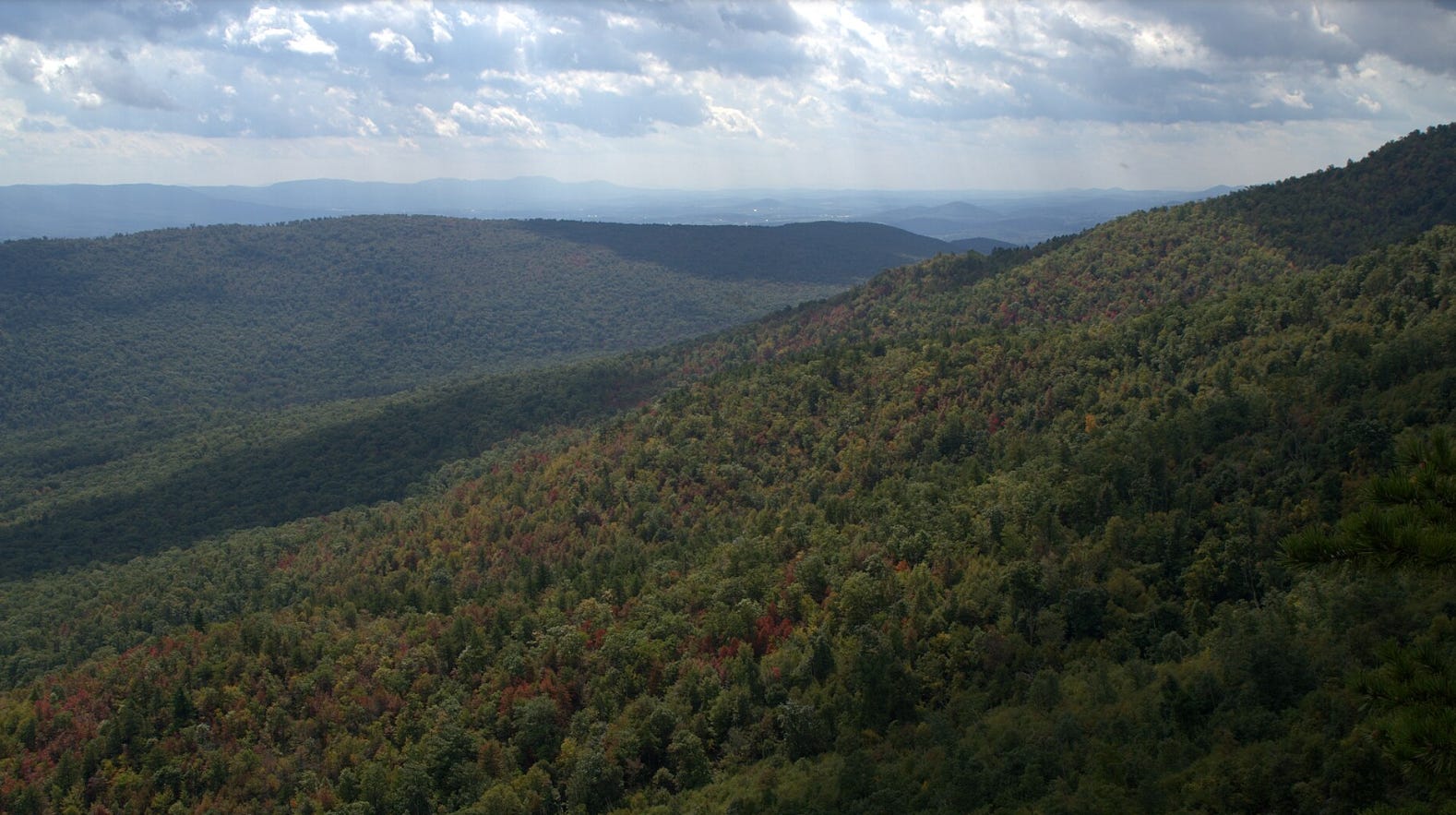
There’s a decision moving through Washington right now that will decide whether logging trucks and bulldozers get access to some of the wildest, least-touched forest land America has left—45 million acres of it, an area larger than the state of Washington. Most Americans have never heard of it. That’s not an accident, and it’s worth fixing.
What’s happening
The rule in question is called the Roadless Rule. President Bill Clinton’s administration put it in place in January 2001, in the final days of his term, after the Forest Service spent two years gathering input from more than a million citizens—at the time, the largest public comment process in federal history. The rule is simple: On about 58.5 million acres of national forest land classified as “roadless,” the government can’t build new roads or allow large-scale logging, with a few narrow exceptions for things like fighting fires. Idaho and Colorado later carved out their own state-specific versions of the rule, which is why the number usually cited today is closer to 45 million acres—the amount still governed by the original 2001 rule.
On August 18 of this year, the U.S. Department of Agriculture filed a formal proposal to erase that rule entirely. The Forest Service published the actual text of the proposed rule, along with a draft environmental review, in the Federal Register on August 20. Agriculture Secretary Brooke Rollins says the current rule is a “one-size-fits-all restriction” that ties the hands of local forest managers trying to reduce wildfire risk. Conservation groups, hunters, anglers, and a long list of Native tribes say the opposite is true—that more roads mean more human activity, and more human activity means more wildfire ignitions, not fewer.
Whoever is right, the stakes are real. This isn’t abstract. It affects trout streams in Idaho, salmon runs in Alaska’s Tongass National Forest, elk and grizzly habitat across the Rockies—and land much closer to home. Virginia’s George Washington and Jefferson National Forest holds 394,000 acres of roadless land, more than any other state east of the Mississippi. Much of it sits west of us in the Shenandoah Valley and along the Appalachian spine, through Rockingham, Augusta, Bath, and counties further south. Part of it protects the watershed feeding Staunton’s drinking water, and a nearby cluster does the same for Harrisonburg. This is not someone else’s forest.
Who Actually Benefits
Follow the money before you follow the rhetoric. The clearest winners are timber companies that gain road access to previously untouchable stands, especially in Alaska’s Tongass National Forest, where roughly 90 percent of harvested lumber is exported, most of it to China. Mining and oil and gas interests benefit too, though less than people assume—the 2001 rule never banned extraction on valid existing claims and leases, it only blocked building new roads to reach undeveloped ground, so the real prize is access to previously unreachable tracts. States pushing hardest for repeal, like Utah, argue the rule has suppressed local timber-sector activity and want that decision-making authority back at the local level.
But there’s a catch worth printing: several of these timber sales have historically lost money. Steve Ellis of the nonpartisan watchdog group Taxpayers for Common Sense notes that pre-2001 roadbuilding often produced money-losing federal timber sales that effectively subsidized private logging operators, and the Forest Service already carries a roughly $6 billion road-maintenance backlog that repeal will only add to. In other words, the beneficiaries may be a narrower slice of well-positioned operators and land-access holders, not the timber industry or the taxpayer broadly. Whoever ends up ahead, it’s rarely the closest neighbors—the towns downstream, drawing drinking water from the same roadless watersheds this rule protects.
Where Things Stand Today
As of this week, the process is in its most important phase: A formal 30-day public comment period that runs through September 21, 2026. This is not the first time the public has weighed in. Back in the summer of 2025, when USDA first announced its intent to study a repeal, the agency opened a short comment window that drew more than 625,000 responses—the overwhelming majority in opposition—along with formal objections from 329 organizations and a string of former Forest Service chiefs. The agency was originally supposed to release its full proposed rule and environmental analysis by March of this year. It didn’t show up until August, five months late, a delay confirmed only because a separate lawsuit over Alaska’s forests forced USDA to file status updates with a federal court.
Now the real rule is on the table. Comments submitted between now and September 21 go into the official record, and by law, the agency must respond to the substantive ones before it can issue a final decision—expected sometime later this year.
A second document is riding along in this same 30-day window that deserves its own mention: the draft environmental impact statement, required under the National Environmental Policy Act, or NEPA. NEPA is the 1970 law that forces federal agencies to study the environmental consequences of a major decision before making it, and to let the public weigh in on that study. USDA’s draft EIS lays out the alternatives it considered for roadless areas, from leaving the 2001 rule alone to rescinding it entirely, and estimates the effects on wildlife, water, and fire risk. Under NEPA’s own guidance, a draft EIS this significant would typically get a minimum of 45 days for public comment, and major proposals often get 60 to 90. This one is getting 30, tied to the same September 21 deadline as the rule itself. Several outdoor and conservation groups have called that combined window unusually short for a decision covering 45 million acres. You can comment on the draft EIS specifically, separate from the rule text, through the same regulations.gov docket described below—and it’s worth doing, since the EIS is the document meant to capture whether the agency’s wildfire and economic reasoning actually hold up.
What A Well-Run Version of This Would Have Looked Like
I want to be fair to the process here, because there’s a version of this that isn’t about who wins the fight—it’s about whether citizens get a real chance to be heard before the decision is made. A well-run rulemaking would have looked something like this from the start:
An agency would announce its intent clearly and early, with a comment window long enough for ordinary people—not just Washington law firms—to understand what’s being proposed and respond to it. Sixty days is typical for something this consequential; the initial 2025 window here was three weeks. The agency would hold public meetings in the affected states, the way it did for the original 2001 rule, rather than leaving that job to outside advocacy groups organizing their own forums because the government didn’t. It would consult tribal governments on a timeline that meets federal trust and treaty obligations, rather than triggering formal objections from the National Congress of American Indians over inadequate consultation, as happened here. And it would hit its own stated deadlines, so that the public isn’t left tracking court filings in an unrelated lawsuit just to find out the review is running five months behind schedule.
None of those changes whether the underlying policy is right or wrong. But skipping these steps invites the backlash and legal challenge this one is now facing.
Organizations Worth Knowing
If you want to follow this seriously or add your voice through an established group rather than going it alone, a few are worth knowing by name. Earthjustice and the Natural Resources Defense Council are the legal engines behind the opposition, handling the court challenges tied to Alaska’s Tongass forest. The Wilderness Society and the Sierra Club have been the loudest public voices pushing back on the wildfire-prevention rationale the administration is using. If your interest runs toward hunting and fishing rather than conservation politics generally, Trout Unlimited and Backcountry Hunters & Anglers make the case in exactly those terms—clean water, fish habitat, and hunting grounds, not abstract environmentalism. And the National Wildlife Federation deserves a mention for taking the least absolutist position of the bunch: it opposes wholesale repeal but says it would support a more thoughtful update to the 2001 rule, which is a useful reminder that this debate has more than two sides.
If You Want to Comment Yourself
You don’t need any of those organizations to have your say. Here’s what it actually takes.
Go to regulations.gov and search for docket number FS-2025-0001, or search the Regulation Identifier Number 0596-AD66. Click “Comment,” and you can either type directly into the box or attach a longer letter. You can submit as yourself, with your name, or you can choose to submit anonymously if you’d rather not be identified. There’s no minimum length and no required format—a few honest paragraphs from someone who has spent time in these woods carries real weight, arguably more than a form letter copied from an advocacy group’s website. State plainly whether you support or oppose the change, say why, and if you can, point to the specific part of the proposal you’re responding to. The deadline is September 21 at 11:59 p.m. EST, no exceptions for late mail.
Why bother when the decision seems politically predetermined? Because the administrative record matters. The final rule will legally have to address the substantive comments submitted, and comments become public documents you can cite later—in a letter to your member of Congress, in testimony, or in a column exactly like this one. A rulemaking process this consequential deserves more attention than it’s getting, and forty-five million acres is a lot of country to lose track of.
***
Phil Huber is a retired Army Reserve colonel, federal civil servant and consultant who writes on civic education. He lives in Fredericksburg.

Great article. More people need to know about this swindle - -- as with data centers, companies lobby to exploit public resources for purely private gain. Once a wilderness is logged, it's gone for centuries, at least. Thanks.