
By Martin Davis
EDITOR-IN-CHIEF
Email Martin


Jordan Cook is becoming everything most parents wish for their children. Soon to be a Howard University graduate, she is poised, well-spoken, and about to embark on her first full-time job.
That poise was on display in a stylish speech Cook delivered on Valentine’s Day before a filled ballroom at the Ritz Carlton in Tyson’s Corner. To anyone passing by and glancing in, Cook looked to be a prime example of what is possible when raised in a home with every advantage that life can offer.
Her speech, however, dispelled the notion that Cook ever had it easy.
She grew up in a family that abused her; she sought help by turning to men who used her; and she was on track to become simply another statistic of teenagers running away, getting into trouble, and facing a life with no future.
Her life began to turn when she found her way to Youth for Tomorrow, a residential program in Northern Virginia founded by Washington Redskins (now, Commanders) football coach Joe Gibbs, and run by Dr. Gary Jones, a one-time Under Secretary of Education in the Reagan Administration, and later Acting Director.
The transformation, however, was far from easy. She ran away on several occasions before finding her footing. But over time, with the support of a staff that doesn’t give up on kids, she found her way.
The event Cook was speaking at was the annual Heart-2-Heart fundraiser for YFT, and those in the room were donors and supporters of the organization. She is the success story that any organization would be proud to put before its donors.
To think of Cook and YFT only in terms of success stories, however, is to miss a critical piece of the organization’s work.
Placing a success story like Cook before the public, after all, is the easy part.
Granting media access to troubled teens in the early stages of their journey to, hopefully, a better tomorrow is something not commonly done.
On a recent windy Friday, however, the Advance sat down with Dr. Jones, other members of the YFT team, and four young men who were far away from the success that Cook embodies. In many ways, each was still broken, hurting, and visibly wrestling with trauma.
I was allowed to ask what I wanted, and the four young men responded honestly.
Their stories provide some perspective on just how far the individuals who come to YFT have to travel.
Nota Bene: the individuals attending YFT and interviewed are identified by pseudonyms to protect their identities.
‘Receiving Hope’
Dressed in a suit and tie, Brian looked me in the eye when introducing himself and saying his name — though he said it in a register that required my asking a second time.
The process of following social conventions when meeting someone was not natural to him, nor to the other three boys interviewed. Handshakes, looking people in the eye, standing when greeting people, answering questions without dominating a conversation — none of this appeared to come easily.
These were skills Brian and the other boys had only recently learned — presumably at YFT — and one could observe the boys thinking through each step of the meeting.
Originally from Springfield, Virginia, Brian was brought to YFT by his father who drove him to the facility.
Constantly in trouble with the law, he told the Advance that “I used to steal, break the law” on a regular basis.
Asked what it was like to be driven to a residential home by your father and left for them to care for him, Brian — now 16 years old — said: “My past was very traumatic, but coming here wasn’t.”
Though still uneasy while interacting with new people, Brian showed little hesitancy when asked about his ambitions — he wants to pursue a career as either a law-enforcement officer, or a pastor.
“Both share something in common,” I said.
Brad looked at me quizzically, before asking “What’s that.”
Each job, I responded, requires dealing with people on their worst days.
Brad smiled. He got the connection, and just as quickly was able to connect it to his own experiences.
At YFT for seven months, he said that he valued the therapy he was given and the life skills he was taught. But neither was the most important thing he said YFT had given him.
That, he said, was “receiving hope.”
Beginnings
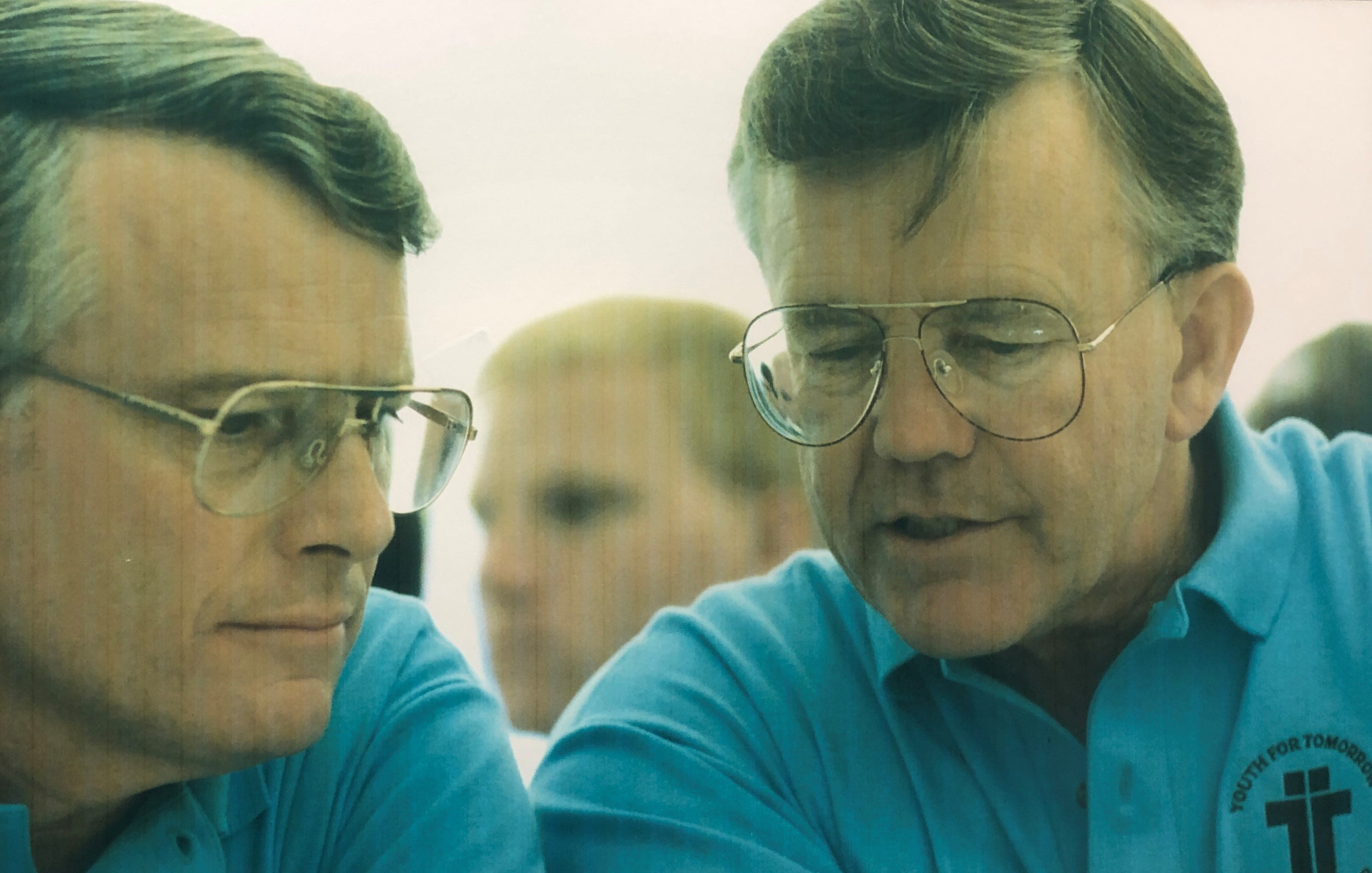
The 1982 NFL strike left many fans disgruntled. It left Redskins Head Coach Joe Gibbs bored.
Forced to wait until the strike ended before returning to work, Gibbs — along with some of his assistant coaches and members of his Sunday School class — began visiting young men being cared for by the D.C. government.
What troubled Gibbs was what had brought the boys to these circumstances — legal issues, truancy; what inspired him was a desire within each to be better.
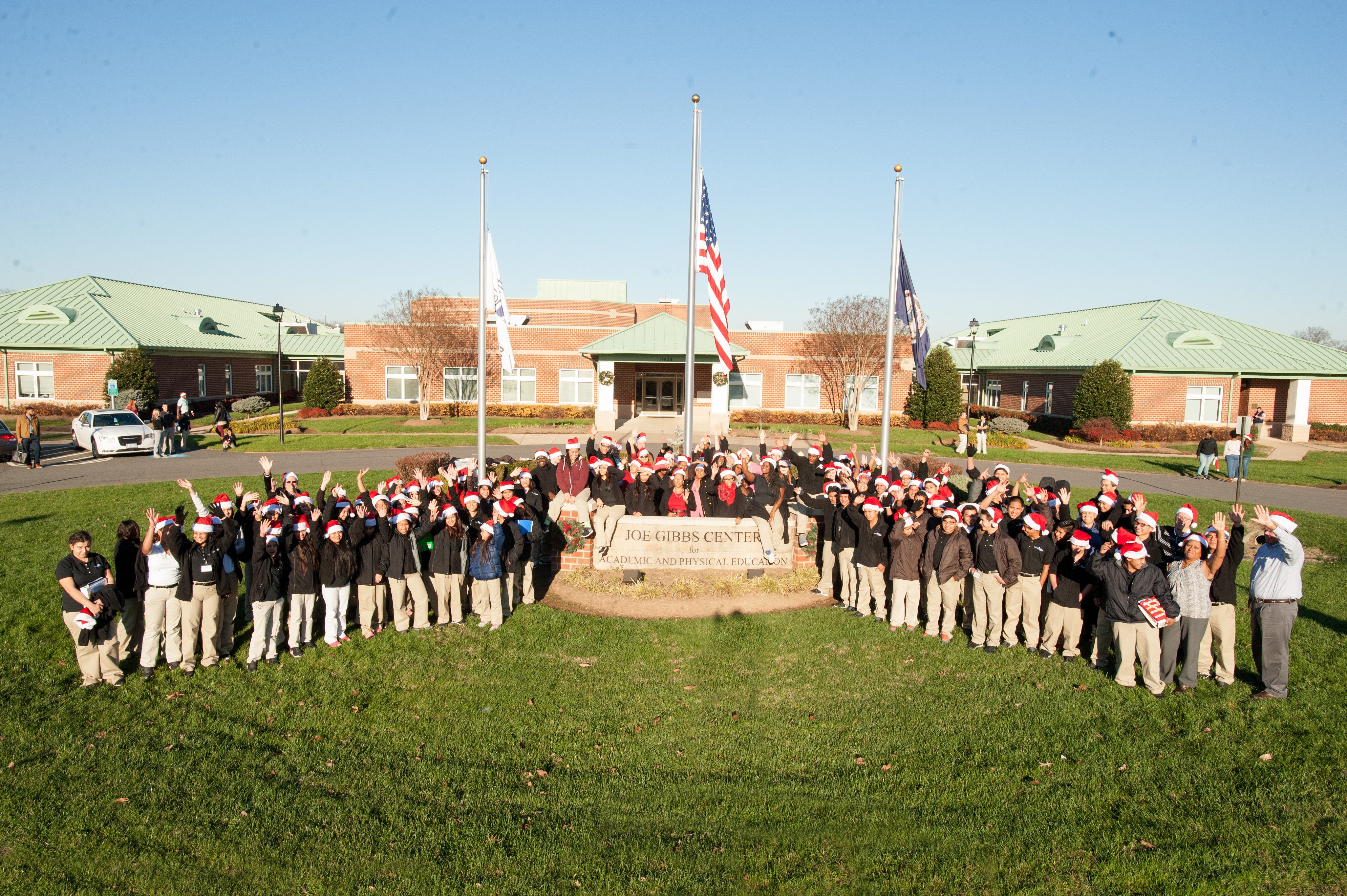
From that experience, the idea for what would become Youth for Tomorrow emerged. Licensed in 1986, YFT opened its doors to four young men in 1986 on a 130-acre campus in Bristow, Virginia.
A decade later, when Jones was named CEO, the institution was serving 10 boys.
Originally, residents were brought by parents and grandparents who had heard about the program and were desperate to find help. Within a year, however, the social service agencies, law enforcement, and the juvenile courts began turning to YFT for help with the boys they were struggling with.
The growing need forced YFT to begin looking for ways to expand.
They Have My Back
Jerry came to YFT from the western half of the state, where he had bounced for years among foster homes, group homes, mental hospitals, and residential settings.
He said that he struggled with “anger and aggression [and] not being able to control it.”
Though trying, Jerry had trouble making eye contact, and he spoke in a low register that made it hard at times to understand what he was saying.
One message came through consistently, however. A deep appreciation for YFT and the progress he is making there. The people at YFT “have my back” he said in a level that was easier to hear than his normal speaking volume. And, he added, “people here help me.”
That feeling of support is counterbalanced, however, by the reality of the struggles he is facing. “The hard part about staying” at YFT, he said, “are the habits.”
Those struggles, however, are now partnered with support and a sense of direction in life. Jerry’s goal is to the join the military and become a Navy Seal.

The Cost
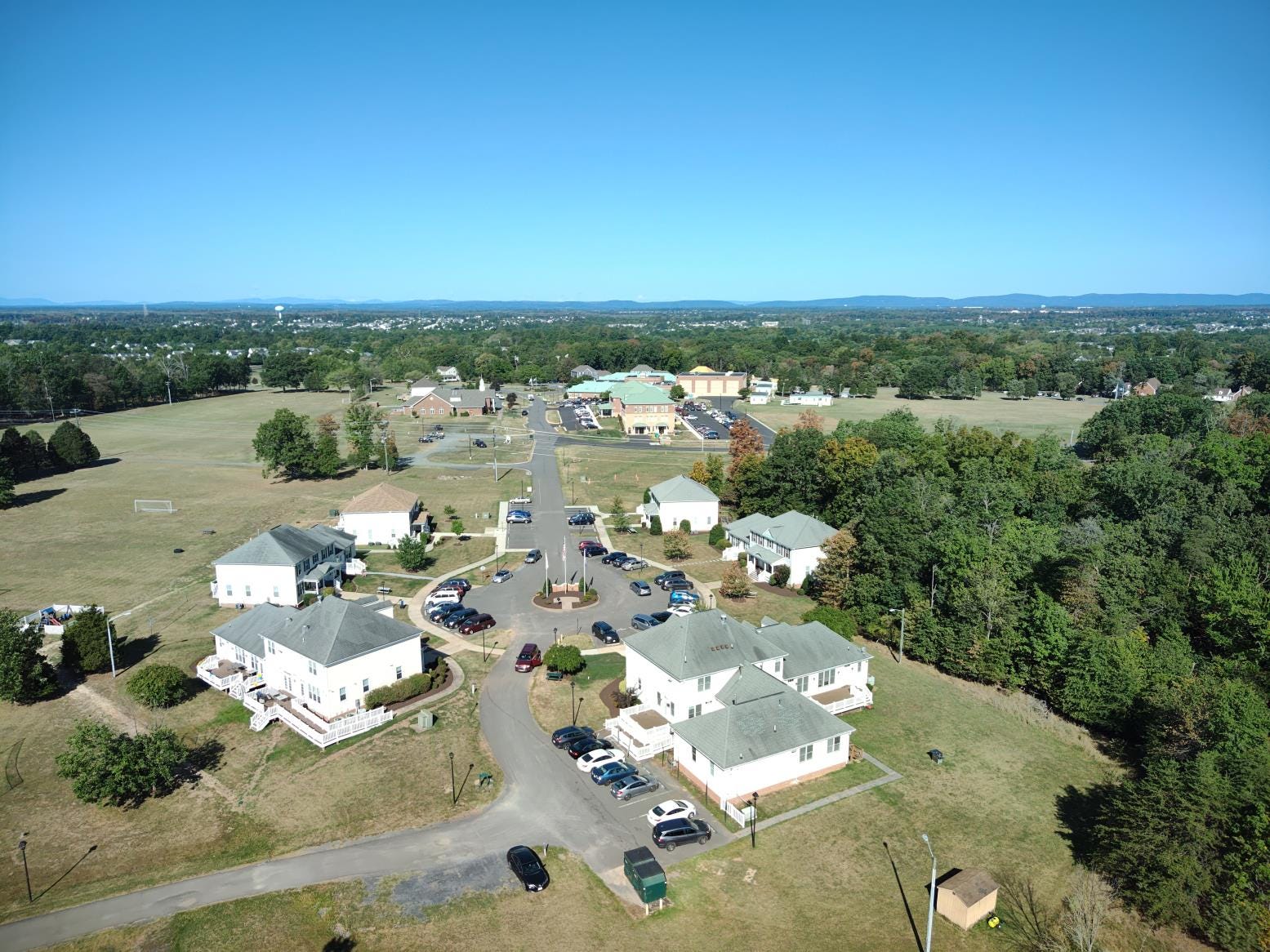
In one respect, YFT is in an enviable position. The land and the buildings that sit on it are owned free and clear.
That is thanks to people like Bob Wiser, who built five homes on the campus for young women, a population poorly served and one YFT wanted to support. The first opened in 2003.
Earlier, in 1996-97, the Northern Virginia Building Industries Association constructed a transition home for boys who had come through the YFT program but could not return to their homes.
Fundraisers and Capital Campaigns also fueled the growing campus. In 2000, YFT launched a $13.1 million campaign that allowed for the construction of a Grades 7-12 school, as well as a physical education facility.
Being free-and-clear on land and buildings, however, does not mean the organization begins every year with a loaded budget. Gary Jones II, YFT’s chief financial officer, said the organization begins each year “in the red” to the tune of $5.5 million to $6 million — that’s what’s needed to maintain the level of services YFT provides.
As a residential facility, YFT tries to provide as much medical care on-site as possible. It also invests heavily in therapists. One form of therapy the organization is most proud of is its play care therapy work, which Dr. Jones said is shown to be especially helpful in helping kids with deep trauma.
“We have seven [play care] therapists” on staff, he noted.
The organization also supports four out-patient offices, including one in Dumfries that supports families in Stafford County.
In addition to salaries for medical personnel, YFT has to pay for teachers at its school. It also provides scholarships to those who successfully leave YFT. It’s available to people who have stayed 6 months or longer, and maintain good behavior.
To date, YFT has invested $1.5 million in college scholarships.
“We invest in our kids,” said Dr. Jones.
‘I Don’t Want to Live My Life Like That’
Angelo has been in and out of YFT a couple times over the years. As he is growing older, he is beginning to appreciate the serious of the issues before him.
He said he had trouble both “inside the household,” as well as “with the law.” He is at YFT because of the court system.
Turning 18, he said, means he could end up in jail. “I don’t want to live my life like that.”
He has trouble opening up to people, he said, which was evident during his time being interviewed. Eye contact was difficult for Angelo; so, too, was speaking with a level of confidence about himself and his direction.
That changed, however, when he talked about basketball. He plays on the school team and has found an outlet for expression on the court. It was the only time during in our brief interview that Angelo smiled.
Challenging Days
The challenges for YFT have become greater over the years. But for Dr. Jones, that just means finding more ways to help those who need it.
“We answer the call of a community when we can,” he said.
That has meant adjusting to the types of young people coming to the school, as well as finding new avenues to serve people.
“The kids have gotten more challenging” said Dr. Terry Tinsley, YFT’s Vice President for Residential Program Services, to the Advance. Among the problems the organization regularly sees now are kids with substance abuse issues like fentanyl and kids who have been sex-trafficked.
Equally challenging is the funding environment. When YFT first opened, kids typically stayed a minimum of six months. Today, that time frame is down to 3 to 6 months. “The length of stay,” Tinsley said, “is determined by insurance, the courts,” and related entities.
To meet the growing need, YFT has expanded the services it offers. Today, the organization employs nearly 500 staff members and serves more than 800 boys and girls annually through residential services. They also have 40 therapists in eight regional outpatient behavioral health offices that serve more than 7,500 clients and their families annually.

Preston
Preston is reflective of the deeper challenges YFT is facing. Issues with substance abuse brought him to YFT. When asked what he was using, he listed off “weed, alcohol, oxycontin” and a slew of other substances.
He says he has now been drug free for a “couple of months.”
Asked what he hopes to do, he began talking about a business that he said he thought Dr. Jones wouldn’t approve of. He spoke quickly and in a low register that made it difficult to decipher what was being said.
After he left, Dr. Tinsley said that “Preston is learning how important and valuable he is. I don’t think he fully understands what an amazing person he is. We are very proud of him.”
Of the four, Preston appeared to have the furthest to go in his journey. Though each of the young men were wrestling with their own traumas, for Preston the wounds appeared to be fresher and more open.
“It takes more courage to stay here,” said Dr. Tinsley, “than it does to get here.”
The Wonder of Each Student
Over its 40-year history, YFT has become a critical support for thousands of the most challenging, traumatized young people in the state of Virginia.
What sets it apart is its willingness to show both sides of the story to people who are interested.
Individuals like Jordan Cook are a testimony to the ability of YFT to effect significant change in the course of a young person’s life. And her story is a powerful reminder that when the right support, even those often considered “hopeless” are powerful people who just need some direction and support from people who see their strength and potential, while refusing to give up on them.
Little wonder YFT would put her in front of the donors who make their work possible. She is a testimony to what properly resourced organizations can do.
As impressive as Cook is YFT’s willingness to also put those who are just beginning their journeys before those who want to better understand the work that goes on at the campus.
To sit across the table from teenagers who have seen more trauma in their formative years than many people will experience over the course of their lives is difficult. The challenges they face ahead are significant, with no guarantee that their stories will turn out like Cook’s.
What speaks louder than the trauma, however, is the unlimited respect that those working at YTF have the students. Rather than focusing on how sad their stories are, they focus on the wonder each of these people are.
Perhaps that is the real secret to why YFT is so successful.
They believe in people when no one else will, and they are willing to walk alongside them every step of the way, until they’re able to stand on their own.
To learn more, visit the Youth for Tomorrow website.


Local Obituaries
To view local obituaries or to send a note to family and loved ones, please visit the link that follows.
