
By Bruce Saller
ADVANCE CONTRIBUTOR
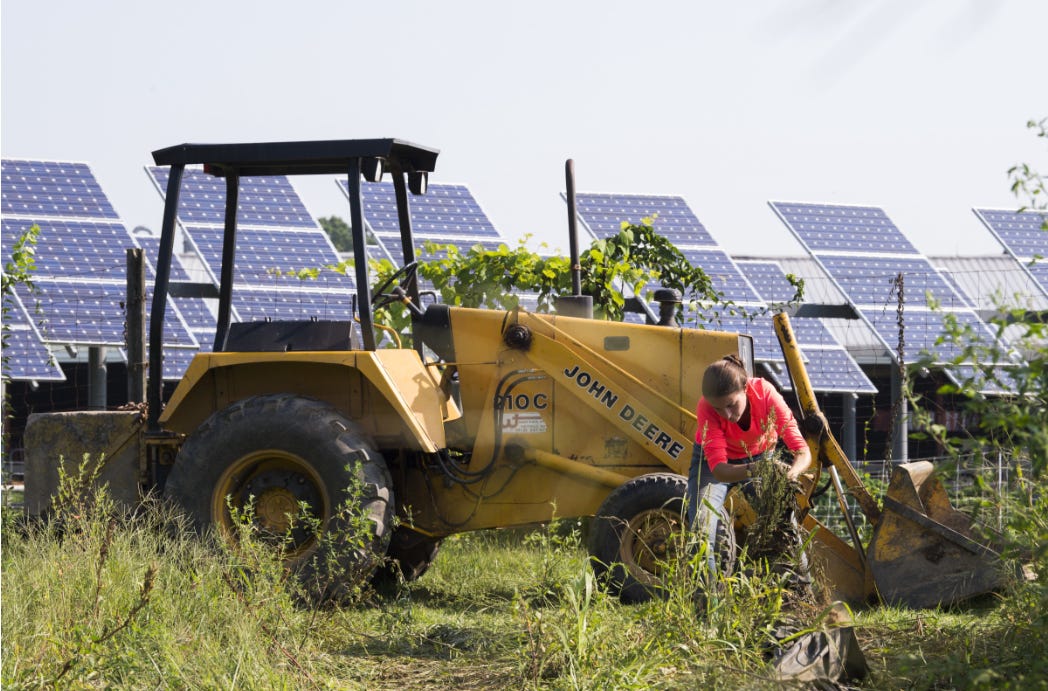
Most solar farms have panels mounted near the ground in long rows separated by several feet for maintenance access. The ground is usually covered with low-growth grass or plants that are not harvested. There is another approach being utilized, though, that allows farmers to use a significant portion of the land around solar panels.
Agrivoltaics is the practice of using land for concurrent farming and solar production. The solar panels are installed higher and farther apart, allowing farmers to grow crops or raise livestock under the panels. This approach has several advantages:
1. The land can continue to be used for farming.
2. Landowners can receive lease payments from the solar companies while continuing to farm.
3. Solar panels increase ground shading which reduces evaporation, saving 20 – 30 percent of water usage. This is even more important since our area is in a Severe or Extreme Drought according to the U.S. Department of Agriculture.
There are also constraints and disadvantages to agrivoltaics:
1. Increased installation costs due to the elevated solar panels. However, since solar currently has the second lowest lifetime costs (US Energy Administration report), it should still make economic sense even with the added costs.
2. Certain crops do not grow well in the shade. For example, lettuce does well, but grains prefer full sun.
3. There will be a reduction in the amount of land available to farm. The amount lost depends upon the crop and the solar panel configuration.
Virginia Senate Bill 340 established a formal definition for agrivoltaics, allowing for development of policies and incentive structures. It is essential that we install significant numbers of solar and wind projects quickly to meet the one billion watts per year increase in electrical demand from data centers. This is our only option as new nuclear or gas turbine plants won’t be available until the 2030s.