By Phil Huber, ADVANCE COLUMNIST
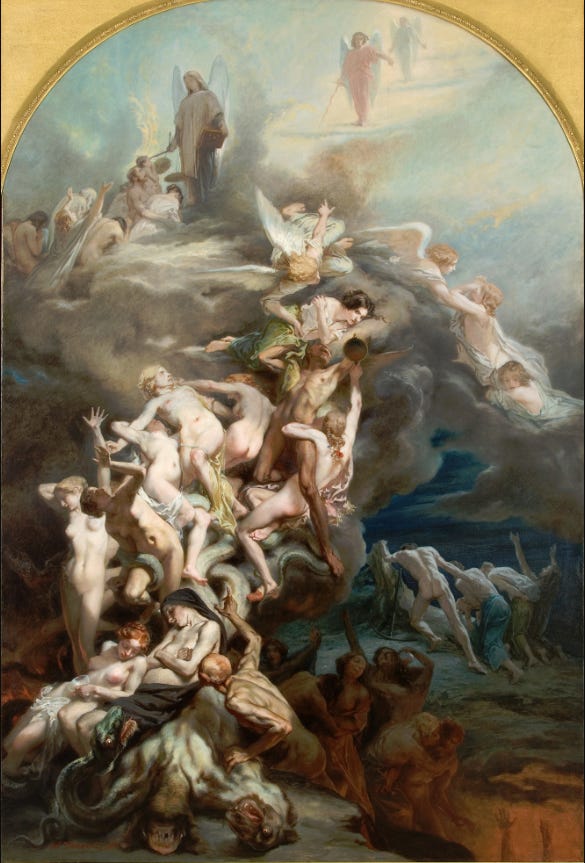
Ronald Reagan knew how to turn eternity into a political punch line.
“Communism works only in heaven, where they don’t need it, and in hell, where they’ve already got it,” he told a gathering of small-business representatives on June 22, 1983. The official transcript records laughter.
The joke made his argument memorable: a promise of earthly paradise could become an instrument of earthly oppression.
Decades later, a social-media observation turns that argument around. A version credited to “goma,” whose identity and original authorship remain unverified, reads:
“Its funny how everyone’s idea of heaven is a complete untouched paradise, crystal clear waters, lush green forests, enough food for everyone, classless, moneyless, stateless, a utopia of peace, unity and happiness. But here on earth it’s considered a leftist ideology.”
Reagan warned about the means used to manufacture paradise. The anonymous observation asks why the supposed ingredients of paradise become controversial when proposed for the living.
Neither settles an economic argument. Wanting everyone fed does not establish which policies will accomplish it. Warning against communism does not answer how a free society should respond to hunger.
But together, they raise an interesting question: What do we mean by heaven and hell?
While exploring that question, we arrived at another definition—not scripture or a famous quotation, but a description of political conditions:
“Political hell is a society where truth serves power, cruelty proves loyalty, neighbors become enemies, wealth buys immunity, and no one can hold the rulers accountable.”
Notice what is missing: a party label.
What matters is how leaders behave—not which party they belong to. Do we condemn dishonesty, cruelty and abuses of power only when the other side is responsible, or also when our own side is?
Before we enlist eternity in another political argument, however, we should recognize that the world’s religions do not share a single map of the afterlife.
In Christianity, heaven is fundamentally about life with God, not simply unlimited comfort. Many Christian traditions understand hell as final separation from God, although Christians disagree about the nature and duration of punishment. Resurrection and judgment are central to the larger story.
Islam likewise teaches resurrection and divine judgment. Paradise, Jannah, and hell, Jahannam, belong to an understanding of life in which human choices carry consequences beyond death. It is not merely a comparison between pleasant and unpleasant surroundings; it is a vision of ultimate accountability.
Judaism offers a more varied picture than many Americans may realize. Jewish traditions discuss the World to Come, resurrection, Gan Eden and Gehinnom, but these ideas do not fit one universally accepted scheme. In many rabbinic accounts, Gehinnom involves temporary punishment or purification rather than endless torment. Jewish teaching also places substantial emphasis on how people live now.
Hindu traditions complicate the familiar two-destination picture further. Many describe heavenly and hellish realms within a continuing cycle of death and rebirth. The ultimate goal, moksha, is liberation from that cycle—not simply a permanent reservation in a celestial resort. Different Hindu traditions explain that liberation differently.
Many Buddhist traditions also recognize heavens, hells and rebirth. But nirvana is not another name for heaven. It concerns liberation from craving, ignorance, suffering and the cycle of rebirth. The absence of an eternal creator’s judgment does not mean Buddhism teaches that this life is necessarily our only existence.
That distinction matters. “No conventional heaven or hell” does not automatically mean “nothing after death.”
Secular humanists take a different approach: they generally do not organize their lives around belief in a personal afterlife. Meaning and moral responsibility must be addressed here, through human relationships and the consequences of our actions.
If this is the only life we have, suffering is not a temporary inconvenience before compensation elsewhere. A childhood lost to hunger or violence cannot be returned in another world.
Believers need not accept that conclusion about death to recognize the urgency of the suffering.
None of these traditions can be reduced fairly to a campaign platform. Nor should we pretend their differences are unimportant. But we can ask a civic question without resolving a theological one: What obligations do we have to people whose lives our decisions affect?
We need not agree about eternity to oppose cruelty. We need not share a religion to demand honest government. We need not promise utopia to insist that children eat, public officials obey the law, and political opponents retain their rights.
Reagan’s joke asks us to distrust promises of paradise imposed through power. The social-media quotation asks us not to dismiss compassion merely because someone attaches a political label to it.
Both questions deserve an answer.
Before the next election, ask what your candidates will do to reduce suffering—and what limits on their own power they will accept. Then apply the same standard to your own party.
We may disagree about what awaits us after death.
That is no excuse for making life hell for one another.
***
Phil Huber is a retired Army Reserve colonel and former federal civil servant who writes about civic education, public accountability and national security. He lives in Fredericksburg.