By Phil Huber, ADVANCE COLUMN
‘Less a Fixed Story Than a Shifting Landscape’
Living through today’s turbulence, it is tempting to say that history is repeating itself. My own experience has led me to a different conclusion. History is less a fixed story than a shifting landscape of what we know, what we know we don’t know, and what we do not yet realize we are missing.
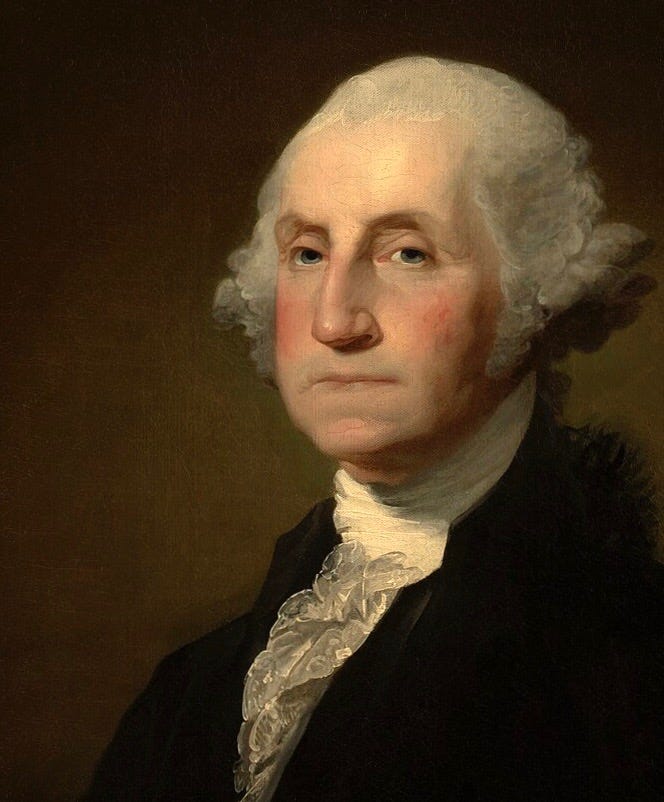
That lesson came to me in stages. First came NATO exercises in Europe during the late 1980s. Later came life in Virginia, where the Civil War is never far away. And more recently came the surprise of learning about a Loyalist plot in New York in 1776 to kidnap or assassinate George Washington, a story many Americans never encountered in school.
My first real education in contested history came not in a classroom, but in conversations with other military officers during those NATO years. Officers from allied nations would sometimes drift into arguments about wars fought centuries ago. One nation remembered a battle as a proud victory; another treated the same event as a costly draw, or as a tactical loss that led to a strategic gain. Those conversations were usually good-natured, but they carried a serious point. Even among professionals committed to a common mission, the past was not one neat, settled story.
Those exchanges taught two enduring lessons. First, “winning” is often more complicated than we admit. A side can win a battle and lose the war, win militarily, and lose morally, or lose in the short term and shape the peace that follows. Second, history is never about yesterday. Those old national stories still shaped pride, identity, and trust in the present.
Years later, living in Virginia sharpened that lesson. In places like Fredericksburg, where battlefields sit alongside neighborhoods and schools, the Civil War is not just a subject for historians; it is part of the everyday landscape. In this state, the Civil War is not simply a chapter in a textbook. It lives in battlefields, cemeteries, monuments, museums, school lessons, and family memory. Here, too, people still ask who really won what.
The military answer is clear enough: The Union won, the Confederacy was defeated, slavery was abolished, and the United States remained one nation. But the argument over the meaning of that victory never ended. For generations, the Lost Cause narrative recast Confederate defeat as moral nobility, softened or ignored slavery, and taught many Southerners that they had lost the war but preserved their honor.
That matters because winning the war is not the same thing as winning the story. In Virginia, as elsewhere, public memory often became a second battlefield. Which leaders were honored, which causes were praised, and which suffering was minimized all shaped how later generations understood the conflict. Even now, arguments about monuments, curricula, and citizenship show that the struggle over the Civil War’s meaning continues.
Then came another reminder of how incomplete our historical understanding can be. I recently read more about the 1776 conspiracy in New York involving Loyalists and at least one member of Washington’s Life Guard, Thomas Hickey, in a plot to kidnap or assassinate Washington as the British arrived. It is a startling story. Had that plot succeeded, the Revolution might have taken a vastly different course.
What struck me most was not only the plot itself, but the fact that so many educated Americans know little or nothing about it. That is not because history is useless. It is because historical knowledge is always partial. What we know depends on which records survive, which archives are opened, which questions historians ask, and which stories schools and communities choose to emphasize.
That is why I have come to rely on a simple framework. I know what I know. I know what I don’t know. And I don’t know what I don’t know.
The first category, what I know, includes the stories and facts I have studied, lived, or tested against experience. The second, what I know I don’t know, includes the gaps I can name: questions I still need to ask, histories I still need to read, perspectives I know I have not fully heard. The third category is the humbling one. It includes the forgotten plot, the overlooked document, the silenced witness, the missing context that may change how I understand everything else.
All three categories change over time. Something once unknown becomes a question. A question becomes knowledge. Then new evidence rearranges what seemed settled. That is not a weakness in historical thinking. It is its strength.
This matters for more than scholarship. It matters for citizenship. We are living through a time of high fear, especially among the young, who see political dysfunction, economic insecurity, and democratic strain and wonder what kind of country they are inheriting. It matters for elder citizens too, many of whom feel the ground shifting under values and narratives they were taught to trust. Some respond by locking down harder on what they already believe. The more citizens understand our history, the more thoughtfully they can choose their leaders.
This framework is offered to both the young, who fear the future, and the elder, who fear losing the stories they grew up with, as a way to talk about history without turning every difference into a battle.
But fear is often made worse by intellectual rigidity. If people believe they already know the whole story, then every new fact feels like a threat. If they can admit that some things belong in the “I know I don’t know” box, and that other things may still be in the “I don’t know what I don’t know” box, then new evidence becomes less frightening. It becomes an invitation to learn.
That may be one of the most important civic habits we can teach. Young people need reassurance that uncertainty is not failure. Elder people need reassurance that updating one’s view of the past is not surrender. In both cases, a healthier democracy begins with enough humility to ask whether the story we inherited is complete.
My NATO experience taught me that even allies carry different versions of the past. Life in Virginia taught me that wars can end while memory wars continue. The Washington conspiracy taught me that a nation can still be surprised by its own history. Taken together, those experiences suggest that history is not a trophy case for winners. It is a continuing argument over evidence, meaning, and memory.
That is why citizens have a role to play. History is not shaped only by famous leaders, celebrated generals, or professional scholars. Teachers, editors, parents, organizers, veterans, readers, and voters also shape it—by all of us who decide which stories we repeat, which myths we challenge, and which hard truths we are willing to face.
The arc of time does seem to go on and on. But the question is not whether history repeats itself in some mechanical way. The question is whether we will meet it with false certainty or honest curiosity. A free people should choose curiosity. That means holding firmly to evidence, admitting the limits of what we know, and staying open to what we have not yet learned.
That kind of humility will not solve every political argument. But it might make us wiser, less fearful, and more worthy of the history we are still writing.
***
Phil Huber is a retired Army Reserve colonel, a federal civil servant, and a retired consultant who writes on civic education. He lives in Fredericksburg.