By Jake Pearson, ProPublica
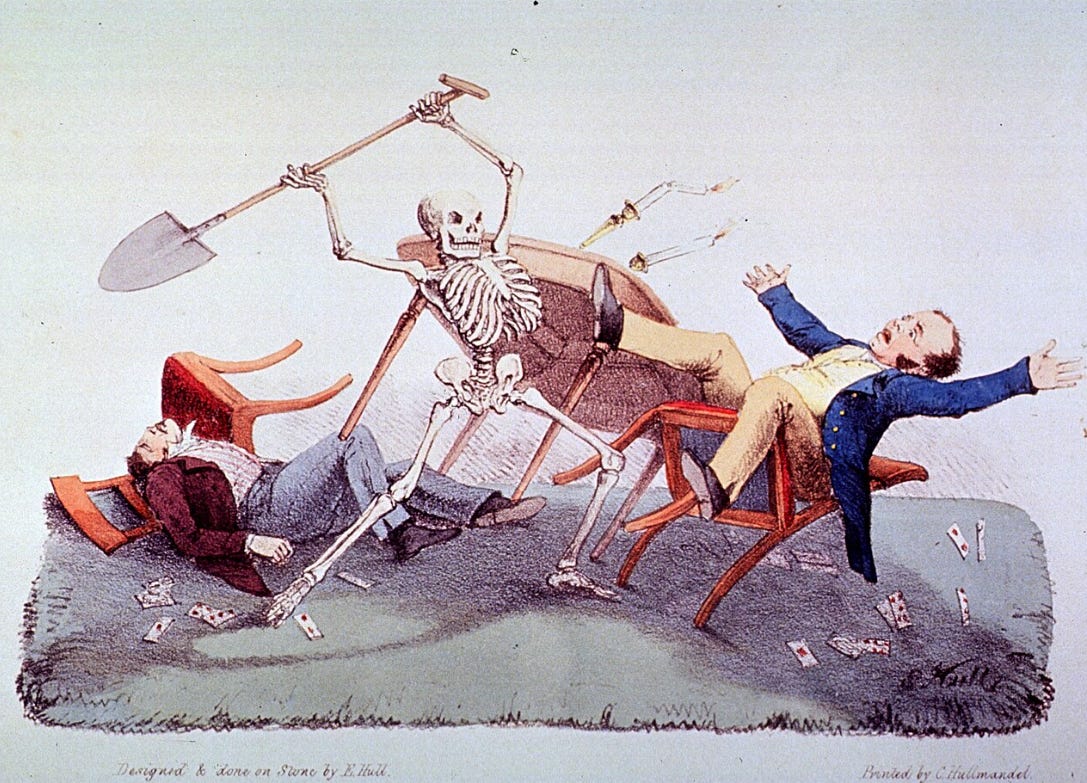
The nonprofit news organization ProPublica provided the stake for writer Jake Pearson, then sent him off to explore the world of problem online gambling firsthand. This is Part III of Pearson’s three-part story, originally published in its entirety on September 26, 2026 in ProPublica. You can find Part I HERE and Part II HERE.
***
By late May, according to my expert panel, I was enthusiastically waving all the red flags of a compulsive gambler. Loss chasing? Check. Regular depositing? Yup. Exotic betting products? Lots of ’em. Long hours on the app and bets of increasing size and frequency? Yes and yes.
Yet the only pushback I got from DraftKings came in the form of responsible gaming prompts that required me to opt in to the app’s tools. The company told me it sent a total of 32 such notices over my 10 weeks of gambling, including emails that every DraftKings customer gets. By my count, I got in-app notifications about my betting on 14 of the 71 days I gambled.
Lori Kalani, who served as DraftKings’ outside lawyer before becoming its responsible gaming chief, says her 51-person team manually reviews user accounts suspected of problem gambling. But I’d never heard from a single one, and I wondered if it was because I wasn’t compulsive enough.
So to erase any conceivable doubts about my status as a problem gambler, I went full “degen,” as sports bettors say when they’re on a particularly wild tear.
This is the moment that I bet feverishly on the French Open. I was fueled with $1,100 I’d won from my second bet ever, on April 16, a $200 wager on the Knicks to win the Eastern Conference finals. Now, six weeks later, I was compulsively betting on tennis, a sport I’d never bet on before. Once I blew my stack, I went straight to the responsible gaming center to set limits on how much I could deposit and how many hours I could be on the app.
The company says it doesn’t want there to be a stigma attached to using responsible gaming tools, but instead wants to encourage its users to budget, impose limits and avoid going off the deep end. DraftKings says millions of customers have visited its responsible gaming center, but the little data available publicly suggests only a small percentage opt into these tools.
As of April, just over 8percent of active DraftKings users in Massachusetts were using them, a company official told state regulators this summer. This number was trending up, which was a good thing, the official said.
But when I used the tools, it didn’t take long to see their limitations. Just a half an hour after opting in, I received the first of four push alerts.
When I asked Kalani if the push notifications undermined my efforts to control myself, she dismissed the issue.
“People use our tools all the time, and they also appreciate being offered the same things other customers are also offered,” she said. “I think they are two very different things.” Besides, she said, those kinds of marketing materials aren’t sent to customers who opt into more severe restrictions, like a “cool-off” period.
I knew she was right about that from firsthand experience because I’d opted into a three-day cool-off after blowing another couple of grand on tennis to really communicate to DraftKings that I was struggling.
When you’re cooling off, you literally can’t log in. I’d picked a torturous time to enroll—the NBA Finals were underway as I was headed to a reunion trip with the college bros. I couldn’t have scripted a more stereotypical scenario for betting. The Knicks were playing the Spurs in Game 1, but I couldn’t get in on the action!
When I emerged from betting purgatory, it did seem like DraftKings had taken its foot off the gas. I wasn’t getting push alerts. Some of the bonus perks the app regularly fed me weren’t available. Even the dark patterns deposit buttons had returned to the default amounts of $10, $20 and $50.
So on June 8, ahead of Game 3 in the Knicks-Spurs series, I texted my VIP host to see what the deal was—and to see how firm the guardrails were. I asked whether I could get some extra DK Dollars in exchange for making a big deposit. I wondered if, given the circumstances, he’d invoke responsible gaming. He responded a day later and initially demurred.
But on the advice of a recovering gambling addict I’d been speaking to, I tried another tactic: asking for a bonus bet—just to remind my rep that I was eager for action.
Not one week after coming off my three-day cool-off, my VIP rep juiced my biggest deposit to date with an extra $1,250 in free DK Dollars.
Kalani told me she didn’t see a problem with this, either. It had been me, after all, and not my host, who first made contact following the cool-off. “At that point, again, you’re a VIP customer, and you’re asking for something that we would give to any customer,” she said.
Overall, “the system worked the way it was supposed to” in my case, Kalani said. The range of behaviors and indicators that DraftKings scans for that trigger closing or manually reviewing an account didn’t ping for me, she said.
While I often played late into the night, I wasn’t playing in the wee-est hours, between 1:30 a.m. and 5:30 a.m., she said.
I found this response revealing, though perhaps not in the way she’d intended it to be. I’d deposited $21,600 into my account in less than eight weeks, exhibiting just about every sign of compulsive gambling there is, according to my expert consultants. By DraftKings’ metrics, I didn’t even register for a manual review. Kalani had told me that the company was motivated to retain customers who were betting “within their means and can sustain their own entertainment.”
So I asked Kalani straight up: Does DraftKings ever cut somebody off purely based on their betting history and not because they’ve disclosed that they’ve got a problem? “Yes, we do that all the time,” she told me. She repeated the same answer when I asked her how often. I pressed again, and a spokesperson interjected, telling me he could take the question as a follow-up. I checked in later, but the company told me that “we do not share the specific number of closures.”
Sportsbooks know how to identify and restrict gamblers’ behavior. In fact, they already do so when it comes to sharp bettors like Isaac Rose-Berman, a professional sports gambler and policy expert at the American Institute for Boys and Men. Gaming regulators in Massachusetts who crunched the numbers on this last September found that, on average, just 0.64percent of gamblers in the commonwealth were limited as of December 2024 and that, within that group, winning bettors were more likely to have their bet maximums lowered than losers.
Sportsbooks could do the same to losers who are digging deeper and deeper holes. In fact, the Times reported, data scientists at DraftKings had developed a tool to identify customers who were headed in this direction, but the company didn’t adopt it. Kalani told the Times that DraftKings’ existing system for identifying problem gamblers was a “better methodology.”
As it stands, the current system relies on users to opt into setting responsible gaming tools like budgets or time limits. That model restricts the tools’ utility to those who have the wherewithal to police themselves, said Brianne Doura-Schawohl, a gambling reform advocate who lobbies statehouses to impose stronger consumer and public health protections on behalf of the Campaign for Fairer Gambling.
To stem the flow of casual money losing and potential addiction, advocates say, the design should be the exact opposite, requiring users to opt out of setting limits, especially since research shows that gambling can impair decision-making.
The argument about responsible gaming tools, while legitimate, misses an even larger public policy question, Doura-Schawohl added. States that have legalized sports betting derive billions of dollars in revenue from it—even as research shows that gambling disorder diagnoses are skyrocketing in those places. That makes it harder for lawmakers to impose stiffer regulations on specific offerings such as VIP programs or prop bets, like microbets, that are huge sources of revenue for companies and thus state coffers, she said. Other countries have already taken aggressive steps to curb some of the industry’s more problematic products, from marketing practices to advertisements. But in the U.S., the industry has actively opposed proposed reforms in Washington as well as statehouses across the country, and it even seeded a political action committee with $41 million to influence elections this year.
“We want regulations like deposit limits, the reconsideration of microbets. Let’s talk about the inundation of advertising that we’re all sick of,” Doura-Schawohl said. “How do the products themselves impact harm? I think VIP is a big problem with that.”
Midway through June, the unimaginable happened: The Knicks won the NBA championship for the first time in more than half a century.
It’s hard to add anything of substance to the canon of what’s already been written about the historic turn. But what I can say is that from a betting perspective, this was very good for me. My first bet, for $100, was on the Knicks to take home the chip. And ahead of Game 5, I had laid down my biggest bet ever: $10,000 on the Knicks—five times my biggest bet to date. As the city erupted in celebration, my account was as flush as ever, with $25,350. I’d erased all of my previous losses and netted a couple grand in profit.
And as it turns out, I was far from alone.
In fact, so many New York fans went big that the unlikely win resulted in sportsbook operators reporting a $48.5 million loss for the week ending after the Knicks secured the championship, the first time that’s happened since state lawmakers legalized online sports betting.
This confusing series of events presented a wrinkle in my experiment: What does the problem gambler who has been a consistent loser do when, by the grace of God, he comes out ahead?
My various advisers and sources—recovering gambling addict Rob Minnick, University of New Mexico gambling disorders researcher Joshua Grubbs, and professional bettor Isaac Rose-Berman—all had the same answer: He keeps on going. “Congrats on becoming a huge world cup fan,” Minnick texted me.
It was good timing. The 48-team tournament was a major betting event, with billions wagered on the regulated apps alone. DraftKings was eager to get me into the action.
For the first time in the 12 days since my cool-off, with my account newly fat with house money, the company turned back on the push notifications notifying me of BOOSTS and betting opportunities. Between 1 p.m. and 8 p.m. on June 16, for example, I got five alerts pushing me to bet. “Defending champs Argentina start their quest for back-to-back glory,” read one. “Can they score 3+ goals vs Algeria (+180)?…” So I threw myself into World Cup betting with enthusiasm. And guess what? I was winning. A lot.
I was up $16,000 on top of my initial investment—astronomical heights. I frankly started to wonder: What if I was really good at this? What if I kept on winning?
My experts knew better. Winning, and winning big, can actually be dangerous for a problem gambler because it instills in that person a false confidence, a validation of their betting behavior. What I experienced was also a representative snapshot of how it really plays out on a problem gambler’s account.
“Most people’s gambling stories aren’t straight down,” Rose-Berman told me. “The whole point is that so much of the asymmetric downside is caused by the initial upside.”
I had to keep going. I was putting more money than ever into play, placing between $3,000 and $7,000 a day on games, going for lucrative, unlikely parlays.
Think about that. That’s well above monthly rent for most people.
But I was hit in the app with responsible gaming prompts on only one of the 10 days that I spent so lavishly on the World Cup, receiving time reminder pop-ups notifying me of how long I’d been on the app, and how much I’d wagered, on June 17.
In fact, DraftKings was egging me on. Because of my VIP status, I’d been able to bet up to $250 to qualify for a profit BOOST. But as I kept spending more and more, DraftKings lifted the qualifying bet amount from $250 to $500 and even $1,000.
I’d recently hit the gold tier of VIP, but I still hadn’t gotten any cool perks as a result of my status. So I texted my host to see if I could get tickets to a World Cup match in New Jersey. No such luck, he said.
That should have been an omen. My fortune was turning.
In all, I’d lost $10,702 and decided enough was enough. I’d eventually withdraw the remainder and return it to ProPublica.
But before closing out my experiment, I wanted to see just how far DraftKings would let me go. So I asked my VIP rep if I could get a match on a (hypothetical!) $25,000 deposit.
If I deposited more, my rep said, he could “look into the account and see what is available to add in.”
***
<script type=”text/javascript” src=”https://pixel.propublica.org/pixel.js” async=”true”></script>
Creative Commons License (CC BY-NC-ND 3.0)