By Phil Huber, ADVANCE COLUMNIST
I use a series of questions when I am trying to understand something: What do I know? What don’t I know? What don’t I know that I don’t know? And what might you know that I don’t?
At 79, after years in the military, federal service, and consulting, I know there is a great deal I do not know. I have also spent enough time with technical studies, reports, and decisions to know that saying “I don’t know” can be a very good answer.
But it cannot be the end of the matter.
If I do not know, the next step is to find out. I will ask another question. Read the information. Talk to somebody who knows more. Check the source. Maybe I will change my mind. That is how I have always understood the words “I don’t know.”
Lately, however, I keep hearing those words when Republicans and Trump administration officials are asked difficult questions about President Trump, his policies, or his administration.
Maybe I am hearing something that is not there, but the pattern has caught my attention.
“I haven’t seen it.”
“I haven’t heard about it.”
“I’m not aware of that.”
“I’m not familiar with the details.”
Those can all be legitimate answers. Nobody knows everything––I certainly do not. An official may need time to check the facts, consult the responsible agency, or read the underlying material. But then what?
Maybe I have been looking at this the wrong way. Perhaps these are not answers at all. Perhaps they are courses.
Welcome to the Washington School of Not Knowing.
Freshmen begin with Not Knowing 101: “I haven’t seen it.”
That works until the reporter shows it to you.
Then comes Not Knowing 201: “I haven’t seen the context.”
Suppose the reporter has the context.
That moves you into advanced work: Not Knowing 301: “I’m not familiar with all the details.”
There are always more details.
Eventually, the better students qualify for graduate work: “That’s the first I’ve heard of it.”
And I suppose the doctorate goes to those who master: “I’ll have to get back to you.”
No one should be condemned for needing to get back to a question. The problem arises when “I’ll get back to you” means the question has been sent somewhere from which no answer ever returns.
That brings me to Tom Homan.
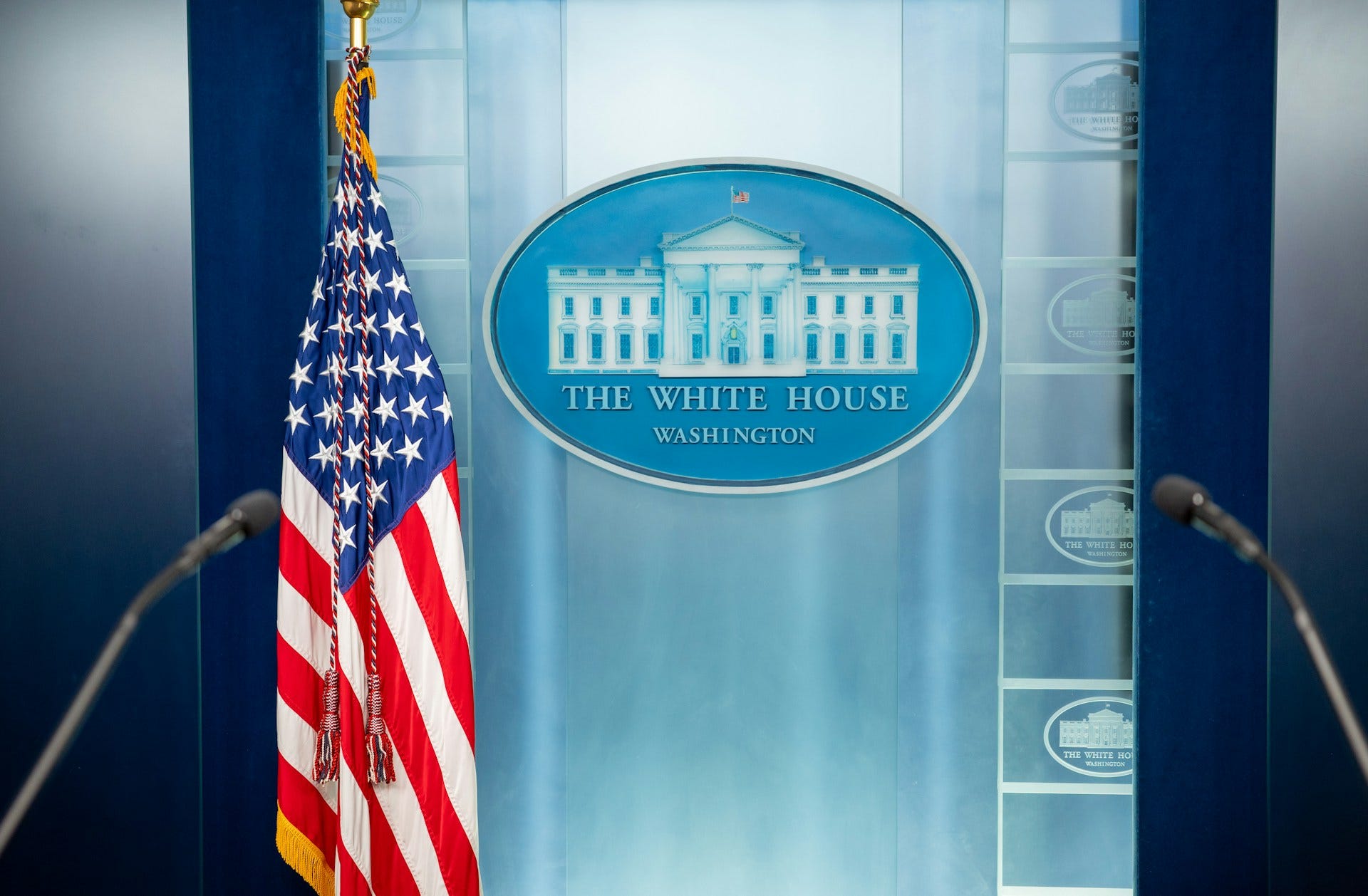
At a White House press exchange on Sept. 8, Trump’s border czar, Tom Homan, was asked about material appearing on the White House’s own website. Homan said, “I have not seen it. Where’s that at?” The reporter told him where it was.
“Okay, I have not seen it.”
Later, another reporter raised the matter. Homan said: “I haven’t seen it. I can’t judge it; I haven’t seen it.”
Homan was right about one thing. If he had not seen the material, he should not judge it.
The obvious next question was: When would he look at it?
The same exchange turned to an ICE incident at a school bus stop in Bridgeport, Connecticut. Homan said he had not heard about it. A reporter pointed out that he had been asked about it the previous week. Homan said he had not been aware of it then either.
Homan said he had asked ICE for information.
Good. That makes sense to me. You do not know, so you find out.
But when the reporter asked whether ICE had gotten back to him, the answer was no.
So, after all the questions and answers, where were we? He still did not know.
Now compare that with Republican Sen. Josh Hawley. In August, Hawley was asked about something Sen. John Cornyn had said concerning Congress and President Trump.
“I don’t know. I haven’t seen it,” Hawley said.
Then he added something important: “So I better look at what he said.”
There it is: “I do not know, so I better find out.” That sounds very different to me.
But politicians are only the instructors. The Washington School of Not Knowing has a much larger student body: the rest of us. Voters say “I don’t know,” too. So do columnists, neighbors, people at church suppers, people on social media, and people standing in line at the grocery store.
Sometimes “I don’t know” is the only honest answer. We cannot all know every detail about every bill, court decision, school-board vote, military action, or presidential policy. But if the matter affects our kitchen table issues like taxes, our schools, our rights, our safety, or the people we elect, “I don’t know” ought to be the beginning of the conversation, not the end of it.
We can read the article. We can look for the original report. We can ask someone who knows more. We can check whether the quotation is real, whether the video has been edited, and whether a social-media post leaves out half the story. We can even change our minds.
That last part may be the hardest course at the Washington School of Not Knowing.
“I don’t know” is not a failure. Refusing to find out may be. Maybe the next question should simply be: When will you find out?
“I haven’t seen it.”
When will you look at it?
“I’m not familiar with the details.”
Will you become familiar with them?
“I haven’t heard about that.”
Would you like us to show it to you?
“I’ll have to get back to you.”
Fine. When?
I am beginning to think Washington may need a new rule. You are allowed to say “I don’t know.” In fact, I wish more people would say it when they really do not know.
But it may be the end of a particular press exchange. It should not be the end of the matter. There should be a second part: “I don’t know, but I will find out.”
That should apply to presidents, cabinet officers, members of Congress, reporters, columnists and voters.
“I don’t know” should open a door—to another question, another piece of information, perhaps a changed mind, and eventually an answer. When it closes the door instead, I have one more question:
Why?
***
Phil Huber is a retired Army Reserve colonel, federal civil servant and consultant who writes on civic education. He lives in Fredericksburg.