
By Phil Huber, ADVANCE COLUMNIST
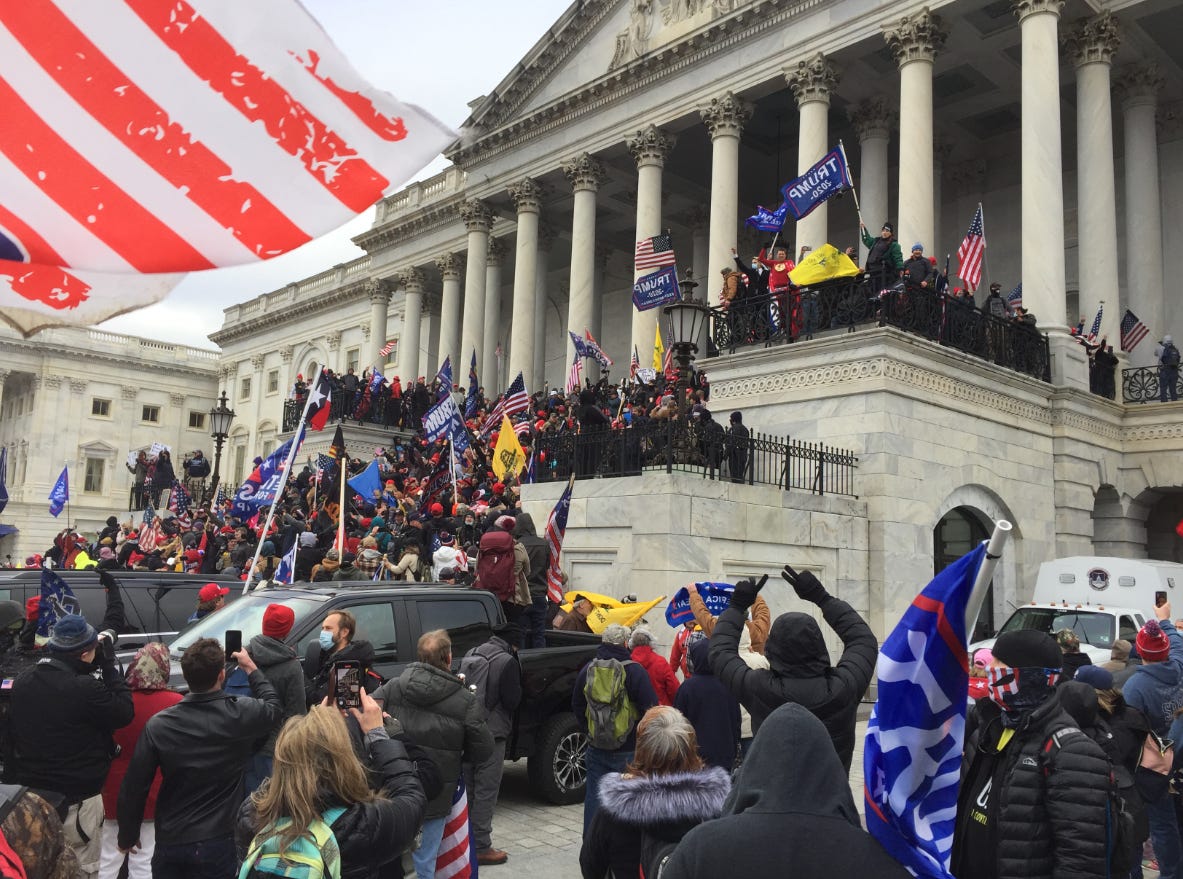
On Tuesday I watched former federal special prosecutor Jack Smith testify before the Senate Judiciary Committee about his investigations into President Donald Trump’s actions related to the January 6 insurrection, the 2020 presidential election, and mishandling of classified documents. It was interesting, as hearings often are when old battles are brought back to life. But I am not writing about that hearing. I want to go back to January 6, 2021, and put down the record in the spirit of Sgt. Joe Friday, the Los Angeles police detective in Dragnet: Just the facts.
At 1 p.m., Congress met in joint session to count the electoral votes from the 2020 election. Vice President Mike Pence presided as President of the Senate. Before the session, Pence had told Congress that his oath did not permit him to claim “unilateral authority” to decide which electoral votes counted. Outside, President Donald Trump addressed a “Save America” rally on the Ellipse. He repeated claims that the election had been stolen and told the crowd that Pence had to “come through.” He urged people to walk to the Capitol, where Congress was meeting, and said they would give Republican members “the kind of pride and boldness that they need.” The House January 6 committee concluded that Trump sent the mob to the Capitol; the Justice Department later alleged that people who had traveled to Washington and to the Capitol at his direction broke through barriers and advanced on the building.
A precise crowd total is not available. The public record does support a useful distinction: an estimated 10,000 people entered Capitol grounds and at least 2,000 entered the building. That is why readers should resist claims of certainty about an exact total while also resisting efforts to make the event sound like a small, harmless trespass.
The outer perimeter was breached shortly before 1 p.m.; one official timeline places the first breach at 12:53 p.m. At 2:13 p.m., rioters entered the Capitol itself. The Senate recessed, Pence and congressional leaders were evacuated, and the House and Senate chambers were locked down. Capitol Police Officer Eugene Goodman diverted rioters away from the Senate chamber. The attack had interrupted the count of the electoral votes.
The violence was neither abstract nor victimless. Congress found that more than 140 law-enforcement officers suffered physical injuries, including 15 who were hospitalized. One of them, U.S. Capitol Police Officer Brian Sicknick, died the following night after suffering two strokes. The D.C. medical examiner ruled the death natural causes, while Capitol Police said he died in the line of duty after defending Congress. Four other officers who responded died by suicide in the days and months afterward; the record does not establish that the attack legally or medically caused every one of those deaths. Court records describe rioters throwing objects, striking officers with batons and other blunt instruments, using chemical sprays and fire extinguishers, deploying electrical shock devices, crushing officers against doors and walls, and joining coordinated “heave ho” pushes against police lines. These were acts by members of the mob—not a description of every person who attended the rally or entered the grounds.
At 2:24 p.m., while the attack was underway and Pence was at the Capitol, Trump posted that Pence “didn’t have the courage” to do what should have been done. That message came after Pence had refused the demand that he reject or delay certified state electoral votes. The point here is not to relitigate anyone’s politics. It is to recognize the sequence: Congress was under attack; the Vice President had been evacuated; and the President publicly renewed pressure on him.
The security response was slow and confusing. A bipartisan Senate investigation found failures in intelligence sharing, Capitol Police planning, command communications, and the process for obtaining National Guard assistance. It reported that the Capitol Police chief lacked unilateral authority to request Guard support during the emergency. The D.C. National Guard began arriving at the Capitol Complex at 5:20 p.m., more than four hours after the first barriers were breached.
At about 8:06 p.m., the Senate reconvened. Pence said, “Today was a dark day in the history of the United States Capitol,” but added that “the people’s work continues.” He told those who had “wreaked havoc” that they “did not win.” Congress completed the count in the early hours of January 7, and Pence announced Joseph R. Biden Jr. and Kamala D. Harris as President-elect and Vice President-elect.
Those are the facts that should come before the arguments. People may disagree about culpability, punishment, security failures, or the lessons that should be drawn. But no serious civic discussion can begin by erasing the clock, the crowd, the violence against police, the evacuation of elected officials, or Congress’s return to its constitutional duty. If we cannot agree on what happened, we cannot honestly argue about what it meant.
***
Phil Huber is a retired Army Reserve colonel, a federal civil servant, and a retired consultant who writes on civic education. He lives in Fredericksburg.

And we watched it on live television with our own eyes! Thank you, Phil.