
By Phil Huber, ADVANCE COLUMNIST
WASHINGTON (AP)—Defense Secretary Pete Hegseth has announced that he is rolling out a new screening program for “testosterone deficiency” among troops, calling it necessary to allow them to operate at their “absolute best.” The screenings will be conducted annually as part of service members’ required medical screenings for those 30 and older, he said. Troops under 30 can volunteer to be tested. In a video on social media, Hegseth said receiving testosterone replacement therapy would be voluntary.
***
On Tuesday, August 4, Erin Banco, Mike Stone, and Jonathan Landay of Reuters reported that the U.S. has used “virtually all” of its highly accurate long-range missiles that can strike accurately from a safe distance. Sources told the journalists that the dwindling missile supplies could make it more difficult for the U.S. to deter Russia and China. The journalists reported that the shortages contributed to President Donald J. Trump’s decision not to resume massive strikes against Iran. —Heather Cox Richardson, “Letters from an American.”
***
Drive east from Fredericksburg toward Dahlgren and you encounter the fences and warning signs surrounding one of the Navy’s key testing ranges. Head north and you find Marines pounding Quantico’s trails. Around here, we know something about real toughness and real weapons. We smell jet fuel, hear live fire, and watch military families juggle deployments and Little League.
That is why Pete Hegseth’s version of “toughness” at the Pentagon should alarm this region.
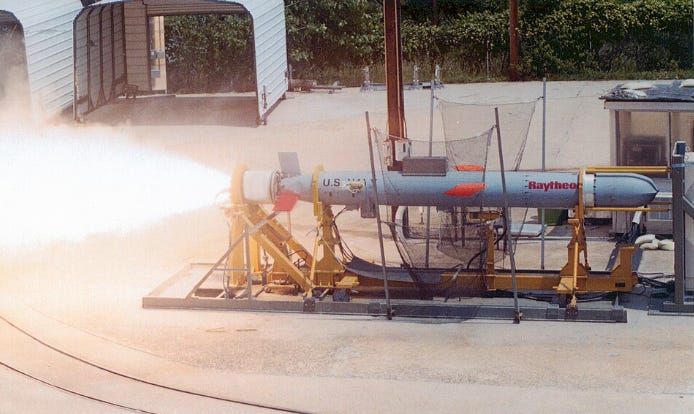
Donald Trump’s defense secretary has decided that strengthening the armed forces requires “little t” testosterone testing and a war on “woke” diversity. He attacks the idea that “diversity is our strength” and promises to take a “sledgehammer” to inclusion and contracting programs. At the same time, he is presiding over a dangerous shortage of “Big T”—Tomahawk missiles and other precision weapons—in the middle of a war with Iran.
For people around Fredericksburg, this is not abstract. Our neighbors are Marine NCOs, Dahlgren engineers, retired colonels, military spouses, and defense-industry workers. They understand that you cannot refill a missile magazine with bravado or blood tests. You cannot keep Marines safe in the Gulf or sailors safe in the Pacific by pretending testosterone scores measure combat power.
Hundreds of Tomahawks have been fired in Iran, and Independent estimates indicate that stocks of several high-end munitions have fallen sharply from prewar levels. Rebuilding those inventories will take years. According to reports, Japan has been warned of delays in receiving approximately 400 Tomahawks because of increased American wartime demand. That is the Big T story missing from the primetime monologues: We are expending weapons faster than we can replace them while our top defense official devotes his attention to little t and “woke” talk.
Even Hegseth’s tough‑guy act looks half‑finished. In the viral “Pete and Bobby” fitness challenge videos, he and RFK Jr. pump out push‑ups and pull‑ups at camera‑ready speed, but trainers and commentators have flagged the form as sloppy, with range of motion breaking down as the reps pile up. It’s performative toughness—enough strain for the clip, not enough discipline for a drill instructor—and it mirrors his Pentagon: projecting an image of strength while cutting corners where strength actually matters, from weapons stockpiles to promotions.
Around Fredericksburg, toughness does not come from a lab report or staged workout. It is the Marine who rises at 0400 to run before formation, the Dahlgren technician who adjusts a guidance system until a test shot lands where it should, and the reservist driving up I-95 for weekend drills. It is also the spouse—often a woman—who holds a household together during deployments. Hegseth’s rhetoric replaces that reality with a cartoon.
He claims to have eliminated DEI—diversity, equity, and inclusion—from the military. In truth, he has created his own DEI: Domination, Exclusion, Impunity.
Domination begins with how he treats the people who work for him. Hegseth warns Pentagon employees that DEI initiatives and “woke garbage” must disappear if they want to remain. He portrays diversity efforts as an enemy within rather than an attempt to correct longstanding bias. One ideological faction is claiming the power to define who belongs.
Exclusion appears in the promotions pipeline. Hegseth has intervened to block or delay senior officers selected through the normal merit-based process. A disproportionate number of those affected are women and officers of color. Army colonels selected for brigadier general have seen their careers abruptly halted. Navy officers headed for one-star admiral have been removed from promotion lists. In some cases, their apparent offense was an association with diversity efforts—or simply representing the changing face of the force.
For a region with so many military families, that exclusion is personal. Black officers, women in uniform, and children who watch their parents put on boots each morning are our neighbors. Politicized promotions tell young officers that performance may matter less than fitting an approved demographic and ideological mold.
His crusade targets programs intended to broaden opportunity and identify unequal treatment. It targets programs capable of holding leaders and institutions accountable. He has launched a sweeping review of Pentagon contracts awarded through the 8(a) program, while promising to take a “sledgehammer” to what he calls the government’s oldest DEI program. That threatens firms—including some in our region—that use those opportunities to innovate and provide good jobs.
He has also moved to eliminate diversity offices and oversight mechanisms that track discrimination and protect equal opportunity. Removing those safeguards makes discriminatory patterns in promotions, assignments, and contracting harder to identify and challenge.
Domination, Exclusion, Impunity. Hegseth’s DEI is appearing not only in speeches but in firings and forced retirements. He has removed or sidelined senior military leaders, including the Army chief of staff during the Iran war, thinning the ranks of experienced commanders while missiles and interceptors are already in short supply. Civilian review of military promotions should be rare and careful. Hegseth has turned it into an ideological weapon.
This is not merely bad personnel policy. It is bad war policy. Promotions move proven battalion commanders into regiments, brigade commanders into divisions, and capable staff officers into joint headquarters. Freezing or politicizing that process weakens the decision-making that keeps service members alive.
Meanwhile, Hegseth treats military health policy as another culture-war battlefield. Testosterone testing and slogans about masculinity do nothing to meet the force’s real needs: preventive medicine, mental-health care, family support, predictable rotations, and protection against burnout. For families waiting through deployments and worrying about loved ones overseas, converting health care into an ideological performance is irresponsible and cruel.
Real toughness has different ingredients:
An honest accounting of weapons and equipment shortages, followed by credible plans to correct them.
Promotion systems that reward merit, experience, and integrity—not favoritism and fear.
Health and family policies grounded in evidence and respect, not stereotypes about who is “manly” enough to serve.
We have a right to demand that kind of toughness from civilian leaders. In wartime, the Pentagon should be protecting troops, rebuilding the arsenal, and preserving the professional leadership needed to prevail—not scoring points in a domestic culture war.
Pete Hegseth’s little t and his DEI of Domination, Exclusion, Impunity give us the opposite: depleted magazines, a chilled leadership climate, and a military treated as a political prop. The Marines who run through our streets and the sailors, scientists, and engineers who work at Dahlgren deserve better. So do their families.
From Fredericksburg, we may not control who serves as defense secretary. But we can refuse to confuse performative cruelty with strength. We can insist that when the next budget is written and the next promotion list reviewed, Big T readiness and genuine inclusion—dignity, equality, and integrity—come first.
***
Phil Huber is a retired Army Reserve colonel, federal civil servant and consultant who writes on civic education. He lives in Fredericksburg.

As always Phil, your insider view on military issues rings true. Thank you for this thoughtful piece.
Our nation is in the perilous position you document because the president appointed a guy as Secretary of Defense whose main qualification, according the president himself, is that he looks like he’s “straight out of central casting”. Like so many of his fellow appointees, he lacks substance.
And that the Republican-controlled congress keeps giving the president everything he asks for tells me two important things.
The first is that, although the term was coined to describe those who resist the president , Trump Derangement Syndrome much more accurately describes what ails most of the members of the Republican Congressional caucuses and just about every MAGA zealot I’ve ever met or whose opinions I’ve read.
And second, the best treatment for TDS is to vote those Republican congressional enablers out of office in November.
The FXBG Advance's Trump Derangement Syndrome is so off the scale that you make Jacobin magazine look like a Charlie Kirk newsletter. Have to laugh at how you end up giving Lloyd Austin a pass when it comes to "readiness" (except among transgender soldiers with whom he was infatuated) and you never mention the impact of the weapons we have given to Ukraine over the last three years on our stockpile. There is nothing our soldiers, sailors and Marines have done or are doing against Iran that suggests "readiness" has failed. Last year's B2 strike during Operation Epic Fury was a master lesson in planning and execution as well as skill and daring. I suspect that in some quarters there is a great deal of hidden support for Iran as long as they can make Orange Man Bad look bad.