
By Kirk Evans
ADVANCE FOOD COLUMNIST
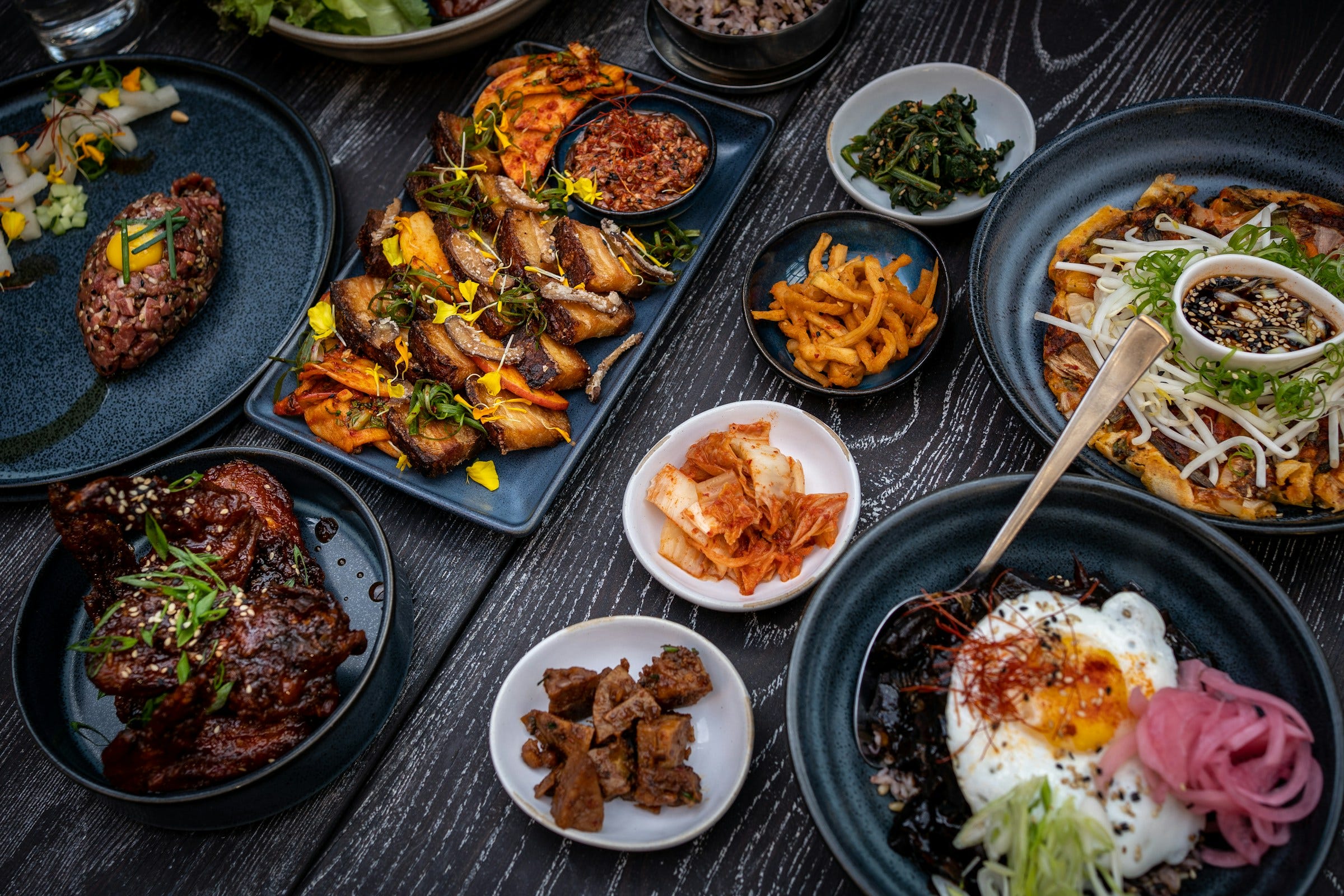
My mother Mary Jean showed me how to eat and how to cook. She was born in the 1930s in Wisconsin, moved to D.C. in the 1960s. With her Midwest upbringing, it would have been reasonable to expect a 70s childhood menu of bland beige dishes and processed food punctuated by the occasional green veg cooked into wilty submission, but she was an anomaly. She mostly cooked from scratch, steaming fresh vegetables to tender-crisp and being sparing with the butter. She took us to Ethiopian restaurants to sit on the floor around a communal table to eat with our fingers. For dinner one week, she’d grab takeout Vietnamese spring rolls and bun cha. The next week it would be Lebanese shawarma and stuffed grape leaves. Her signature potato salad was not the standard Midwest mayo-heavy variety; it was lively and bright, spiked with curry powder and crisp celery. My sister still makes it today, and I’m so glad she does.
When we were in our early teens Mom brought home a new food she told us was called “bulgogi.” Salty-sweet shavings of beef and rice. I loved it. By the time I was in my late teens, I was taking my lunch breaks at Korean restaurants whenever I could. I loved anything red and spicy: sundubu jjigae, ojingeo bokkeum, yukgaejang. I loved the banchan: the little side dishes of kimchi, pickled daikon, salty black beans and so many others.
In my 20s I used to go to the very busy Hee-Been in Alexandria, which offered a huge, beautifully arranged Korean lunch buffet where my brother and I would meet and gorge ourselves alongside a crowd that was probably 80 percent Korean. I’ve never been shy about dining solo, and one noisy weekday lunch at Hee-Been, I sat by myself and watched a big corner booth fill up with well-dressed Korean women in their 60s and 70s. There must have been 15 of them. They chatted and laughed, swapping stories as their table was filled and cleared, filled and cleared.
I was struck by how lucky they were: To meet with your pals on a random Wednesday and eat glorious food and laugh and talk. It stuck with me, this attitude about food and friendship. I admired them so much. Hell, I was jealous of them. I still am.
Many years later I witnessed this coming together when I worked with an all-Korean crew in my job at a body shop in Fairfax. They used to tease me good naturedly when I would dip out to H-Mart for lunch and come back with a bowl of steaming sticky black noodles called jjajangmyeon, and again when I would hog the microwave for a mid-morning snack of Shin Ramyun which smelled up the office and made everyone come to my desk to bum a soup. I kept a cardboard box full of different types of ramen on the floor behind my desk and told the staff to help themselves—my version of a candy dish. I think my respect for Korean food is what made them invite me to a mid-day crew bbq.
Every couple of months, the crew would stop work in the middle of the day and take an hour or two to relax and eat potluck grilled meats, rice, noodles, and banchan. I was happy to be included when they invited me to join them, and I offered to bring galbi. A few years prior, I’d been at a BBQ at my friend James Kim’s home, and his wife Julie had served LA-style galbi, which consisted of beef short ribs, cut thinly across the bone into strips, marinated, and grilled over hot coals. This dish of grilled strips of sweet and salty rib meat, tenderized by kiwi fruit and fragrant with ginger, garlic and sesame, was completely new for me. I chewed every scrap of meat off the charred bones and sought out Julie to tell her how amazing her ribs were.
“Oh thanks!” she said. “The recipe is my mom’s. Do you want it?”
I did. Over the intervening years I made it many times, never changing or omitting a step. I knew it was gold, and worthy of sharing with this hard-working crew of craftsmen and laborers.
When Service Advisor Junrok came over to my desk to invite me to their lunch grill-out, he was surprised by my offer to bring galbi.
His eyebrows went up. “You make galbi?”
“I do,” I said. “And it’s really good.”
Junrok didn’t smile. He looked seriously at me and said, “I will bring my grandmother’s galbi, and we will see whose is better.”
I admit I swaggered a little bit. “My recipe is from a Korean grandmother too,” I said. “Bring it on.”
The day before the grill-out, I prepared a big Ziploc bag of marinating ribs. enough for 10 people. I also made a huge batch of the delicious, cooling cucumber salad called oi muchim, and kept the components separated so I could combine them before serving, and they would not get soggy. The next day, the shop closed at 11, and they rolled out a couple of janky, rusty charcoal grills somebody must have picked up at CVS 10 years before. They lit the coals and we started laying out our dishes, a huge amount of food: Noodles, rice, salads, chicken, beef, and a big tub of kimchi. When it was time to start cooking, I laid my galbi on the grill and left it to the guys to turn and take the meat off when it was ready.
Junrok didn’t bring his ribs that day. He told me he was spooked by my confidence and didn’t want to get shown up.
I spent the next few hours eating, drinking cold tea, and laughing with these friendly guys through the middle of the day. At the end, one of the body men who spoke only Korean approached Junrok, who translated the conversation for me later.
“Who’s the weird American?” he said. “His ribs are very good.”
I was so proud to be known as the Weird American by these Korean friends.
A month later, the owner of the body shop told me he was bringing the crews from both his shops together for a big dinner at Sō Korean Barbeque in Centreville and asked if I’d like to come. I was grateful to be invited, and arranged with my brother to sleep at his place just down the road so I wouldn’t have to drive back to Fredericksburg afterward. The dinner started at 7—35 guys sitting together at one long table. I soon learned how to drink with Koreans, and the proper way to eat Korean BBQ.
The younger guys started calling me ahjussi, which means “uncle” or “sir.” They passed me endless plates of food and endless cups of soju and cold glasses of beer—using two hands—and I accepted in kind. My ears rang from the volume of the lively conversation and laughter in the crowded restaurant. I was one of the last men standing at about 11 p.m. when we finally shut it down. That dinner remains one of the high-water marks of my life.
To this day, cooking and sharing good food is my way of telling people how I feel about them. My mom died in 2014, but she would be so proud and happy that my brother, my sister, and I have all continued her traditions, and passed them on to our kids. There is love and truth in a meal well-prepared and shared.
Mom taught me that.
***
LA Style Galbi
Credit to Julie Choe Kim and her mother
½ c sprite
½ c soy sauce
½ c sugar
1 tsp black pepper
1 heaping tb minced garlic
1 tb minced ginger
1 kiwi, minced
1 bunch spring onions chopped into 3 inch pieces
1 tb sesame oil
Combine ingredients in a ziplock bag and mix together. Add up to 2 lbs LA-Style beef short ribs (available at Asian grocery stores. You can use flanken, but they are thicker cut and will not be exactly right).
Marinate overnight and grill over a very hot fire until cooked through and beginning to char. You can eat them plain or make a wrap (ssam) using rice, romaine lettuce leaves, thinly sliced scallion, ssamjang (a spicy Korean dipping sauce) and slivers of garlic.
Great piece, Kirk! Made me sooooo hungry!