

By Claire Marshall Watkins, ASSOCIATE EDITOR
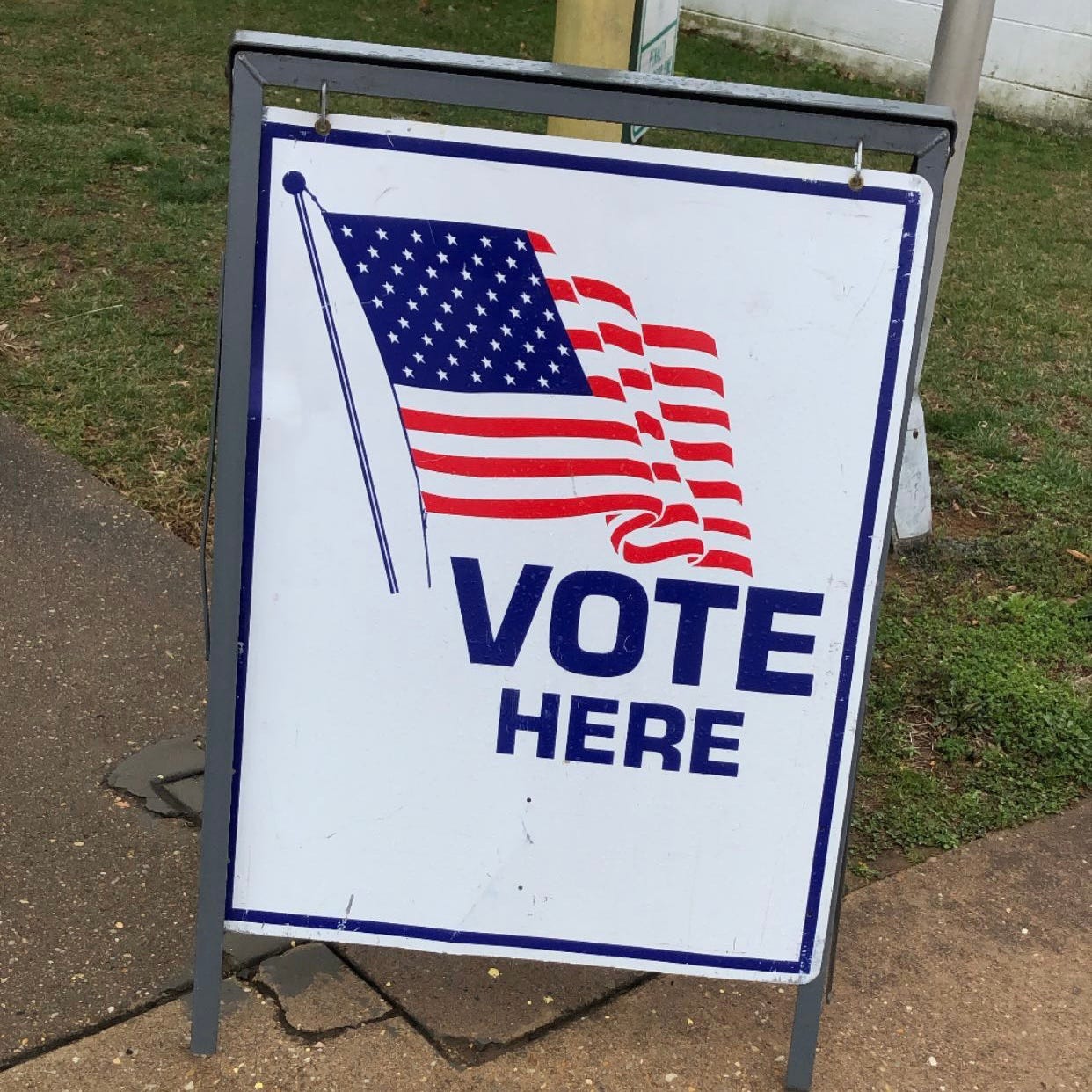
A few weeks ago, I mailed my ballot for the Virginia Midterm Elections to the Office of Voter Registration and Elections in Fredericksburg. I went to my local library, printed out my ballot, and marched straight to the post office. London is a long way from Fredericksburg, but distance isn’t an excuse to disregard a crucial civic responsibility.
This is my second year voting absentee from England. Last year, I followed a similar routine to cast my vote for the Virginia General Election. I had just started my master’s program, so I went to my campus library, printed out my ballot, and marched straight to the post office. It was classically dreary that day, but I didn’t mind walking through the rain––I was determined to make sure my ballot arrived in time. Since absentee voting means no beloved “I voted” sticker, I wore a cashmere sweater, wool skirt, and go-go boots to make the occasion feel special.
I met a girl earlier this year who told me that she moved abroad in January 2025, the day after the presidential inauguration. Her first time voting had been in the 2024 Presidential Election, and she was disappointed with the result. I understand her desire to leave––I moved abroad the same year. But I hope that she, and everyone else disheartened by the current state of American politics, keeps voting.
My first time voting was in the 2020 presidential primaries. It was just two weeks before the world locked down due to Covid-19. Although I knew the importance of voting, the pandemic opened my eyes to policies I had the privilege of not considering before. The economy, foreign policy, human rights, and immigration were factors that informed my voting choice then, and still do today, but healthcare and public safety weren’t at the forefront of my mind when researching who to vote for in 2020.
One of the great things about democracy is that it allows citizens to vote based on their values and priorities. These things might change throughout a citizen’s life and that’s OK, because—hopefully––there will always be another election. During the Covid-19 pandemic, I realised how important healthcare and public safety are to me. I have since made it a point to research what policies candidates support in this area before I vote in any election.
I grew up in a very intentionally politically-involved family. In 2008, my little sister and I sold lemonade to the people in line for President Obama’s talk at the University of Mary Washington, which we then took turns watching from our dad’s shoulders. Throughout high school and university, I was involved in various political and social justice organisations. I am grateful to have politics that align with most of my family’s, even though we haven’t always seen eye to eye on every issue. But beyond that, I am grateful that my family holds fact-checking and free-thinking as core values.
In this election, on November 3, Fredericksburg voters will elect a member of the United States Senate, a member of the House of Representatives 7th District, a member of the school board, and vote on several proposed Constitutional Amendments involving reproductive health, same-sex marriage and voting rights for convicted felons. I encourage every voter to research each of these candidates and proposed amendments. Voting helps determine the laws and policies that impact our communities, and it is important to make informed decisions regarding these matters.
Absentee voting allows citizens like myself, who live abroad, to participate in elections. But we’re not the only people who benefit from it. Active duty military personnel can register and request their ballots through the Federal Post Card Application which sees that each state sends ballots at least 45 days before elections. University students who aren’t able to travel to their hometowns on Election Day can also register for an absentee ballot. There are many reasons an individual may opt to vote by mail, and any registered voter can register to vote absentee.
There are plenty of voter resources out there––websites, community groups, and even campaign events where voters can ask candidates directly about the policies they support. My advice, if you want it, is that if you find yourself consuming political content in an echo chamber––leave it. Regardless of party, an informed voter is a better voter.
For registered absentee voters, ballots postmarked on or before election day and received by the general registrar’s office by noon on November 6 can still be counted. Early voting in Fredericksburg runs until Halloween this year, having started in late September. Election Day is November 3.
Have you made your voting plan?
***
Claire Marshall Watkins is an alumna of the University of Mary Washington and has just completed a master’s in journalism at Goldsmiths, University of London. You can read more of her writing on her Substack, Virginia Magnolia.

Like you, I voted from abroad—Japan—in 2000, not for the declared winner. I went to the U.S. Consulate in Osaka to turn in my ballot since I didn’t apply early enough to vote by mail.