
By Donnie Johnston
ADVANCE COLUMNIST
I bought myself a new gardening tool, one that I hope will keep the deer out of my bean patch.
In past years, I kept guard with a shotgun, but the deer never came to graze on my crops until after they saw my bedroom light go out. And I didn’t want to stay up much past midnight guarding what I had worked and slaved over.
Last summer I began to see ads for various deer repellants on the Internet, most of them electronic, so after the first bean leaf disappeared this spring, I ordered the most obnoxious gadget I could find.
The minute it came I mounted it in the garden. The set-up wasn’t easy because the instructions on the box were mostly in Chinese, as were the verbal guides on the machine itself. But from the few English words that were there (no separate instruction was provided), I got the repellant working.
Now, every five minutes from dusk to dawn, this gizmo, which is solar powered, turns on with lights flashing everywhere, junkyard dogs barking, sirens going off, gunshots being fired and some guy screaming what sounds to me like obscenities in Chinese. And I turned the sound up as loud as it will go.
I placed it adjacent to a scarecrow so that any deer will think there is a human there creating all this havoc. So far, the deer have stayed away, but I still have the old shotgun in the kitchen ready to protect my crops if necessary.
Aren’t you glad you don’t live in my neighborhood? So far, no neighborly threats.
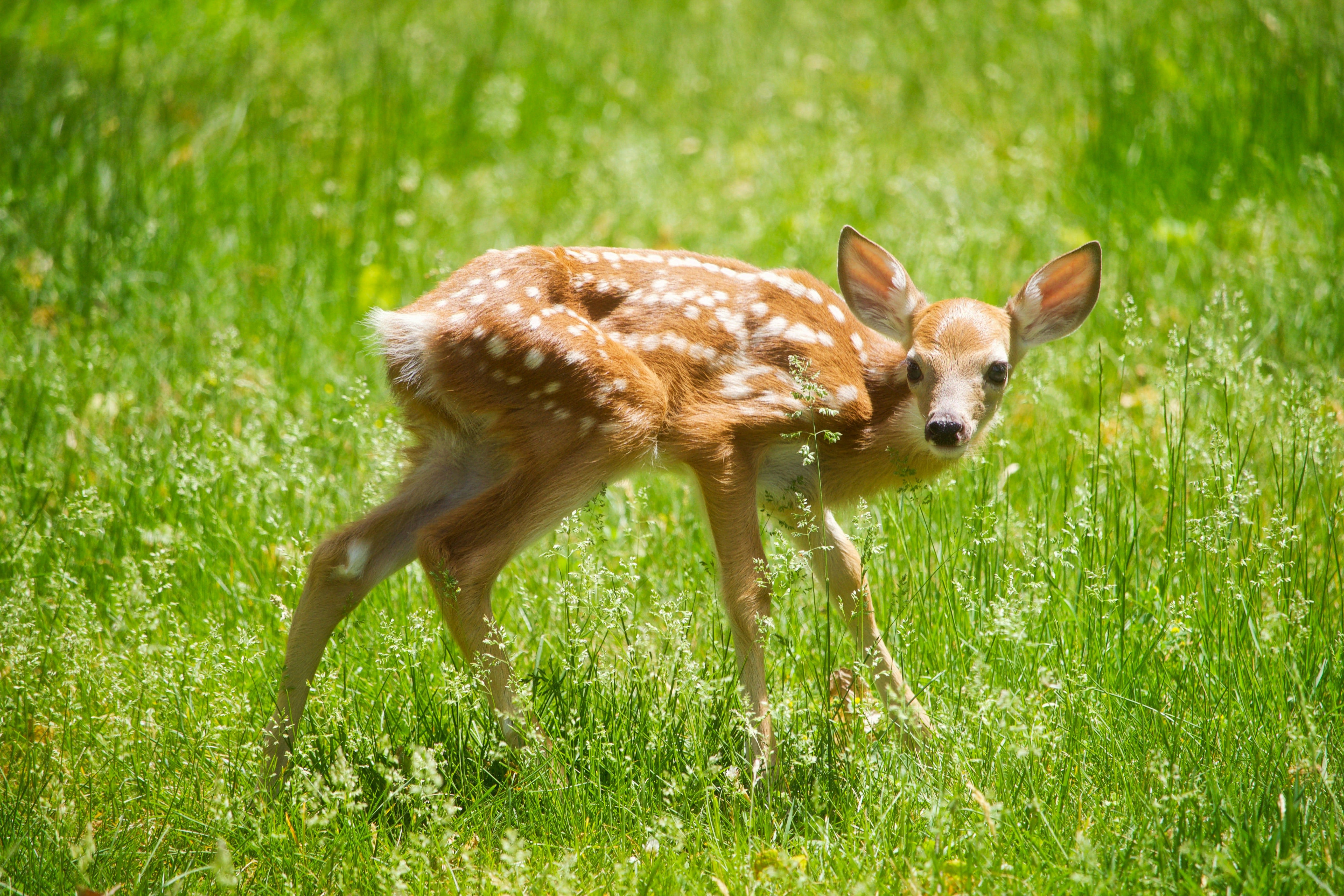
Speaking of deer, fawning season is about over, and doe are beginning to move about a bit more, especially during the day, which is unusual. Three times in the past two weeks I have almost hit deer in broad daylight.
And it will get worse. In the next few weeks, fawns will start following their mothers and they will have no conception that highways are bad for their health. Drive carefully and anticipate deer along the highway, especially in rural areas.
Now is a tough time for fawns, especially those hidden in tall grass. Many are killed when farmers come through with a hay mower. Instinctively, baby deer stay put when danger is close, and too often the man on the tractor never sees the fawn until it is too late.
Coyotes also take many newborn fawns. These animals must feed their young, too.
There is an abundance of squirrels this summer. These bushytails are everywhere, wandering farther and farther from wooded areas in search of food.
I would have anticipated just the opposite. For six or eight weeks last January and February, the ground was encased in ice so thick that humans needed a pick to get to frozen dirt. I would have thought it was a horrible time for squirrels that could not get to the nuts they had buried last fall.
But the squirrel population did not decrease, it increased. One friend had an answer as to why. “Maybe they cuddled too closely in the cold,” she said with a wink.
That’s possible. After all, more humans are born in October than any other month.
I haven’t seen any young turkeys yet, but they should be hatching soon. Turkeys also had a hard time last winter, but seem to have come through in good shape.
The little foxes were back in my neighborhood this spring. For the past 15 or so years, a red fox vixen—likely two or three generations of mothers—has raised pups in an abandoned culvert under the road to my house.
These little guys are, of course, the darlings of the neighbors, and cars stop to check them out every time their little heads pop up out of that hole.
One final nature note. My daughter and her family are traveling through the Northwest, visiting the five continental states her kids have so far missed (we took her and her siblings on the same trips years ago).
She texted from Olympic Rain Forest National Park complaining that they couldn’t do anything because it was raining.
I wrote back: “It is a rain forest! Duh!”