By Phil Huber, ADVANCE COLUMNIST
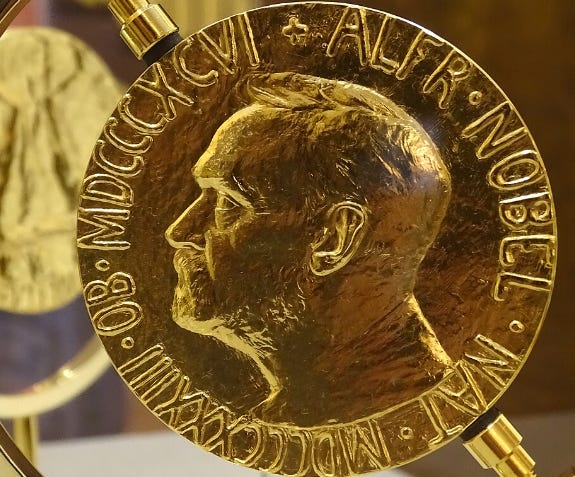
The Nobel Peace Prize is not a contest for the most recognizable name. Recent recipients include an imprisoned Iranian rights advocate and a grassroots organization of atomic-bomb survivors. The committee has repeatedly honored people who challenge abuses of power, not merely those who wield it.
This year it chose South African jurist Navi Pillay. Donald Trump called the decision “disgraceful and embarrassing,” an “indelible stain” on Norway, and said the United States, represented by him, should have won.
The better question is what each record contributes to peace.
Alfred Nobel identified three purposes: fraternity between nations, abolition or reduction of standing armies, and holding or promoting peace congresses. The committee interprets them broadly, recognizing negotiations, disarmament, democracy, human rights and international cooperation. A candidate need not excel in every category. But achievement in one cannot make contrary conduct elsewhere irrelevant.
Pillay’s career helps explain that broader understanding.
Under apartheid, she defended activists and political prisoners. In 1973, she successfully challenged restrictions on legal representation for prisoners on Robben Island, including Nelson Mandela. Her work confronted government power with enforceable rights.
At the International Criminal Tribunal for Rwanda, she helped establish that rape and sexual assault could constitute genocide. Accountability for such crimes is not a distraction from peace. It is part of what makes peace more than the temporary absence of shooting.
She subsequently served as an International Criminal Court judge and UN human-rights chief. Announcing her award, committee chair Jørgen Watne Frydnes said international law and its institutions are “the cornerstone of a more peaceful world.”
Compare that record with Trump’s approach to international accountability.
His conflict with the ICC began during his first term, when his administration sanctioned two senior court officials. Biden lifted those sanctions in 2021. On Friday, Trump’s administration expanded penalties to the court itself. Secretary of State Marco Rubio promised to cut off its resources and cripple its operations. This escalates a longstanding campaign; the Nobel announcement did not create it.
The administration disputes the court’s authority. But disabling an accountability institution is not an achievement for peace. Pillay helped build international justice; Trump’s administration is working to weaken one of its institutions.
Human Rights Watch’s 2026 assessment also documents attacks on accountable government, civil rights, and civil society under Trump. Those are the organization’s findings, not Nobel Committee rulings. They nevertheless belong in an assessment that takes democracy and human rights seriously.
Trump’s strongest case is negotiations. Give him his due.
His administration helped secure the July 2025 Cambodia–Thailand ceasefire, using trade pressure alongside Malaysian mediation. American diplomacy also contributed to managing the May India–Pakistan crisis, although the countries dispute the American role. Shared and contested credit should be weighed, not discarded or inflated into sole ownership.
Armenia and Azerbaijan signed a declaration and initialed a peace agreement at the White House in August 2025. That was real progress. But the treaty remains unsigned and unratified. On October 1, Armenia’s prime minister called the process an “interim milestone,” not its final outcome.
The Rwanda–Democratic Republic of Congo agreement did not end fighting in eastern Congo. Late-September reporting documented continuing clashes involving Rwanda-backed M23 rebels and other forces. Signing an agreement and ending a war are different accomplishments.
Under the negotiation standard, Trump’s record is meaningful but mixed—not the unqualified success he advertises.
Disarmament requires a separate accounting. In January, the Bulletin of the Atomic Scientists moved its Doomsday Clock from 89 to 85 seconds before midnight, its closest setting ever. It warned of worsening global dangers and criticized increasingly aggressive conduct by Russia, China and the United States.
The clock assesses nuclear dangers and other threats, not Trump alone. But it hardly supports his portrait of a dramatically safer world. Nor do ceasefires, by themselves, establish reduced armaments or effective arms control.
Pillay’s record does not supply a direct comparison in every category. What it demonstrates is sustained work protecting rights and strengthening accountability—purposes the committee explicitly recognizes.
The committee has explained why it chose her. It has not disclosed why Trump was passed over; its deliberations remain confidential. This judgment is mine, not a reconstruction of its private reasoning.
Trump deserves credit for diplomatic progress. But his mixed negotiating achievements do not outweigh the contrary evidence on rights, international cooperation and global security.
Peace requires more than powerful people announcing deals. It requires institutions capable of holding power accountable. Pillay’s career strengthened that principle. Trump’s record falls short of it.
***
Phil Huber is a retired Army Reserve colonel and former federal civil servant who writes about civic education, public accountability and national security. He lives in Fredericksburg.