
By Steve Rabson, GUEST COLUMNIST
I first learned about hell at age five. I was playing on the swing in our backyard with Tommy, one of my neighbors. My hands slipped when I tried to climb onto the seat and I yelled “Damn it,” which was what I’d heard my father say when something went wrong. Tommy got a horrified look on his face and put his hand up over his mouth. “Don’t you know,” he said, “every time you say a bad word, a mark goes on your chest and when you die, God counts the marks. If there are too many, you go to hell.” He then proceeded to describe hell.
In those days I was frightened hearing people talk about death, though one of our family friends had tried to convince me that it was just like going to sleep. But the idea that there was something even worse after death sent me into a panic. I bolted out of the backyard, rushed into the house, and scrambled upstairs to my father’s study where he sat at his desk smoking his pipe as usual. Without even saying hello, I pressed him right away to tell me if it was true about hell. My father, a mathematician who preferred to let me figure out the answers to questions myself, said “Well, some people believe….”
I interrupted him immediately. “No, I want to know if it’s true.”
He got up to fill his pipe.
“Tell me if it’s true,” I demanded again.
His continuing silence made me even more desperate for an answer.
“Tell me if it’s true. You have to tell me now!” I repeated this several more times squeezing his arm as hard as I could.
Finally, raising his voice in obvious exasperation, he answered. “No, it’s not true.” Later, I realized he was just trying to get rid of me.
Although no one in our family considers themselves religious, we enjoy a Jewish ethnicity. We had bagels and lox for breakfast in the late 1940’s long before most Americans knew about them. My father taught us some Yiddish and studied Hebrew growing up, albeit under pressure from his father. He quoted Bible verses occasionally to make points he was arguing, and likened people we knew to Biblical personages to illustrate his opinion of them, favorable or unfavorable. Some years he led our family Passover Seder celebrating the Jews escape from slavery, and we joined Jewish families among his colleagues for observance in other years. In 2024 I joined Jewish Voice for Peace in expressing opposition to U.S. transfers of weapons to the Netanyahu government.
From childhood I have learned to admire what religion has contributed to culture with narratives that inspire great works of literature, art, and music, including the works of Bach that I played on the piano.
Yet I will never join any of the world’s organized religions. How could I possibly devote myself to religions with scriptures that threaten non-believers with “death by stoning” (Deuteronomy 17:2-5), “to be put to the sword and their city burned down completely” (Deuteronomy 13:12-15), “thrown into the lake of fire” (Revelation 20:15), “eternal fire prepared by the devil.” (Mathew 25:41) or “the Fire of Hell eternally” in the afterlife (The Quran, Surah At-Tawbah 9:68)?
Most followers of these religions disavow such passages or dismiss them as figurative or metaphorical. Yet there have also been followers who embrace them as commandments, sacred duties to carry out persecutions and mass murder as in the crusades, the inquisition, and the pogroms.
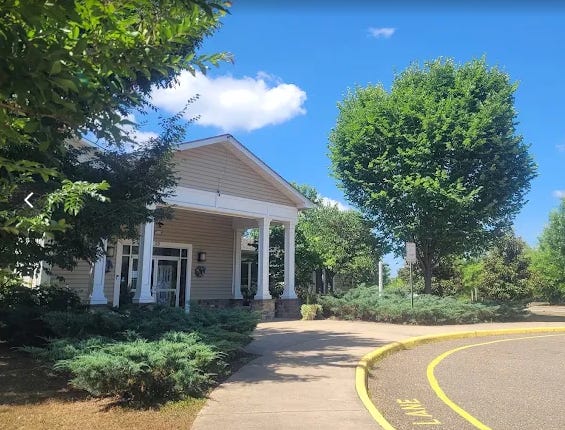
That is one reason I participate in the Sunday services of the Unitarian Universalist Fellowship of Fredericksburg. The fact that they hold services on Sundays might be one of the few things they have in common with the two most widely practiced religions in this country, Catholicism and Protestantism. They espouse no religious doctrine or obeisance to religious symbols or personages, historical or mythical. Instead of sermons by a head cleric, the Fellowship offers presentations by members with special expertise on timely topics.
Recently, Dr. Patrick Neustatter, a physician from the U.K. and long-time Fredericksburg resident, spoke at the UUFF and explained that what’s wrong with our healthcare system is the pervasive corruption of “greed” (number two of what Western religious texts call The Seven Deadly Sins). This is enabled in the U.S. by largely unregulated lobbying in Congress and state legislatures on behalf of hospital conglomerates, pharmaceutical corporations, and insurance companies. Dr. Neustatter’s presentation was followed by testimonials from individuals in the congregation who have struggled in desperation and futility with a system that prioritizes wealth care over health care.
Such a community might be called “ecumenical,” except that it reaches out beyond religion, extending to those who value the ethical over the liturgical. It advocates reforms in today’s world rather than threatening punishment in this world or the next.
***
Steve Rabson is a jazz pianist, retired professor from Brown University, and current adjunct Instructor at the University of Mary Washington.

I will be grateful forever to the UU Fellowship for introducing me to your mother. Alice was one of my favorite people and I will always remember her. She really got me one day when she stood on her tiptoes looking pretty much at my chin and told me she didn’t like my first name. I told her I was sorry she didn’but that I had had nothing to do with it. We both smiled. She was an unforgettable character, and I mean that only in the nicest way.
Sara Toye