
By Phil Huber, ADVANCE COLUMNIST
A president does not need proof of espionage before taking precautions. He needs a credible warning.
I take that responsibility personally. During my military and federal civil-service careers, I held clearances ranging from Secret to Top Secret with access to Sensitive Compartmented Information, or SCI. Renewals and upgrades brought repeated investigations into my background.
In the private sector, I also served as my company’s security officer. Along with maintaining my own clearance, I managed the company’s Secret and Top Secret facility-clearance responsibilities. Inspections and renewals were recurring obligations, not occasional inconveniences.
Security was serious business. Everyone had to exercise good judgment—including young employees still discovering that “it seemed like a good idea at the time” was not much of a defense.
Those responsibilities did not disappear because someone was successful, influential, or personally trusted by the boss. That is the standard I bring to the latest questions about President Trump.
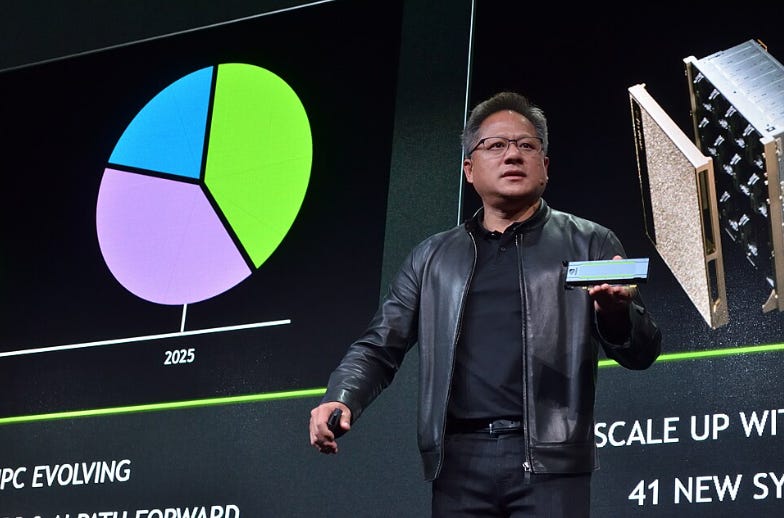
According to The New York Times’ November 10 report, “Despite Denial, Trump Was Told on Trip to China About Spying on Nvidia Leader.” Trump received warnings about Nvidia chief Jensen Huang’s relationship with a woman suspected of working for Chinese intelligence—at least twice within seven months. One reportedly came from Secretary of State Marco Rubio before Huang joined Trump’s May visit to Beijing. Trump subsequently denied hearing about the relationship during that trip.
Reuters reported on November 10 that Trump has publicly defended Huang while saying the FBI is investigating. Lawmakers from both parties are demanding answers and reconsidering restrictions on advanced computer-chip sales to China.
The question is not whether Trump should have pronounced Huang guilty. It is whether he responded to those reported warnings with appropriate precautions.
What safeguards were followed? Were sensitive discussions restricted? Did export-policy decisions receive independent security review? What explains the conflict between the reported briefings and Trump’s public account?
Huang’s company produces strategically important artificial-intelligence chips, and he has pressed for access to China’s market. Nvidia has announced an investigation and says its board has no reason to believe national security or company secrets were compromised. Knowing wrongdoing by Huang should not be presumed.
But uncertainty calls for precautions, not personal reassurance.
Should the president have his security clearance removed?
Technically, a sitting president does not hold an ordinary clearance that a security office can revoke. His access follows from his office. Employees and contractors undergo a different process.
That explains his access. It does not establish his trustworthiness.
The investigations I underwent were not simply searches for criminal convictions. The clearance process evaluates judgment, reliability, trustworthiness, and willingness to safeguard secrets. It considers patterns and whether problems are likely to recur.
The Huang episode warrants scrutiny against an existing record.
In 2017, Trump shared highly sensitive intelligence concerning an Islamic State threat with Russian officials, according to U.S. officials interviewed by Reuters. The information came from an ally. The White House disputed the reporting; Trump defended sharing information with Russia.
In 2019, he published a detailed image of an Iranian launch site. Documents obtained by NPR later confirmed that it came from a classified intelligence briefing. Its detail exposed information about American surveillance capabilities.
Then came Mar-a-Lago. Prosecutors alleged that Trump retained national-defense documents after leaving office, stored them insecurely, disclosed sensitive material to unauthorized people, and obstructed recovery efforts. Those allegations were never proved at trial. The case ended without a verdict on the merits, as Reuters reported on February 11, 2025.
Those qualifications matter. So does the distinction between legal authority and responsible judgment. Presidents have broad authority over much classified information, and some disclosures legitimately serve the public interest.
But permission to reveal a secret does not prevent an adversary from exploiting it.
I cannot predict a hypothetical clearance decision about Trump. I can ask why the standards I had to meet should matter less for someone with access to the nation’s most sensitive information.
Congress should establish what warnings Trump received about Huang, what precautions followed, and whether relevant policy decisions received independent security review. Sensitive details can be examined privately. The public deserves the fullest responsible accounting.
Citizens should demand those answers regardless of party. Would we accept the same behavior from a president we opposed—or an employee we supervised?
This is not about counting rumors or declaring guilt before an investigation. It is about judging conduct and demanding explanations when credible warnings arise.
In uniform, in civil service, and as a company security officer, I understood that protecting secrets was a responsibility—not a privilege to exercise casually.
I expect no less from the president.
His authority is greater than mine ever was. So is his responsibility.
***
Phil Huber is a retired Army Reserve colonel and former federal civil servant who writes about civic education, public accountability and national security. He lives in Fredericksburg.

The nuclear weapons base in Okinawa where I was stationed in the Army with a top secret clearance was supposed to be a "secret," but it was described in an unclassified Army manual read by protesters who picketed outside the gate shouting the names of the weapons inside.
I don't think anyone with a clearance has ever thought Trump would be eligible for one had he not been elected President.