
By Donnie Johnston
ADVANCE COLUMNIST
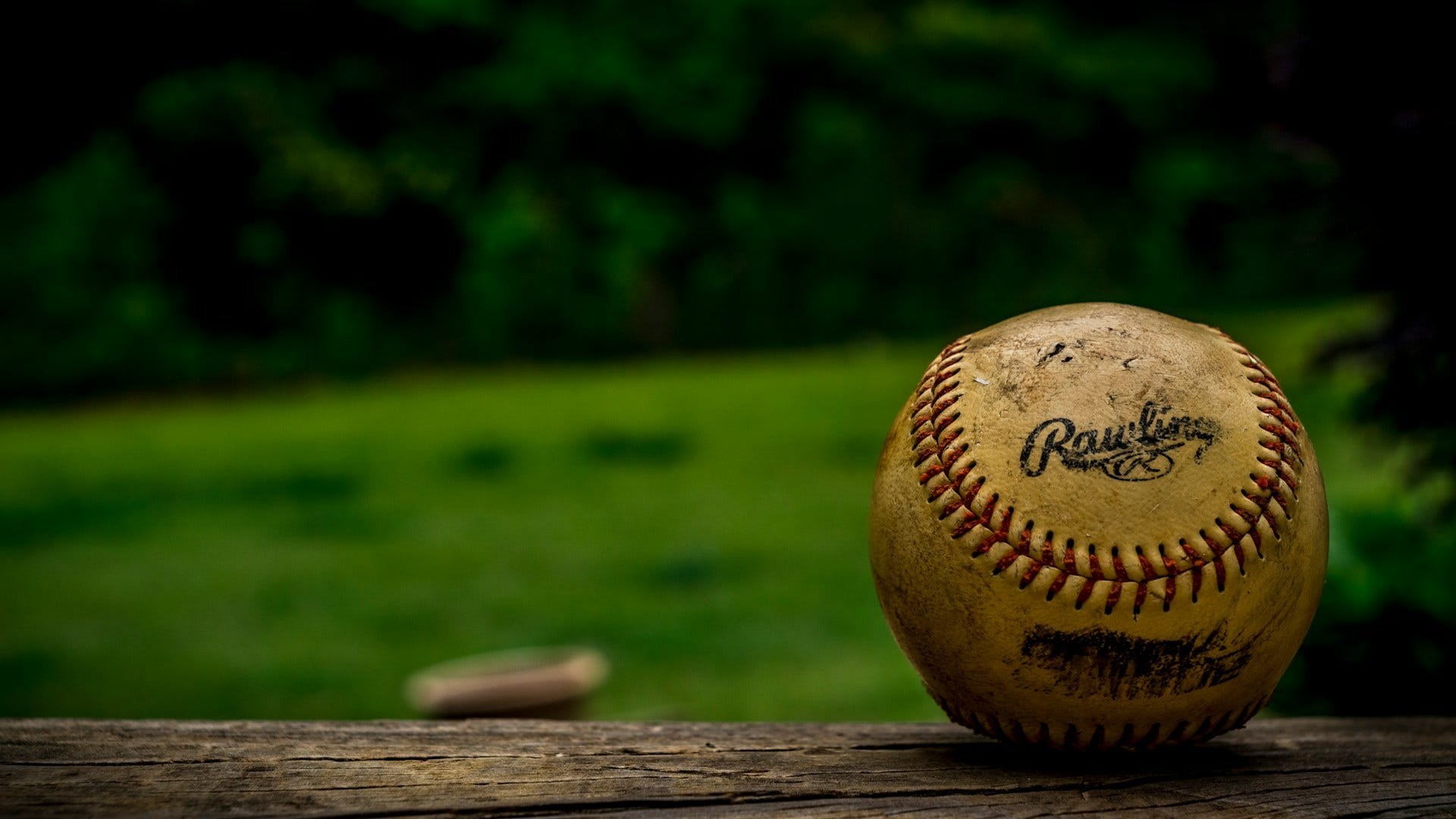
I played baseball on a lot of ball fields during my time, some good, some not so good.
I marvel at the beautifully manicured fields that Little Leaguers play on today and remember all the sandlots that we frequented as kids—and later as adults.
Beautifully manicured? I thought I was in a Major League park when we played an American Legion tournament on the field at the Marine base in Quantico. The infield was so smooth that a groundball seldom took a bad hop. It was wonderful.
In my neighborhood, we played in a cow pasture at the neighbor’s farm, and in the hayfield next door. Both limited our season. When the bull was in with the cows, the neighbor’s pasture was off limits to 10-12-year-old kids, and the only time we could play in the hayfield next door was during the two weeks after the hay was cut and baled.
These days I watch Major League umpires throw out every baseball that touches the dirt and I shake my head. For us, a new baseball was a rarity. We couldn’t afford them. We usually played with the same baseball all summer. When a string broke, we kept playing. When one of the two pieces of leather came loose, we kept on playing, the ball whirring when hit.
Finally, the whole leather covering would come off. No big problem. We just went to somebody’s house, found a roll of tape, and made a new covering. White bandage tape. Black electrical tape. The only difference was the color of the ball. Once we even tried masking tape, but that didn’t last but a couple of innings.
We played with our taped ball until it became so soft that would-be home runs barely made it to the pitcher. But it was a ball and we wanted to play. Finally, we’d unwind the yarn down to the hard rubber center and hit that.
There were times when we didn’t have a baseball, so we played with tennis balls, golf balls, and sometimes even smooth rocks. I liked golf balls because the home runs went farther.
For bases? Cowpies were ideal, and easy to find in the pasture. Only the well-dried ones, of course. Sometimes we had to remove the fresh ones before the game could begin. A shovel was as important as a bat.
In the second grade at Forest Grove Elementary School in Rappahannock County, we had a rough field, but as the seventh-grade boys began to get older (some remained in the seventh grade until they were 15), the “ballpark” needed expanding.
So, we all brought axes with us on the school bus, and during recess and after school we chopped down the locust saplings in the outfield and cut up the wood as kindling to start fires in the school’s coal stove. Try getting on the bus with an ax these days. Nobody got hurt. We all handled axes at home.
Our elementary school had a softball team and I, of course, played. That field was unique in one respect. The school had a coal furnace and they took the residue—which was akin to tiny pieces of glass—and used it to fill in low spots on the base paths. Talk about getting a strawberry when you slid!
To say our high school baseball field was rough was an understatement. The football team practiced in the outfield all fall, and there were cleat marks everywhere. Charging in to field a rolling base hit was a real challenge. If you didn’t get your body in front of it, the ball was likely to hop over your glove and wind up at the elementary school across the street.
As for the infield, well, it was dragged (with an old Farmall A tractor) the morning before every home game. That smoothed it out somewhat, but it also brought stones to the surface. During physical education class, members of the baseball team had the joy of walking between bases and picking up rocks. Making students work would be grounds for a lawsuit today.
And the constant dragging lowered the infield below the outfield.
Some of the worst fields I ever played on were during my softball years. There was one field up in Rappahannock where the outfield had to be bushhogged (not mowed) before a tournament. Blackberry vine stubble was everywhere.
Another was behind a beer joint, and occasionally we had to remove beer cans (and maybe some patrons left over from Saturday night) before we could play Sunday games.
My team’s home field was a pasture, a low flat bottom on the farm where one of our players lived. In one respect, it was kind of like Oracle Park in San Francisco or PNC Park in Pittsburgh because there was water over the right field fence. But this was a tiny stream, its banks covered with blackberry bushes. Home runs were lost until the leaves came off in the winter.
I played on a similar field during my elementary school years. One of the girls in school had a field along a larger creek near her house, and foul balls behind the screen often landed in the water. When that happened, someone had to go downstream to a shallow spot, take off his shoes, wade into the water, and retrieve the ball when it floated by.
A shovel was also a necessary piece of equipment at the later adult field. Before every game, someone had to go down and move the cow piles off the infield and outfield.
There was a fence problem there, too, at least for a while. One of our players had a VDOT connection and was able to secure a long section of worn-out snow fence (no one today even knows what that is) to put up around the outfield.
The problem was, they put it up too far from home plate and no one, not even the strongest hitters, could hit home runs. After half a season of frustration, I had had enough. One hot afternoon, a 12-year-old friend and I went down to the field. He pitched and I hit a couple of balls as far as I could whack them. We marked where they landed and moved the left and centerfield fence 10 feet short of that spot.
Next game, we suddenly had power, and home runs were flying out everywhere. It took a while for the other players to figure out what had happened.
One field I had a little trouble getting used to was at the local convict camp, where we played an inmate team several times each summer. It was the first time I ever played softball with shotgun-wielding guards in towers around the field.
Yep, I played on many fields during my time. Some good, some pretty bad. No matter. As long as we got to play baseball!