
By Phil Huber, ADVANCE COLUMNIST
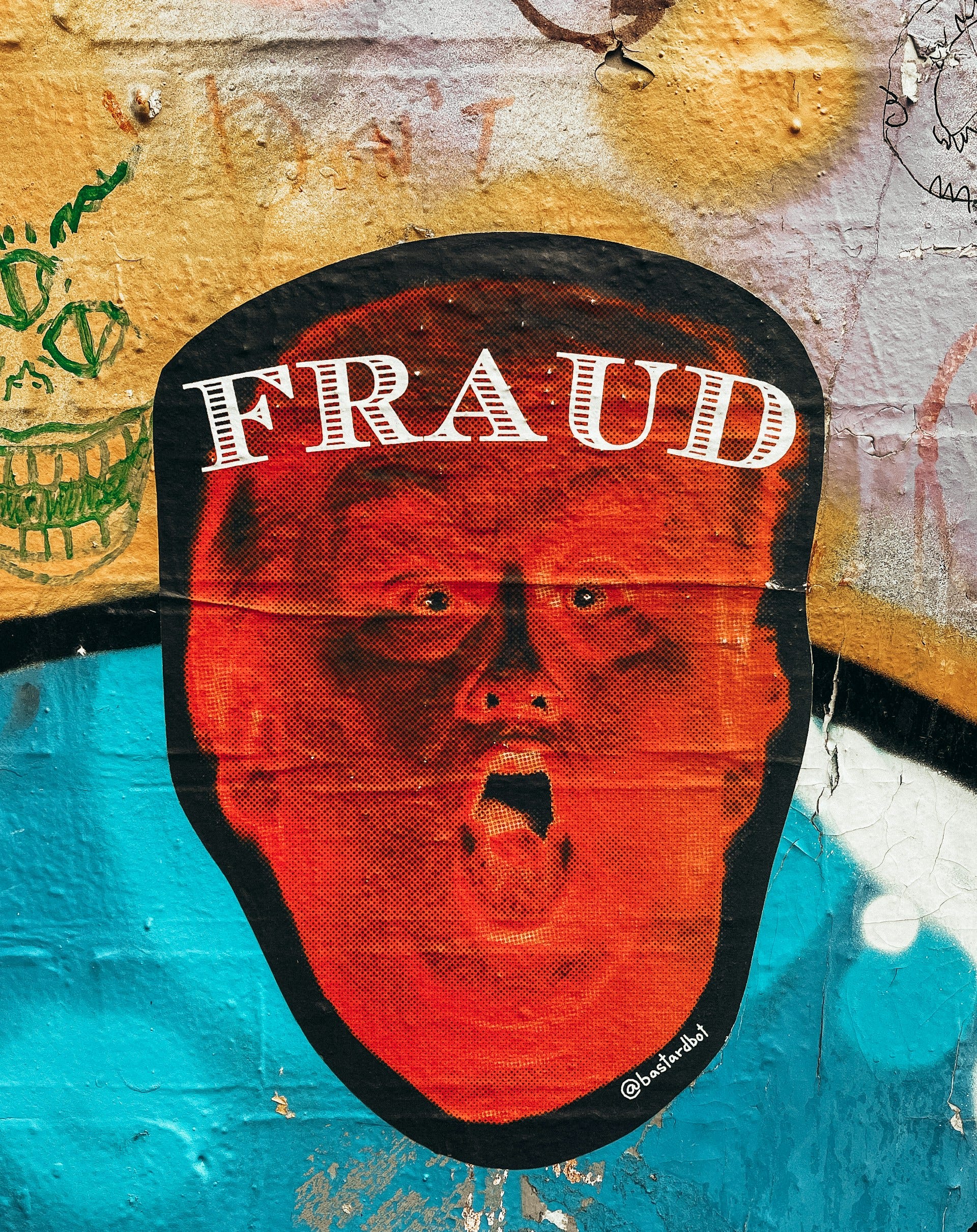
I was born in 1947. My first chance to vote for president came in 1968, when I was away at college. To the best of my memory, I did not vote that year. I regret it.
Since then, I have voted in 14 presidential elections and more state and local elections than I can count. Many ballots were cast by mail, especially while I was on active duty or stationed overseas. President Trump has also voted by mail in Florida this year. Now he urges Republicans to use every lawful option: vote early, vote by mail, or vote in person on Election Day.
I never believed an election was fraudulent simply because my candidate lost. I have had bad mornings after Election Day. Most voters have. That is not evidence of a conspiracy. Democracy does not always consult us first.
Through the early 2000s, I served in military and civilian federal roles. I learned that institutions are not perfect. People make mistakes. Some break rules. That is why we need laws, audits, investigations, and consequences. But error is not conspiracy. Suspicion is not evidence. Repetition is not proof.
Election fraud is not a new phrase. Americans have argued about elections throughout our history. What was exceptional was what followed the 2020 election—the 59th presidential election since the nation’s founding: a sustained campaign by a defeated president and his allies to persuade Americans that a lawful national result had been stolen, despite recounts, audits, court cases, state certifications, and investigations that found no evidence of fraud sufficient to change the outcome.
I write directly to Trump voters. You may have voted over the border, inflation, taxes, judges, or distrust of Washington. Those are real concerns. But a vote does not excuse what a candidate does with the power we give him.
So how much disruption of your own voting rights—and your neighbors’—will you tolerate to address a fraud problem that evidence shows is extraordinarily small?
That does not mean fraud never occurs. It does, and it should be investigated and prosecuted. Secure elections require accurate voter rolls, clear rules, trained local officials, records that can be checked, audits, recounts, and real penalties for real violations.
The remedy must fit the problem. A 2025 National Academy of Sciences review of vote-count audits in 856 jurisdictions across 27 states found a net 2020 change of 0.007 percent—thousandths of a percent. It cannot answer every question, but it found no counting errors remotely large enough to reverse the result.
A fair-minded reader may say that election security is supposed to prevent fraud, not simply punish it later. Fair enough. Prevention matters. So do voter rolls, clear rules, audits, recounts, secure ballots, and penalties for anyone who breaks the law.
But prevention is not a blank check. Before changing voting rules, ask: What documented problem does this solve? Will the rule reduce it? What will it cost lawful voters?
Some readers believe Democrats win with illegal votes cast by immigrants. Investigate that claim—but require evidence. In Iowa, 2,176 possible noncitizen registrations became 277 confirmed noncitizens after review; the state said 35 voted in 2024.
The Heritage Foundation’s Election Fraud Map documents proven cases and real vulnerabilities. Heritage also calls it a sampling and says nobody knows fraud’s full extent. That supports investigation and sensible safeguards, certainly—but not a claim that a national election was stolen.
A voter-list mismatch is not automatically wrongdoing. An elderly veteran without an easily available birth certificate, a married woman whose documents no longer match, or a student voting away from home can be caught in a system built on suspicion. They can be Republicans, Democrats, or independents. A database error does not check party registration before it causes harm.
Many people say they fear widespread fraud. Yet a September PBS News/NPR/Marist poll found that 66 percent of Republicans were somewhat or very confident that their state or local government would run a fair and accurate election. Overall, 75 percent said the same.
That is not unanimous trust, but it matters. Concern often points elsewhere—to another county, city, or state—not to the local officials who handle ballots, audits, and certification. Local trust does not prove perfection. It does show how national suspicion can outrun what voters see at home. A late count or isolated error can be turned into a plot. Say it long enough, and doubt feels like fact.
Conservative voters should also consider a principle they have long defended: states’ rights and limits on presidential power. States’ rights do not mean that states may ignore the Constitution or federal election laws. Congress has a legitimate role. Federal courts do, too.
But the President is not Congress. The Constitution gives states the main responsibility for administering elections and gives Congress authority to set federal election rules. That is why Trump’s March 2025 election executive order raised serious legal questions: it attempted to reshape voter registration and election procedures through presidential direction rather than a law passed by Congress.
If a Democratic president tried to dictate election rules from the Oval Office, demand state voter information, or use federal pressure to reshape how states administer ballots, conservatives would rightly object. The principle should not change because the president has an R after his name.
Trump’s actions do not threaten only Democrats. They can affect the people who support him just as surely. When government starts by treating voters as suspects, Trump voters are suspects, too. When a president undermines confidence in local election officials, he undermines confidence in the people who count Republican votes as well as Democratic votes.
We are less than a month from congressional elections. Trump’s efforts may not change every race this year. Courts, election officials, poll workers, and citizens still provide safeguards. But think about 2028.
For two years, expect more claims of rigged elections, more suspicion of mail ballots, and more pressure on states to change their rules. The danger is teaching Americans to reject an unfavorable result before the evidence is in.
Asking questions is not the problem. Election officials should answer them. Citizens should check the rules, watch the process, report real violations, and demand an investigation when facts warrant one.
The problem is repeating a claim before checking it. The problem is forwarding a video without its context. The problem is treating suspicion as proof because the speaker is on our side.
No political leader can keep that fire going alone. It needs citizens to feed it. Republicans, Democrats, independents—and columnists—all have that responsibility.
Do not feed the fire.
I have voted in 14 presidential elections. I have accepted results I liked and results I did not. That is not passivity. It is the discipline democracy requires.
Ask for secure elections. Demand clear rules. Punish real fraud. But demand evidence before accepting rules that burden lawful voters or presidential powers that would be dangerous in the hands of the other party.
A free election protects no party forever. It protects every eligible citizen’s right to be heard when power changes hands. With 2028 already in view, that protection will survive only if citizens refuse to trade evidence for rumor, local trust for national conspiracy, and constitutional limits for party advantage.
***
Phil Huber is a retired Army Reserve colonel, a federal civil servant, and a retired consultant who writes on civic education. He lives in Fredericksburg.

Apparently you don’t remember the election of JFK ( you were probably to young to break away from your Saul Alinsky studies ) Nixon was ahead then Chicago started counting ballots late that night + JFK WON ! The election of 1800 is a perfect example of both voter fraud , criminal behavior . 3 men vying for the presidency and 2 connived to take it away from Adams . Here in 2020 you really believe FJB got 81 million votes , a candidate who couldn’t get 20 people at a public rally where the places to stand weee marked out 6 ft apart , who had a CAR RALLY THAT HAD 10 CARS IN IT + 3 of them were his cars ! Thank you for serving but I don’t think political elections and those that were stolen are your expertise to comment on . Mail in Ballots till the middle 70’s were reserved for active military overseas + elderly invalids in nursing homes , in those days the local election clerk hand carried ballots to the people ( in my city ) in nursing homes or at home and witnessed the voter making out their ballot . Then Democrats decided that was to burdensome so the mess + confussion started !