
By Phil Huber, ADVANCE COLUMN
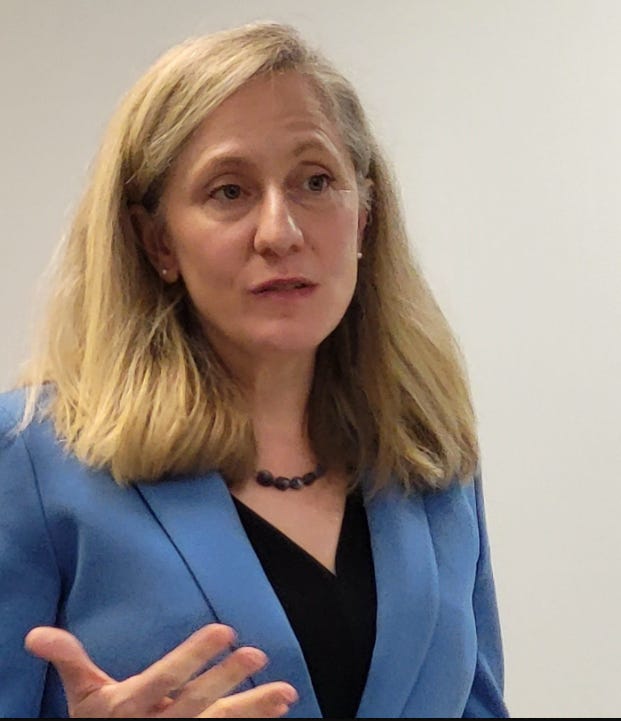
Abigail Spanberger entered the governor’s office with an extraordinary opportunity. She had won by 15 points, Democrats controlled both chambers of the General Assembly, and voters had embraced her promise of practical leadership, effective governance and a focus on affordability. Six months later, several polls show Virginians closely divided over her performance. The latest Virginia Commonwealth University survey places her approval at 44% and disapproval at 47%, a difference within its 4.55-point margin of error.
That does not mean Spanberger has failed. She has signed important legislation affecting health care, housing, energy, education, wages, child care and worker protections. But the contrast between her election victory and current standing offers lessons for Spanberger, the General Assembly—and voters.
The first lesson is that winning an election is not the same as earning lasting approval.
Some Virginians voted enthusiastically for Spanberger. Others voted against Winsome Earle-Sears, Donald Trump or Republican policies. Still others wanted stability after years of political turmoil. Her victory represented a broad coalition, but not necessarily permanent loyalty.
Once Spanberger became governor, voters stopped comparing her with an opponent and began comparing her performance with their expectations. That is a more difficult standard.
The second lesson is that passing legislation and producing visible results are different stages of governing.
Spanberger has fulfilled many specific promises. She signed legislation that will raise Virginia’s minimum wage to $15 by 2028. She approved paid family and medical leave, paid sick leave, renter protections, health-care reforms and investments in education and child care. Her administration says her entire Affordable Virginia legislative agenda became law within her first 100 days.
That is a substantial record. But families experience government through rent, grocery prices, utility bills, insurance premiums and prescription costs. If those expenses remain high, voters may not feel that affordability has improved.
That does not mean Spanberger—or Virginia government—is responsible for all those costs. Tariffs, interest rates, federal health-care decisions, reductions in the federal workforce and broader economic conditions have an enormous effect on Virginia families. A governor cannot control those forces, and no state law can quickly overcome them.
Virginia is especially vulnerable to federal disruption because so many residents work for federal agencies, serve in the military or depend on federal contracts. When Washington cuts jobs, cancels contracts or raises prices through tariffs, the effects move quickly through Virginia’s economy. State government can soften some damage but cannot replace federal resources.
State action also takes time. Revenue must be collected before it can support schools, housing, health care and energy infrastructure. Housing reforms require approval, financing and construction. Workers must be recruited and trained. Energy projects may take years to produce savings.
The fair test is not whether Spanberger reduced the cost of living in six months. It is whether she established credible policies, explained when they will take effect and created ways to measure whether they work.
The third lesson is that unified party control creates shared responsibility.
Democrats control the governor’s office, House of Delegates and state Senate. Voters expected them to govern efficiently. Instead, House and Senate Democrats fought over data-center tax incentives and revenue. Spanberger’s vetoes and amendments involving skill games, cannabis and collective bargaining produced additional disputes.
The budget was not completed until June 29, one day before the fiscal deadline. Virginia avoided a shutdown, but the public saw months of internal disagreement.
Voters rarely determine whether the House, Senate or governor was most responsible. They see Democrats fighting with Democrats. Because Spanberger is the state’s most visible official, she absorbs much of the damage.
Disagreement is unavoidable, but effective governance requires a reliable way to resolve it. Spanberger and legislative leaders need to identify conflicts earlier, negotiate compromises and explain their decisions. Virginians should see debate followed by resolution—not prolonged public warfare.
The fourth lesson is that popular policies do not automatically produce a popular governor.
The VCU poll found broad support for paid sick leave, charging data centers additional fees and Virginia’s participation in the Regional Greenhouse Gas Initiative. Yet voters were divided over Spanberger.
Partisanship helps explain the contradiction. Many Republicans oppose her even when they support individual policies she signed. Republican advertising began unusually early during the redistricting campaign. Gun legislation, immigration decisions and national divisions further hardened opposition.
Still, Spanberger cannot simply blame polarization. She must retain the independents and moderate Republicans who helped elect her by remaining focused on affordability, public safety, competent government and Virginia’s economy.
The failed redistricting effort was particularly costly. Whatever its strategic justification, opponents used Spanberger’s previous criticism of partisan redistricting against her, weakening the pragmatic image central to her appeal.
The fifth lesson is that leadership requires explaining responsibility and timing.
When electric bills rise, voters need to know what results from fuel prices, data-center demand, utility decisions or government policy. When housing remains expensive, they need to understand interest rates, construction costs, zoning and housing shortages. This is not avoiding accountability; it is making accountability accurate.
Spanberger should explain what Virginia can control, what Washington controls, when programs will begin and what results Virginians should expect. Major initiatives should include public timetables and measurable goals.
The final lesson is for voters: frustration is not the same as accountability.
Virginians have every right to be frustrated by high costs. But responsible citizenship requires more than directing anger toward the most visible official. We must ask who has authority over a problem, what government has done and how much time a solution reasonably requires.
That does not give officials a free pass. It means judging them by what they control: whether they identified problems honestly, pursued credible solutions, used public money responsibly and adjusted when policies fell short. Polls reduce complicated judgments to “approve” or “disapprove.” Democracy asks more of us.
Spanberger’s first six months are not a verdict. They are a warning and an opportunity. She must turn legislation into visible benefits, internal disagreement into disciplined governance and complicated policies into understandable results.
Elected officials owe citizens honest leadership. Citizens owe democracy informed judgment.
***
Phil Huber is a retired Army Reserve colonel, federal civil servant and consultant who writes on civic education. He lives in Fredericksburg.

"The fourth lesson is that popular policies do not automatically produce a popular governor."
Well, certainly not for a promising Democrat leader in Virginia. Her polling is low due to the very effective Republican propaganda machine that ramped up considerably under the threat of an appealing, effective, and moderate Democrat as governor. It's truly remarkable how much false and misleading information has been rained upon the populace since she took office, beginning with a long list of "her" supposed tax increases (as though the governor makes law and as though all legislator-proposed increases were to be passed) and continuing through the anti-redistricting campaign's one-sided list of single-party-represented states. Your average conservative Virginian now erroneously believes Spanberger has raised taxes left and right (and that Democrats hold a federal advantage in state representation). Her problem is the Virginia Democratic Party's problem - the lack of an effective equal and opposite force to the potent, widespread Republican propaganda machine.
Great article! According to most reports, the Virginia State Government is second only to the US Government in terms of the number of employees in the Commonwealth. With the exception of the public service work of Secretaries Marvin Figueroa, Jessica Looman, David Wilkerson, and perhaps Stanley Meador, there are no cabinet members with executive or CEO experience of scale. And none of these has worked at the executive level in business and industry.
I suggest that there is a seventh lesson: Running the Commonwealth requires more than government, policy, legal, or nonprofit leadership. For Governor Spanberger to live up to her tremendous potential and abilities as well as future promise, an exceptional business and industry CEO should be by her side during her next years in office.