
By Kirk Evans, ADVANCE FOOD COLUMNIST
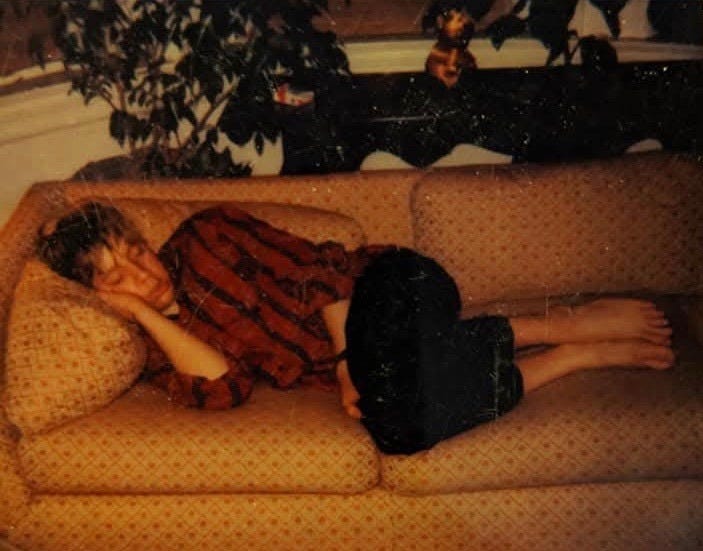
My father was an accomplished alcoholic, ticking all the boxes: Ruined family? Check. Ruined career? Check. Lost friends and the respect of everyone he loved? Check. He had a drinking career that went uninterrupted for about 50 years, until he finally kicked the habit for good when I was about 10.
I started drinking when I was about the same age as my dad was when he started drinking: 14. I remember my first beer: a cold can of Tuborg Gold, given to me at a party by a middle school friend’s father. I remember my first serious drunk, too—that same night when I began to make retching sounds while seated on the velvet couch in the living room of his Dupont Circle brownstone. The father pointed his drink at me—it was a vodka gimlet; I know this because he’d made me one as well—and said, “Get that boy out of here.” A group of seniors picked me up and carried me like a rolled-up carpet out the front door and held me so my head was over the cast iron stair railing as I vomited into the street.
For my friends and me, from that night on, drinking as much as we could became the thing we did virtually every weekend. In Washington D.C., at that time, the drinking age was 18, and underage drinking wasn’t really taken seriously. We all knew which stores would sell to you, and which wouldn’t. Fake IDs were easy to get, and widely accepted. Most purveyors were not about to turn down the opportunity to make a buck off the burgeoning underage market, and a flimsy Fake ID from Electromax on M street was plausible deniability. We knew the China Moon Café on 18th street sold 40s to go, and we knew Talbert’s on River Road was rumored to lock up the unfortunate kids who tried to buy alcohol, until their parents—or the cops—came to get them.
By the time the drinking age was raised to 21, we had crafted strategies to drink illegally. We knew that Ireland’s Four Provinces on Connecticut Avenue employed a real bouncer starting at about 7 p.m. So we went there for pub food at 6, and by the time the bouncer posted at the entrance, we were already seated. The bartenders assumed we had been IDed by the bouncer, and always served us. I learned to love Guinness there at about age 18.
Then there were the places where they just didn’t care. My friends and I used to go to The Kilimanjaro, a sometimes dangerous African, Caribbean, and Go-Go club famous for live music featuring top reggae acts and the occasional murder. I’ve always been short, but at 16, I was just over 5 feet. I remember pushing through the crowds to the bar, staffed by three women wearing striking dresses of red, green, and gold, with matching head wraps. I must have looked like Kilroy with my eyes and nose barely topping the bar.
One of the bartenders leaned down over the bar to look me in the face. “Whatchoo want?” She challenged me in her thick Jamaican patois, with her heavy beaded necklaces jangling.
I was nervous, and it was loud and dark. I only knew one drink, which I had seen on Three’s Company, so I went for it. “A screwdriver,” I squeaked, looking up into her face.
She leaned back and laughed out loud. “Him want a screwdriver!” she shouted, and all the bartenders looked at me and laughed. Still, she pushed a glass of vodka and OJ across the bar to me, still chuckling.
That’s how I grew up. I had my 21st birthday party at a bar called Dylan’s on Prospect Street, a place I’d been going to long enough to be on a first name basis with the owner, Mahan. On that night, he came over to greet me and my friends, and asked what the occasion was. Since I was drunk, I happily told him it was my 21st birthday. The look on his face when he realized how I’d been lying to him all that time shames me to this day.
Throughout all of this, the specter of my father’s alcoholism flitted around my peripheral vison. His drinking had cost him everything he cared about. I knew alcoholism ran in families, and I was sometimes concerned. But I rationalized that lots of kids go through a binge drinking phase in their college years, and end up on the other side as responsible drinkers.
I mostly left binge-drinking behind by my mid-twenties, and settled into a steady habit of a few beers or glasses of wine with dinner, and a bourbon or two at night. I brewed my own beer. I had a successful and rewarding career in the wine business. I enjoyed discovering new cocktails to share with my friends. I wrote a wine column, “The Alcoholist,” for the local paper. I was a little embarrassed but mostly proud when my friends handed the wine list to me at every restaurant without even looking at it.
So it came as a bit of a shock to me about four years ago when a nurse asked me about my drinking habits. I had been asked this question many times before and had always downplayed my drinking. I don’t know why, but I decided to be honest: I told her three to six drinks a day.
“Hmm,” she said. “About how long has that been going on?”
“About 30 years” I said.
“I’d like you to consider quitting,” she said, “and I’d like you to consider coming to group therapy.”
I was dismayed. I argued with her. I said that because I’d been drinking the same amount for years, that meant I was in control. I told her that getting drunk was a thing I used to do when I was a kid, but these days I got actually drunk only about once every year or two. To me, this proved I was not an alcoholic.
She told me to let her know if I changed my mind.
I didn’t go to group and I didn’t quit. But I couldn’t get it out of my head—the feeling, the jolt, she gave me when she said I might have a problem. I tried to envision quitting, but it was like that feeling you get when you think a stair step is there, but it isn’t, and you put your foot down all wrong and damn near fall over.
What if I reached for my support and it wasn’t there? What would I do then? How would I smooth out my anger and resentment after a particularly bad day? How would I calm myself before, or after, a stressful event? I’m an introvert. What would it be like to go to a party or an event “raw”? What about pasta and Italian reds? What about steak and Cabernet? What about sushi and Champagne for God’s sake?
I filed it away in my Scarlett O’Hara file called “Things to Think About Later.”
Two years ago I started having mild abdominal pains. Like exercise cramps, they would come and go. Not terrible, but I was concerned enough to go to the doctor. After a bunch of tests including an MRI and two ultrasounds, he told me my liver was sending up the bat signal.
“It’s not bad,” he said, “It’s nothing to worry about. Right now. But you need to consider some changes, or it could become a serious problem.”
I quit drinking that night.
The memory of my father’s near-total destruction haunted me. After so many decades, I feared I wouldn’t be able to quit, or that I would have serious withdrawal issues.
None of that happened. Not that it’s been easy. I think about drinking almost every day. I miss having that easy remedy to anxiety—both social, and the other, more pernicious kinds. I miss the taste and comforting burn of whiskey. And I miss wine—a beverage I devoted decades to, personally and professionally.
What has changed? Not much, actually.
I haven’t lost any weight. I haven’t saved any money. I haven’t rediscovered life. Sometimes I see people sharing their sobriety success stories on Reddit. When they post photos with their before and after selves, their transformation is undeniable. They look healthier, livelier, slimmer, better dressed, and better lit. I feel ripped off. Where’s my reward for this sacrifice? Where’s my glow-up? In my before and after photos, I’m the same schlub I was two years ago, only without a drink in my hand.
I tell myself that I haven’t quit drinking, I’ve just put off having the next drink. I think about the special occasion where I’ll finally have it. Will it be a wedding? Or the arrival of a grandchild? This strategy of infinite postponement rather than a full perma-ban has helped me not feel so lost.
It’s as though booze is a close friend who moved to another country. I’ll see him again someday, and when I do, we’ll tear it up like old times.
My liver has mostly calmed down. It still nudges me every once in a while, as if to say “You’re crowdin’ me” out of the side of its mouth like some kind of blood-cleansing gangster. I try to give it a wide berth.
It’s been comforting to know, finally and with certainty, that I’m not my father. I’m not an addict with a future catastrophe hanging over my head, waiting to wipe out all the good and happiness from my life. But I also think about how much my father loved his kids, and how he worked damn hard to successfully overcome his addiction. Eventually he became a powerful force for good in my life. So it’s also comforting to know that in that way, yes, I am my father.
Cheers.

I felt a bit sad reading your essay because it is very relatable. You describe a life many of us and many of our friends navigate in our own ways, although your circumstances are unique and anything but typical.
I’m reminded of a few of my friends who didn’t heed warning signs and who paid hard prices.
Your essay also captures a certain era in NW DC that was pretty special. The Four Provinces has been a part of the Connecticut Avenue vibe and culture since at least the late 1960’s. I had an English teacher in high school who was Irish. He’d sometimes roll into class still drunk from whiskey, Guinness and Irish music absorbed at the provinces, and read theatrically to us some of his favorite works by the great Irish writers; and he advise us to go to the provinces and live life, because only then would we understand what those Irish writers were trying to tell us.
Seemed like good advice, so my best friends and I took several Friday night excursions there, lugging our fake IDs; and, boy, the tales we brought back to school on those Mondays!
It takes courage to share like you did in this essay. We are all better for sharing our own stories and we definitely are better when we get to read what others, like you, share. So, thank you for summoning that courage and sharing.