
By Michael Aubrecht
ADVANCE CONTRIBUTOR
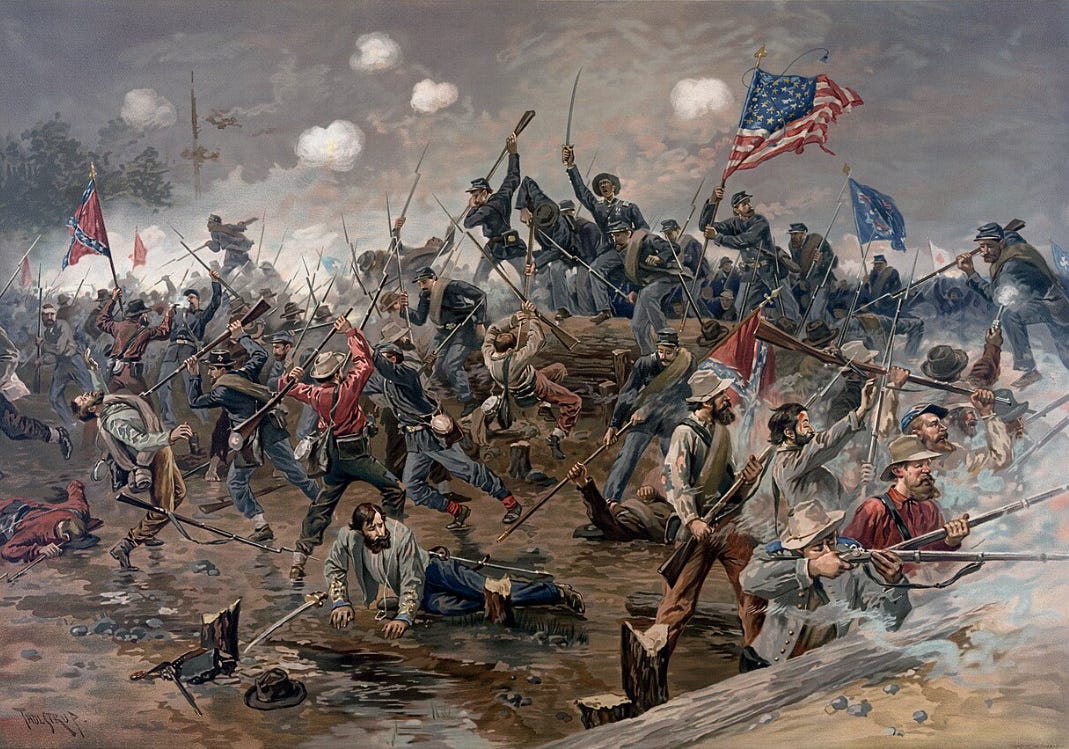
“The boys here have been ‘stumping’ Virginia pretty well. The fact is the woods have all been cut down, and fuel is very scarce. We now are gathering what we call the second crop, that is, we cut off the stumps even with the ground…. If the former residents ever return to this portion of Virginia, they won’t find a piece of timber large enough to make a respectable souvenir.”— Captain David Thomas, 27th Connecticut Regiment, U.S.A.
In the 161 years since the end of the Civil War, there have been countless studies conducted by historians on the military, political, social, and psychological effects of the conflict. One topic that rarely receives consideration, though, is the environmental scarring of the land. Maybe that’s because modern battlefields are magnificent sites of natural beauty. In the effort to maintain these sites, park custodians have inadvertently created an illusion of peace and tranquility, making it difficult for visitors to imagine the scenes of horrific bloodshed that took place on the very ground where they stand—or the vast environmental damage inflicted by the occupying armies that spread over the landscape like a swarm of locusts, devouring crops, killing wildlife, and leveling timber.
The natural resources required to feed and shelter an army, coupled with the deplorable sanitation and disease that traveled with them, wreaked havoc on both the landscape and its inhabitants. In most cases, healing nature from these man-made disasters took longer than curing the physical and emotional wounds both armies inflicted on one another. Eventually the landscape recovered. Today it remains the war’s only survivor.
Spotsylvania County, often referred to as the “Crossroads of the Civil War,” witnessed some of the most intense and horrific fighting during the war. The nearby City of Fredericksburg and neighboring counties of Stafford, Orange and Caroline also hosted a number of historically significant events during the conflict. Four major engagements took place here, including the Battles of Fredericksburg, Chancellorsville, Spotsylvania Court House and The Wilderness. From 1861 to 1865, hundreds of thousands of troops on both sides of the conflict marched through, fought at, and encamped in the woods and fields of the Fredericksburg area.
More than 144,000 Union Troops occupied Stafford County during the Civil War, and both the Confederate Army of Northern Virginia and Federal Army of the Potomac traded occupation of the City of Fredericksburg multiple times. Today, the hallowed grounds that make up the cherished Fredericksburg & Spotsylvania National Military Park are the second largest of their kind in the country. Dozens of monuments and more than 70 Virginia Roadside Markers dot the landscape. Half a million tourists visit the Fredericksburg and Spotsylvania region each year, numbers that have grown exponentially since the four-year celebration of the Civil War Sesquicentennial.
It’s understandable why the National Park Service dubbed this region “the Bloodiest Landscape in North America.” Over a four-year period more than 85,000 men were wounded and more than 15,000 were killed. This doesn’t take into account the untold herds of military horses and teamster-driven livestock that were also lost. The traumatic impact on the area’s citizens, as well as the economic damage to the infrastructure, was almost insurmountable. Although collateral damage was spread throughout the entire country, this particular area experienced an exceptional level of death and destruction from the Civil War.
Local historian Jan Conner has concluded that it took more than 40 years for Stafford’s natural habitats to return to their pre-war state, and author J. Harrison Powell has written that the damage in Spotsylvania County “was as intense, if not more so, than Germany’s involvement in World War II.”
The destruction of the region’s woodlands,” Powell added, was a “wide-scale environmental holocaust.”
Here’s how a war correspondent described it in a February 22, 1862 article for Harper’s Weekly:
“The large amount of fuel required by the army has caused the woods to disappear with magical rapidity. This, and the destruction of the fences, the demolition of houses, and construction of new military roads, will render it rather difficult for the absconding secessionists to recognize their ancient boundaries, if they ever return.”
In addition to hosting millions of intrusive troops over the course of the war, each of the Fredericksburg area’s four engagements experienced unique environmental repercussions. The Battle of Fredericksburg (1862) took place in a city and on a river that both bore the brunt of the battle. The downtown area of Fredericksburg was ransacked and left in ruins, and the adjacent Rappahannock River endured pollutants from both man and military implements of destruction.
The battles of Chancellorsville (1863) and The Wilderness (1864) took place in the same dense, wooded area, one year apart. Both engagements witnessed the unthinkable horrors of men burned alive in brush fires caused by artillery strikes. The Battle of Spotsylvania Court House (1864) took place in more open country, but raged for weeks in the mud and rain while permanently altering the lay of the land.
“A space of perhaps forty yards in width in front of the works was cleared of brush,” wrote James Bumgardner of the 52nd Virginia Infantry. “At my suggestion, trees along the edge of the clearing were blazed, to guide the men in the elevation of their guns, and the men were instructed to aim below the blazed marks.”
A Confederate surgeon with the 13th South Carolina Regiment said from what he’d seen virtually nothing was left of the land after the fighting took its toll:
“The part of Virginia through which we have fought or marched has been totally devastated. It is now nothing but one vast track of desolation, without a fence or a planted field of any kind.”
The environment, in turn, wreaked havoc—and mass casualties—on the warring armies.
While well over 600,000 men died while serving in the military during the Civil War, two-thirds of recorded deaths were due to rampant disease and dysentery, meaning the majority of soldiers who perished were actually sick, not shot, when they died. Army camps were breeding grounds for all kinds of disease, and both young men and old died by the thousands from measles, smallpox, pneumonia, and malaria. Poor hygiene, the lack of adequate sanitation facilities, infected drinking water, and the proximity of animals helped to rapidly spread germs. Exposure to the elements also made simple illnesses deadly. At the time of the Civil War, even a severe case of diarrhea and dehydration could be fatal.
A soldier in the field came under fire infrequently, but he was in mortal peril every day from the invisible enemies that sprung from the filth of army camps. As thousands of soldiers gathered in tent cities, many of them were exposed to different communicable diseases for the first time. Hundreds of country recruits immediately fell prey to these viruses. Their city-dwelling compatriots, however, were more likely to have already been exposed, and so also more likely to be immune to these diseases.
Measles was considered one of the worst diagnoses, and it quickly made its mark on the Confederate army. One officer, Surgeon L.J. Wilson of the 42nd Mississippi, recalled a major epidemic that broke out in his camp in 1861. He stated that the rampant disease was “something that astonished everyone, even the surgeons.” Within three months, 204 men from three different regiments died. Wilson was left with over 100 more patients who were crammed into an old tobacco warehouse. Within several weeks, a new regiment could lose half its numbers to the virus.
More than 20 years passed before enough trees grew back in the Fredericksburg area to the point where they could be used to replace fence rails and resurrect the destroyed lumber industry. More decades would pass before the balance of agriculture and wildlife returned. With a limited number of revenue-generating resources, coupled with the post-war trauma and physical devastation, the area’s citizen population dwindled. Many left never to return. This further inhibited the region from fully recovering during the Reconstruction Era.
Despite these dire circumstances, the Fredericksburg/Spotsylvania region persevered. Fifteen years after the fighting ended, crop production returned close to prewar levels. Returning or newly arriving citizens rebuilt much of the area’s industry and infrastructure. Railroad, shipping, and manufacturing efforts also rebounded. And the environment slowly healed along with its inhabitants.
In 1927, portions of the area’s battlefields were established as the Fredericksburg and Spotsylvania County Battlefields Memorial National Military Park. Today the property includes more than 8,000 acres, and hosts hundreds of thousands of visitors every year. Despite periodic encroachment issues plaguing the city, the park’s boundaries remain untouched, and encompass the four major Civil War battlefields. Each of these sites features a variety of tour stops that offer visitors more than just accounts of military action. They also provide a diverse landscape for local wildlife observation. Thanks to the efforts of the local National Park Service, a number of walking trails have been established. During a typical day, hikers are likely to see a variety of indigenous animals and birds living in the fields and forests. In some cases, these protected parks offer the only unobstructed habitat available in the nearby area.
“Many different vegetative types provide habitat for a wide variety of wildlife in the park,” the Fredericksburg/Spotsylvania National Park Service notes on their website. “Open land wildlife includes rabbits, groundhogs, quail, mourning dove, hawks, owls, field sparrows and several other bird species normally found in cropland, pasture, and meadows. Woodland wildlife includes white-tailed deer, gray squirrels, raccoon, opossum, wild turkey, ruffed grouse, woodpeckers and warblers. Wetland wildlife includes beaver, mink, muskrat, ducks, geese, and other water birds that live along streams, in ponds, marshes, and swamps. There is also a wide variety of reptiles and amphibians.”
Battlefield parks allow for unimpeded tree and plant growth which establish strong root systems and prevent soil erosion. Battlefield woodlands also provide clean air, and serve as riparian habitat, providing food, nesting spots, canopy cover, and migration corridors. They also act as climate buffers, retaining water sources, moderating local climates, and maintaining biodiversity.
If not for the dedication of national organizations and local preservationist groups, these lands and many of the unique plants and wildlife that populate them would be a distant memory.
The Civil War Trust, which has been successful in protecting these vital local landscapes, has so far saved saved 222 acres in Fredericksburg, 211 acres at The Wilderness, 316 acres at Chancellorsville, and 208 acres at Slaughter Pen Farm.
There is an irony to Civil War battlefield conservancy. If not for the blunt carnage of war, these picturesque landscapes would most likely have been paved over long ago.
https://www.youtube.com/watch?v=AsGFwBsrF7c
My compliments to Michael Aubrecht for a very well written piece.