By Eric J. Lyman, GUEST CORRESPONDENT
[Editor’s Note: This post is the first of a two-part series by our friend Eric J. Lyman about Fascism and Italy. The second part will run on Eric’s substack, The Italian Dispatch, on September 22.]
Not on the Itinerary
Earlier this summer, an old college friend spending time in London came to Rome for a brief visit, her first trip to the city in years. A few days before her arrival, I asked her what version of the city interested her most: Ancient imperial Rome? Renaissance Rome? The papal city? Baroque? Fascist? Post-war Rome? The café culture? Foodie Rome? The gritty-modern city? The nearby countryside?
She wrote back to say she was interested in all of it, any of it, that whatever came up was fine. “Well, except for Fascist Rome,” she wrote. “With everything that’s going on in the world, that cuts a little close to the bone.”
“Noted,” I told her.
But then, while we toured different parts of the city, I realized that completely avoiding Fascist Rome was impossible. Fascist Rome was everywhere.
Hidden in Plain Sight
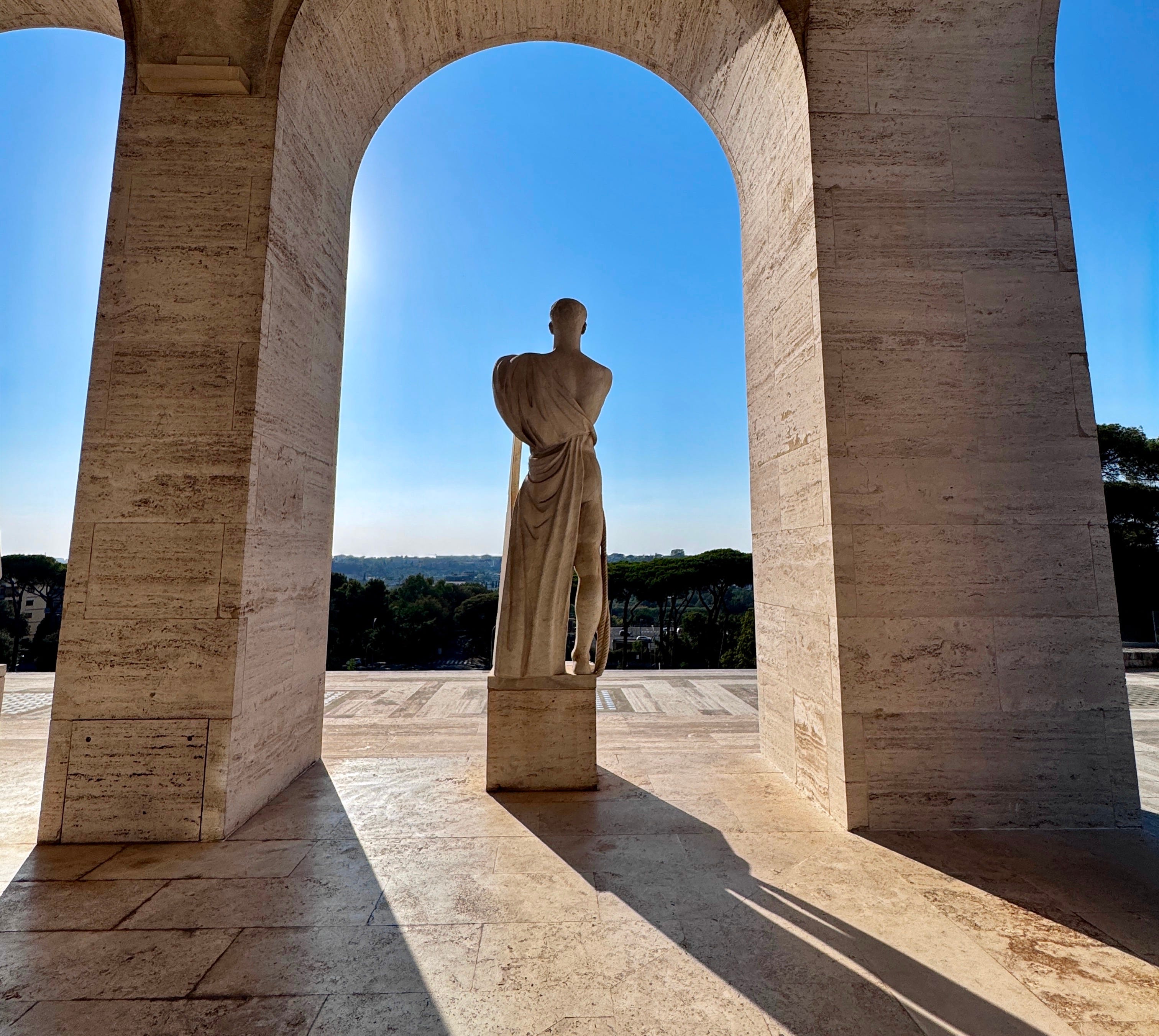
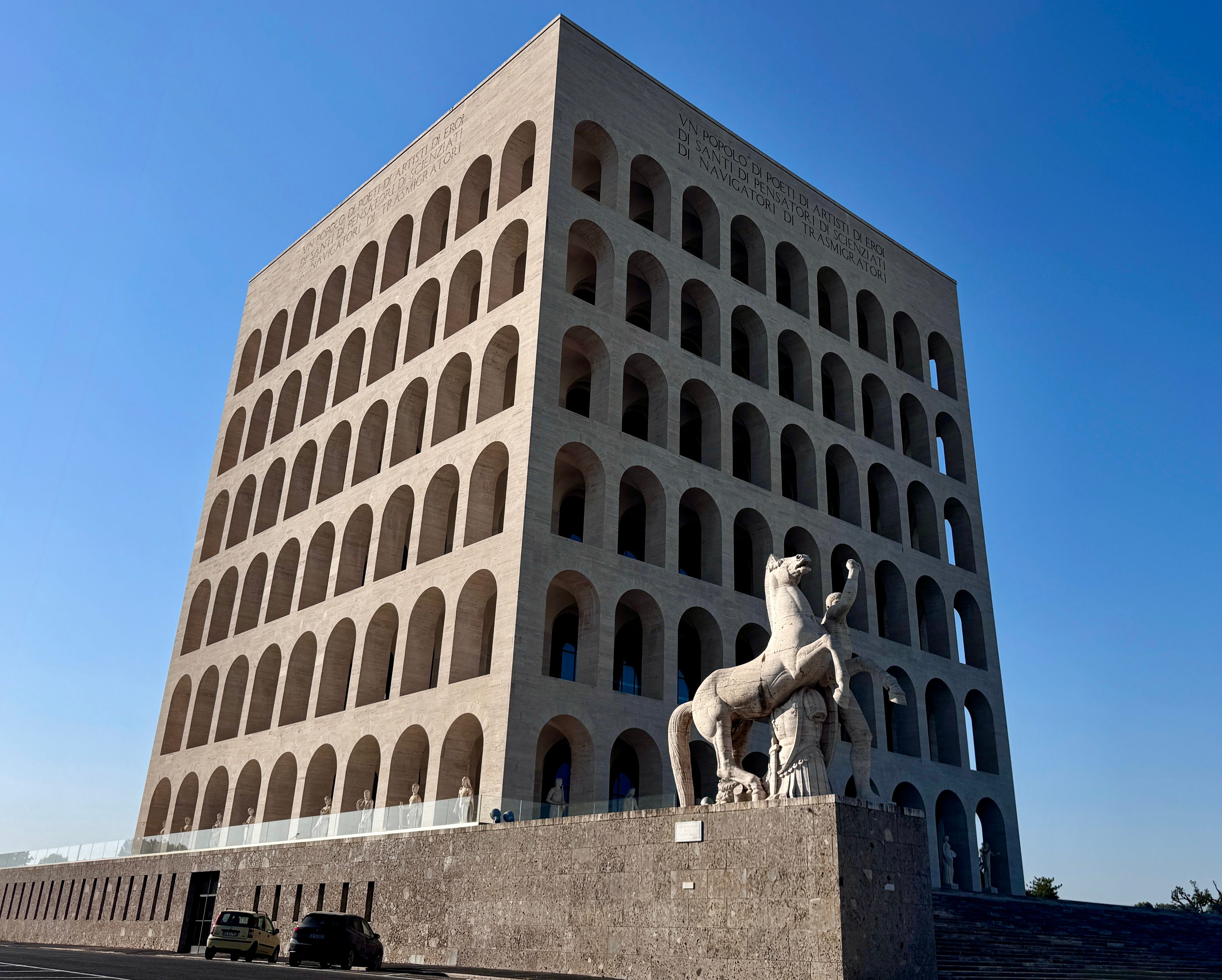
Some parts of Mussolini’s Rome are easy enough to visit … or avoid. There’s EUR, with its wide avenues and Palazzo della Civiltà Italiana, better known as the Square Colosseum (photo below). There’s the Foro Italico, with its colossal marble athletes, a massive obelisk that still bears Mussolini’s name, and mosaics praising Il Duce.
But the Fascist imprint on the city is more deeply carved than that. Sometimes the clue is simply a date chiseled above a doorway or on a column at the entrance to a bridge or avenue.
The letters E.F. stand for Era Fascista. The regime created a parallel system that counted years starting on Oct. 29, 1922, the day after the March on Rome. A few years later, the regime required its use on official documents, in Roman numerals, usually alongside the conventional date.
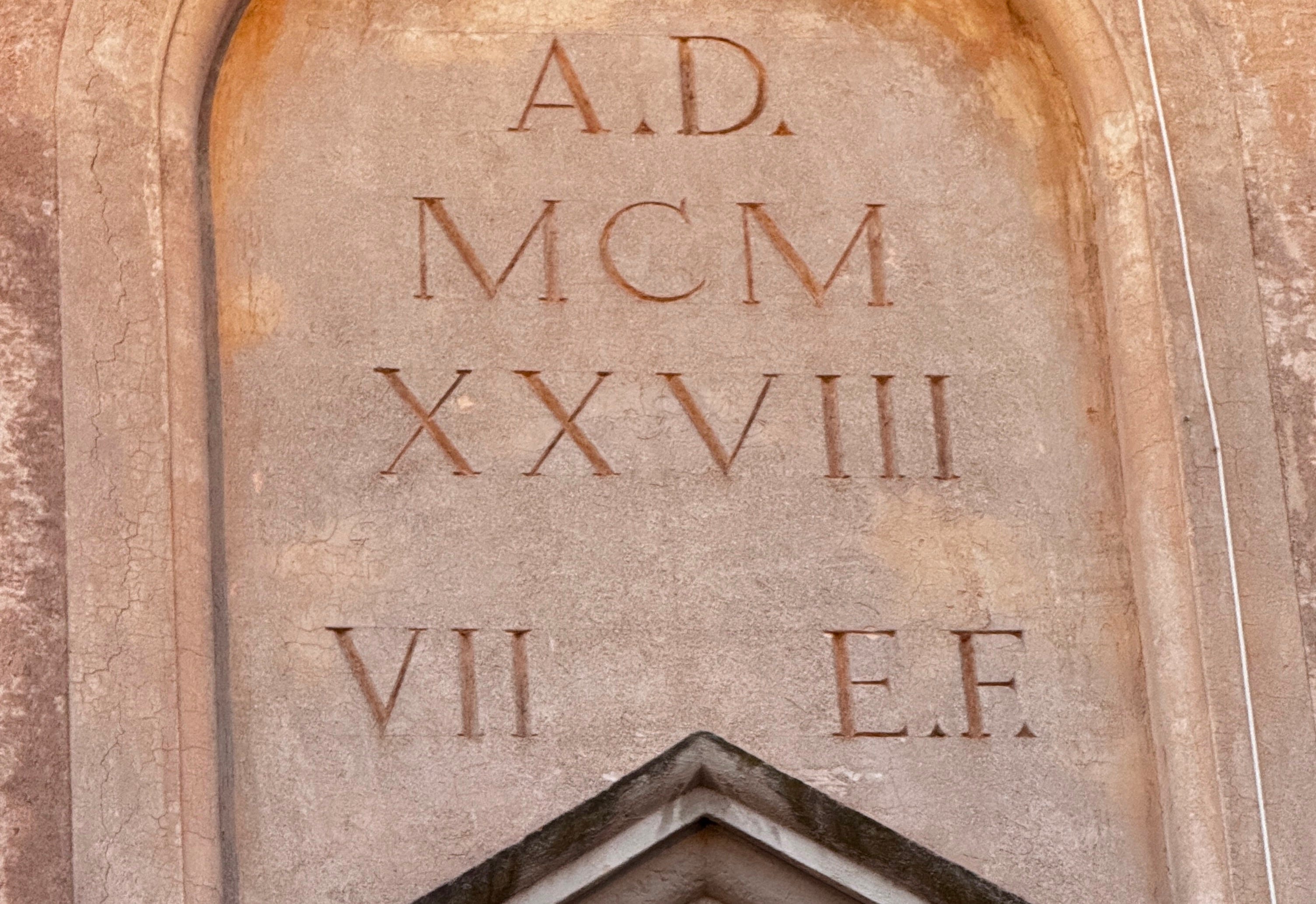
So, “VII E.F.,” as in the above photo, means the seventh year of the Era Fascista, which ran from late 1928 to late 1929. The photograph above gives the completion date as A.D. MCMXXVIII, pinning the inscription to the last nine weeks of 1928.
These clues can appear on apartment buildings, schools, post offices, train stations, fountains, even manhole covers.
Addition by Subtraction
But the deepest marks carry no date at all, because they’re too big to see.
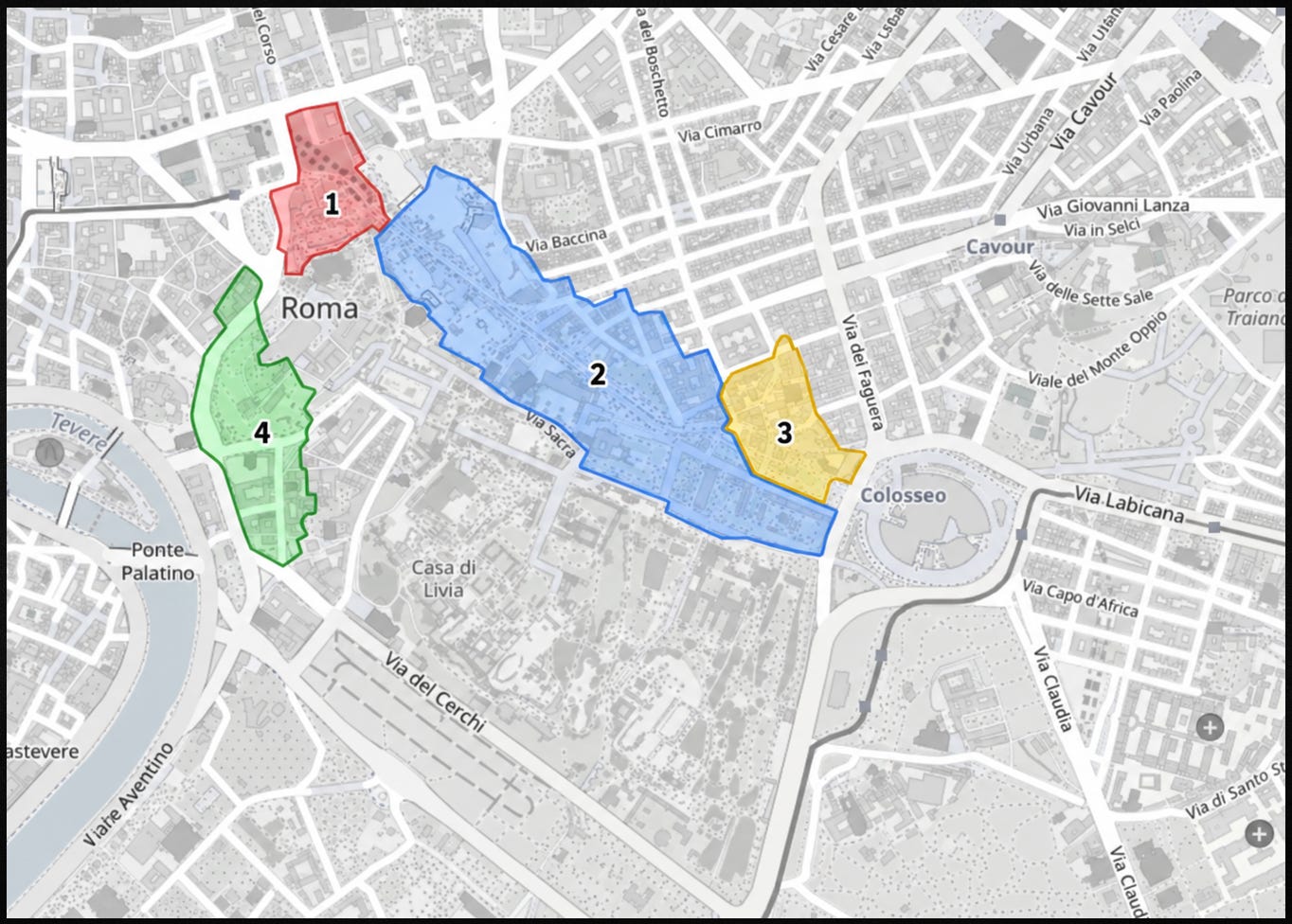
The two avenues that now define Rome’s archaeological geography -- Via dei Fori Imperiali and Via del Teatro di Marcello -- did not exist a century ago. Mussolini carved them out of medieval and Renaissance neighborhoods that today survive only in photos and old maps. Walk from Piazza Venezia to the Colosseum or to Bocca della Verità and you are walking through his idea of Rome.
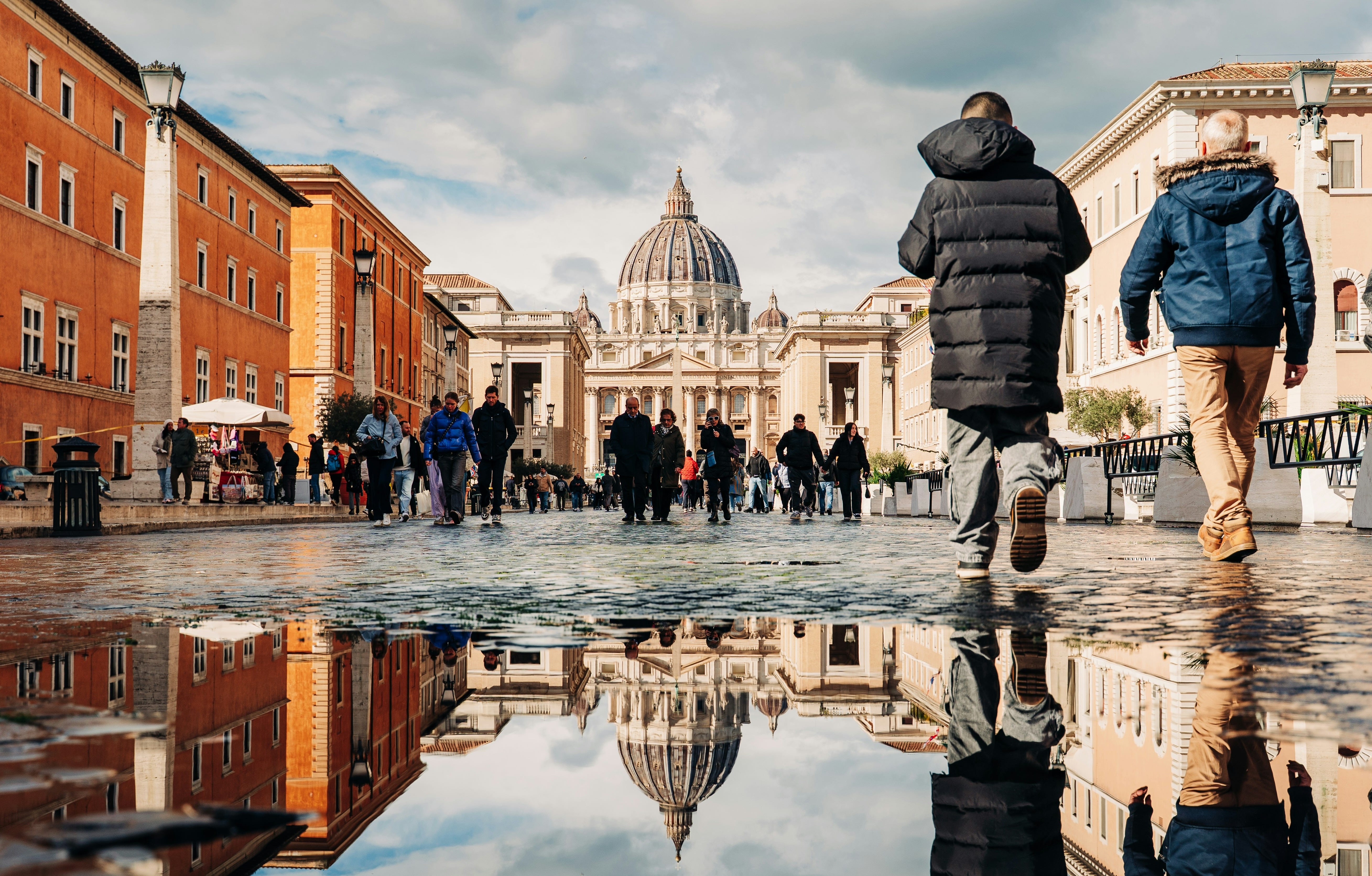
Some of the city’s most breathtaking views -- most famously, the one of St. Peter’s Basilica from the Tiber, over the length of Via della Conciliazione -- exist only because the Fascist government demolished the Spina di Borgo, a dense neighborhood of palaces, homes, and churches that hid the basilica from ground level.
Baroque master Gian Lorenzo Bernini intended visitors to emerge from the tangle of alleyways into St. Peter’s Square, suddenly embraced by the curved colonnades framing its immensity. But Mussolini flattened that surprise along with everything else.
The Edited City
Rome has been reinventing itself for nearly three millennia, with successive eras doing to their predecessors what Mussolini did to the Spina. Roman emperors built over the Republic, for example, and popes converted pagan temples into churches.
In the late 19th century, the Savoy monarchy leveled another medieval neighborhood to erect the Vittoriano, which Romans still mock as resembling a massive wedding cake or typewriter. And nearby Palazzo Venezia, the Renaissance palace that housed Mussolini’s offices, was itself built partially using travertine stripped from the Colosseum.
The Italian peninsula dominated Western civilization twice, a thousand years apart. Mussolini imagined a third act, and he used the capital as his stage set.
I never deliberately took my college friend to Fascist Rome. But the regime came along anyway.
My mistake was thinking of Fascist Rome as a version of the city a visitor could select or skip. But it’s not another layer alongside ancient Rome, papal Rome, or Baroque Rome. It rearranged those Romes, destroying parts and changing how the rest would be seen.
And Another Thing
The best deal in Rome may be the unlikely museum inside the Colosseo-Fori Imperiali metro stop. For €1.50 -- the price of a metro ticket -- anyone can escape the Colosseum’s crowds and take a modern escalator down to the museum-quality collection from ancient Rome: the preserved remains of a Roman bath, ceramic artifacts, personal items, ancient wells.
The stop is the newest on Metro C, a €225-million-per-kilometer project, opened amid great fanfare last December. With it, Metro C is connected to Rome’s other two metro lines and it stretches to the southernmost reaches of the city.
But it’s the displays that earn the attention.
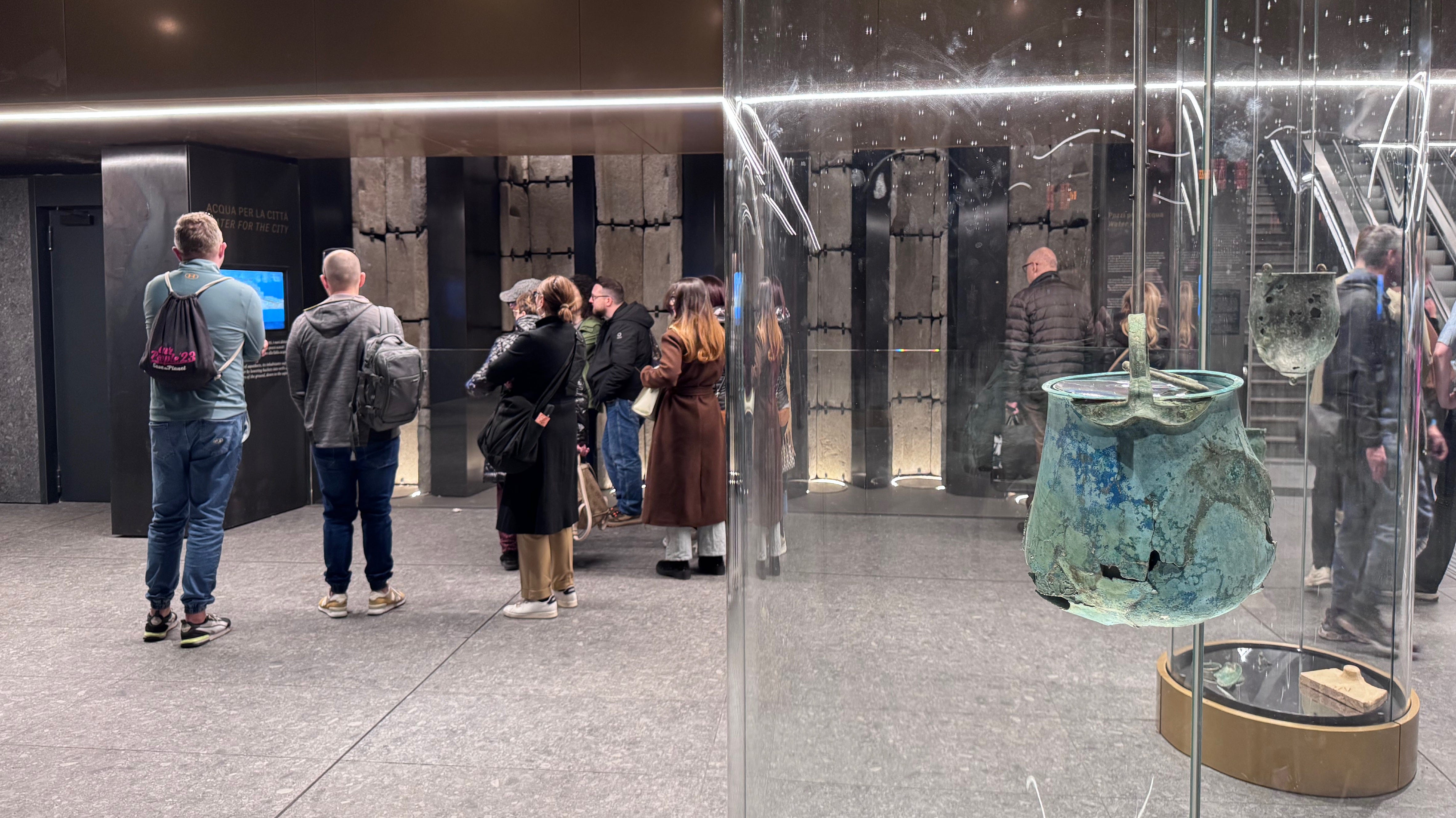
“It’s like traveling back in time,” archaeologist and tour guide Livia Galante told me earlier this year for a BBC piece. “A station like this does more than deliver someone to the train that takes them to work. It helps them understand the history of the city in a way a normal museum cannot, because everything is displayed where it was found.”
The station opened years behind schedule and far, far over budget. Naturally, it drew its share of Roman wit: “Metro C isn’t a subway,” one line went, “it’s an archaeological dig with trains.”
But it would have taken even longer and cost even more if the Velia Ridge (No. 3 on the map above) had not already been removed under Mussolini. Across that cleared space, the regime built what is now the Via dei Fori Imperiali, creating a monumental sightline from the dictator’s offices in Palazzo Venezia toward the Colosseum and creating a parade route along which marchers could see their leader on his balcony.
There’s no telling what archaeological riches were lost to Mussolini’s project. The station’s displays are only what government pickaxes and bulldozers missed. But the crooked path that created modern-day Rome now runs straight through the station.
***
Eric J. Lyman has been living and working as a journalist and writer in Rome for more than two decades. He’s reported from Italy and far beyond on everything from papal conclaves and the Olympics to G7 summits, wars, elections, migration, and more revealing moments of daily life. His bylines over the years include The Wall Street Journal, National Geographic, Fortune, Food & Wine, The Hollywood Reporter, Axios, The Guardian, Bloomberg, and USA Today. He writes the Italian Dispatch Substack, which you can find HERE, with an earlier version of “The F-word, Part 1” HERE.