
By Steve Watkins, ADVANCE EDITOR
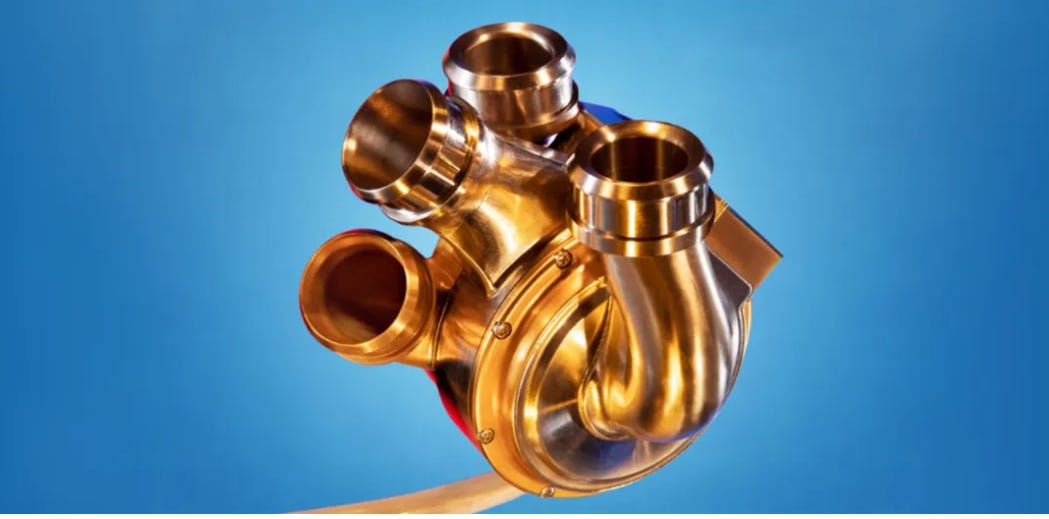
I woke up the other morning thinking about an artificial heart. Not just any artificial heart, but a specific one, made of titanium, implanted last year in a 40-year-old Australian man who was in such severe heart failure that most days he could barely make it to the toilet. He was the sixth person in the world to get the new device, and the first to ever be discharged from the hospital with a fully artificial heart and able to live on his own. It kept him alive for a hundred and five days, until he was finally matched with a donor, making him one of 5,000 heart transplant recipients worldwide last year out of more than 50,000 on waiting lists, most of whom died, or will die, with their original, failing hearts. There have been other artificial devices over the past 60 years, all of which have been temporary—a way to keep patients alive long enough to get the real thing. The titanium heart, though, is meant to be forever.
I’m not on anybody’s transplant list—too old; too conflicted--but I could use a new heart. A cardiologist told me this a few of months ago after I had a sudden bout of ventricular tachycardia while out walking our dog. It was a warm, bright day in late January. Luke and I were on the sidewalk at the end of our two-mile hike, just passing in front of the next-door neighbors’ house, when the lower chamber of my heart suddenly, and for no apparent reason, jumped from 75 beats a minute to more than 150, too fast to pump blood to the rest of my body. Everything shut down. I sagged halfway to the ground, what they call pre-syncope, and would have kept falling, helpless to stop what was happening. But then, 13 seconds into the episode, the CRT-D device implanted in my chest fired off a controlled burst of electrical impulses that interrupted the V-tach and put me back into normal rhythm.
CRT-D stands for “Cardiac Resynchronization Therapy with Defibrillator,” a mouthful, I know. It’s a combination pacemaker and implantable cardioverter-defibrillator, or ICD, for people suffering from heart conditions that put them at a high risk of sudden cardiac death.
The moment passed.
I stood up, took a shortcut through the neighbors’ yard, drank a lot of water (thinking, incorrectly, that I must been dehydrated), and then went into our fenced backyard to pick up dog poop. Two days later, after the long weekend, I left a message with my cardiologist to let him know about the incident on the off-chance that it might have been heart related. Three days after that, he returned the call. His office had just gotten around to checking the remote monitor connected to my device, and the data confirmed that I’d experienced an episode of sustained V-tach, something that had never happened to me before, though I’ve been hit with just about every other heart problem there is, starting in the upper chamber and continuing over the past 15 years to the bottom. Given the progressive nature of my deteriorating heart, it was only a matter of time. Fortunately, the defibrillator did its due diligence and corrected the wonky, and life-threatening, ventricular rhythm with what’s known as “overdrive pacing,” which sounds counterintuitive, and sort of is—like revving the engine in a car that’s idling too fast so it slows back down.
The cardiologist called it a “painless therapy,” and explained that if the overdrive pacing hadn’t worked, and if the V-tach had continued for another 15 seconds, then the ICD would have delivered a full-on electric shock to kick me back into proper rhythm. Sometimes it takes multiple shocks—what’s known as a “V-tach storm.” I read about one guy with an ICD who went into tachycardia on an international flight and had a V-tach storm that lasted 10 hours.
Cardio Rehab Club
I had been tearing it up doing pretty well at cardio rehab—me and a couple of friends I’d made there: Corrinne, a retired Navy procurement specialist, and Sally, an elementary school custodian. Corrinne had a raspy smoker’s voice, popped nitro pills like they were Tic Tac, and gave me a hard time if I got too far ahead of her on the exercise machines. Sally occasionally fudged the treadmill and recumbent cross-trainer settings, once came to rehab in pajamas (it was pajama day at her school), and complained about her freeloading grandkids who she clearly adored. Corrinne had inside dope on a couple of the physical therapists and loved to gossip. Sally had a thing for Monk, the OCD TV detective whose reruns ran on the cardio rehab TVs. Corrinne preferred Little Joe from “Bonanza,” but wasn’t nearly as excited as I was when the classic “Hoss and the Little People” episode aired just before Christmas. Sally, a cancer survivor who in a just world would have already been able to retire, was working a second job in the evenings and on weekends emptying trashcans and doing general clean-up around her apartment complex. She was out sick for a couple of weeks and we worried about her when she didn’t show for rehab.
We were three-afternoons-a-week companions for most of four months in the fall of 2024--checking in on one another, teasing, joking, offering encouragement—until my V-tach. The cardiologist told me to stop working out for awhile and I haven’t gone back since. Corrinne, Sally, and I were all nearing the end of our insurance-allotted sessions anyway, but I still missed them and what Happiness Studies researchers would say was our low-stakes bonding. Only it didn’t feel like low stakes, not entirely, as precarious as things were and are with our bad hearts--even if we didn’t know one another’s last names or a way to keep in touch.
My wife Janet wouldn’t let me out of her sight. We’d been here before with other heart scares and health crises—an embolic stroke I’d had five years earlier that thankfully didn’t do too much damage; a 90 percent blockage of my left anterior descending artery in 2021, repaired with a drug-eluting stent; a couple of massive back-to-back rectal bleeds that nearly took me out three years ago—twice--from a near-catastrophic combination of runaway hemorrhoids, an exposed artery, and the blood-thinner Eliquis.
Eleven hospitalizations altogether over the past five and a half years.
Janet moved her home office downstairs to the dining room to be close to where I spent much of my days, tucked away at my writing desk in a corner of the living room. She went on morning walks with me and Luke, and insisted on holding his leash. She spent a couple of weeks on a mattress next to the guest bedroom downstairs where I’ve been sleeping because of my snoring, even though the noise from my CPAP kept waking her up. (Yeah, that, too.) I suspected that she surreptitiously checked in on me every few hours to make sure I was still alive.
I was already scheduled for a procedure with a cardiac specialist 70 miles away at the University of Virginia to remove and replace a couple of failing leads that had been implanted with my first pacemaker 15 years before, and somehow I got it in my head that new pacing wires would be the answer to everything—including whatever had caused the V-tach. It was magical thinking. The cardiologists all said sorry, but no. The V-tach had been caused by fibrotic scarring in the lower wall of my left ventricle, nothing to do with the wiring. The timing of the two—the V-tach episode and the problem leads—were coincidental.
The One-Percenters
Janet and I not-so-jokingly say we’re members of the One-Percent Club—that if there’s a one-percent chance of complication in a surgical procedure, as there always is, it will happen to us. And it has:
The Heart Wall Micro-Perf of 1999. (Mine.)
A Nightmare on Riveroxaban. (Hers.)
The Intraoperative Uterine Puncture of 2017. (Hers again.)
The Grapefruit Groin Hematoma of ’21. (Mine again.)
The Rectal Repair Snafu of 2022. (Mine yet again.)
And, a surprise to neither of us, another post-operative bleed after the lead replacement that had the UVA Cardiac Unit nurses chasing down one of my surgeons in the Medical Center parking garage and dragging him back to my hospital room. He didn’t even take off his puffy winter jacket, just went right to work with the nurses, all three of them applying as much pressure as they could on my chest and the closed six-inch incision over my CRT-D device so they could muscle on multiple layers of compression tape in hopes of stopping the bleed without having to do a second surgery. The pain far exceeded the promised relief from Oxy and Fentanyl and kept me awake all through that interminable night, but wasn’t nearly as bad as the next morning when they peeled off the thick, rubbery, Gorilla-glue tape along with a couple of not insignificant strips of my skin. A saintly wound specialist did the best she could to patch me up, enough for us to leave the hospital, but my chest was still too raw for me to wear a seatbelt on the ride home.
We got the news a couple of days later that they may have partially dislodged the new lead when applying all that pressure--another possible complication and one that also might require more surgery, though I’d have to wait a month for a follow-up X-ray to find out for sure. At least the hematoma was under control. Now we just needed to keep an eye out for infection.
Jan and I breathed a small One-Percent Club sigh of relief about the shrinking hematoma, anyway, but the caution light stayed on for the next three months. I was given strict instructions not to lift anything heavy, raise my arm above my shoulder, exercise much besides walking the dog, or sleep on my side. I also had to quit driving for awhile because of the chance of another episode of V-tach. Not that I wanted to go anywhere. My lower left ventricle is a mine field, as it turns out, though in my case there are only a couple of landmines buried there in the form of the small amount of fibrotic scarring in a couple of certain spots in my heart wall—a 2 percent “burden,” to be exact, still capable of tripping up the electrical signal and causing another V-tach episode.
I could walk across that field a hundred thousand more times and never step on another mine, or on the same one a second time. Or it could happen the next time I get up to go to the bathroom.
“There’s no way to know,” the UVA cardiologist said. “Could be five minutes. Could five months. Could be five years.”
Circumscribed Life
With so much uncertainty, and after my small run of trauma, I struggled with depression and anxiety, the successful treatment for which turned out not to be doom scrolling on my computer, or incessantly reading about, and being outraged and disgusted by, the daily contraventions and immoralities of the new American president and his rakehell administration. I mostly avoided my friends—I’m not sure why—though they offered to come over and keep me company. Talking to Janet helped. That and our nightly ritual of sitting together on the sofa to watch Scandinavian police procedurals. I checked in with my brother Wayne in Hawaii a couple of times a week to compare notes on our bum hearts. Misery doesn’t actually love company, but it seems to be OK with miserable company. My daughter Eva sent lots of sweet videos of my goofy grandkids out in Minnesota, and all four of my daughters checked in on me from time to time, which was sweet as well. Still, weeks went by when I didn’t leave the neighborhood, and I hardly left the house. I was between book contracts, so had nothing pressing to distract me. I’d given up religion when I was a teenager, so prayer wasn’t an option. Meditation was difficult, as restless as I’ve always been, and I gave it up after a few tries. A couple of breezy afternoons I sat on the front porch in one of the old rocking chairs that we inherited from Janet’s Aunt Linda, watching and listening to the wind in the trees—two 40-foot Triumph Elms we planted as saplings several years ago, their canopies now nearly as wide as they are tall. That helped some, too. Plus the occasional crumb of Xanax.
Janet eventually moved her office back upstairs and put away the mattress on the floor. She got too busy with work for the morning dog walks. A follow-up X-ray confirmed that my new lead was secure. The hematoma, and the bruising, eventually went away altogether, and my skin grew back, though with a round, red scar on one side of my chest that appears to be permanent--like a drink-glass condensation stain on an old wood coffee table.
Now whenever I take Luke out on my own, which is most days again, I carry my trekking poles, plus a shoulder bag with phone and ID. I also have a medical alert bracelet with our address and Janet’s name and cell phone number. I thought, briefly, and then gave up the thought, about switching my wide-brimmed sunhat for a bike helmet, just in case.
I’ve made a few other adjustments as well. I rarely venture out of Phase One, the web of streets that make up our section of the neighborhood, and I altered my dog-walk route to avoid having to go past the neighbors’ house and the spot on the sidewalk where I went into V-tach. Others I’ve met in a couple of online support groups—one for people with genetic disorders called laminopathies, the other for folks living with ICDs--talk a lot about PTSD. They say you should face your fears, that returning to the scene of the crime won’t automatically make you a repeat victim. But I say why take the risk?
I often think about my mom on these walks--about her first stroke in her early 50s and the health struggles that followed her until the end. We didn’t know anything back then about the causes, or the progressive nature, of the Family Heart. I think about my grandmother and my cousin, too, both of whom died from sudden cardiac arrest--not knowing about the causes either, and not having an Implantable Cardioverter Defibrillator that could have saved them: my grandmother years before I was born, as she stepped onto a bus on her way home from work in D.C., my cousin Cindy right after she pulled into the parking lot at a school where she worked with special ed kids.
It’s impossible to know what their scarring burdens were, or how many landmines lay hidden there. We only know that without an MRI to see what was in their hearts, and without an ICD for protection, it only took the one. The first sign of trouble in people with hearts like ours is also often the last.
Lamin-tations
It was my brother Wayne who solved the mystery of the Family Heart. More accurately, it was Wayne’s wife Helen and his daughter Jubilee who insisted he go to the Cleveland Clinic where a team of cardiologists and a weeklong battery of tests in the early fall of 2022 discovered the inherited genetic mutation that caused it. They also figured out the reasons for Wayne’s rapid descent into heart failure and the medications that could lift him out of it. Enough to keep him going, anyway. He’s no longer the energetic children’s music performer he once was--runs out of breath at times, can’t sing as loud or hold a note for as long as he used to, and sometimes has to sit when he plays. But he still gets to be the front man for Uncle Wayne and the Howling Dog Band, and is still a kids’ rock star on the Hawaiian Islands.
What we have—Wayne and I and half the family on our mother’s side, including several of our children and grandchildren—is a rare mutation of the LMNA gene, which carries instructions for making several types of proteins, collectively called lamins. The mutation damages the proteins which in turn weaken the nuclei in certain muscle tissue cells--especially, but not exclusively, the heart muscle. The compromised cells can lead to a number of both rare and not-so-rare laminopathy diseases and conditions:
Dilated Cardiomyopathy, Emery-Dreifus Muscular Dystrophy, Limb-Girdle Muscular Dystrophy, Familial Partial Lipodystrophy, Heart-Hand Syndrome, Hutchison-Gilford Progeria Syndrome. The Lamin mutation can even be a contributing factor for diabetes.
What it’s meant for me is decades-long atrial fibrillation, complete AV node block, arterial occlusion, mitral valve regurgitation, enlarged heart, on-again off-again heart failure, left ventricle scarring, ventricular tachycardia, stroke, pacemaker I, pacemaker II, CRT-D, a pointless cardioversion procedure, multiple heart ablations, blood thinners, anti-arrhythmic drugs, beta-blockers, Watchman implant, panic attacks.
One of the frustrating, even maddening, aspects of laminopathies is that they’re not phenotypical. That is, they manifest differently in different people, and can progress in different ways and at different rates, even within families. Some people get them as children, some as older adults. Most get them in their 20s, 30s, and 40s. There might be a family tendency for which ones you’ll contract, and at what age, and how they’ll progress, but nothing you can take to the bank. The penetrance rate runs north of 90 percent, and if you do inherit the LMNA mutation—it’s autosomal dominant, meaning there’s a 50 percent chance that if one of your parents has the “pathogenic variant,” you will, too—the only thing dead certain is that you’ll develop one or more of the diseases.
Wayne and I are twin cases in point—though he’s 18 months older. In addition to these failing hearts, which we only found out about in our mid 50s, we also appear to have a late-onset form of muscular dystrophy that makes it increasingly difficult to climb stairs, keep up on a walk with anybody except the slowest dog, lift heavy things, carry stuff, raise our arms to our sides or over our heads for any length of time, and, sometimes, particularly for him, breathe.
For a long time, I berated myself about getting weaker, not realizing it was Muscular Dystrophy--convinced that even with my bad heart if I just exercised harder, in the ways I did when I was younger, then I could get back into proper shape. It was an echo of the blame we used to put on our mom—unfairly; whispered among ourselves because we didn’t want to say it out loud and hurt her feelings. Now I suspect that all our gentle encouragement did was make her feel bad for not exercising, or leave her painfully fatigued from the times she pushed herself to try. The likely truth is that for years her body must have been collapsing in on itself from her failing heart, and undiagnosed muscular dystrophy, and chronic cardiac fluid retention. As that happened, and as her heart gave out and other organs failed along with it--things we only found out at the end of her life--she didn’t have the strength or the stamina to keep going.
None of our children and grandchildren who inherited the LMNA mutation have tested positive for any of the laminopathies. Their baseline heart functions are all OK. No signs of MD or premature aging. So far. But that will change. One of our daughters has a follow-up appointment for an electrophysiology study later this summer after a worrisome but inconclusive heart MRI. There always seems to be something. And you always seem to be waiting for the next test to find out what it is.
We join these support groups. Attend online information sessions. Scour the internet for hopeful news. Biotech researchers have recently gotten funding for a new, FDA-approved human drug trial that holds some promise for halting the progression of the diseases—LMNA Dilated Cardiomyopathy in particular. But that study won’t start until 2026, and there’s no certainty about the outcome, or when we’ll know.
Gene-splicing therapy also holds promise for people with the LMNA mutation, though they’ve been touting that as the next big thing for at least ten years and counting--and we’re still waiting. Donor hearts, meanwhile, will always be in short supply, and carry the risks of infection, rejection, stroke, blood clots, heart attack, and medication damage to other organs.
Somebody once asked Denton Cooley, the famous heart doctor who revolutionized heart surgery and performed the world’s first artificial heart transplant (which only worked for a few days), “So, Dr. Cooley, you’re the most prominent cardiac specialist in the world. What can we do to prevent heart failure?”
The story may be apocryphal—probably it is, though I read this version several years ago in The New Yorker. Cooley’s supposed response:
“Change your parents.”
Titanium Dreams
Daniel Timms, the principal designer of the new titanium heart, wishes he could have his parents back. He’s in America now, and has been for years, working obsessively to turn what had once been a literal pipedream into a permanent heart-replacement reality. He misses his mom, who lives half a world away, back home in Australia. He has said this in interviews. And he misses his dad, a plumber, who died several years ago from heart failure—while Timms, a bioengineering graduate student at the time, was in Europe trying to scour up funding for research and development on a new kind of heart that he hoped could save his failing dad. Timms and his dad had worked on Timms’ original idea together, inspired by the “spinning disc” technology of the pond pumps in their own backyard: sitting on the floor of their local hardware store, pulling stuff from the shelves, fiddling with motors and tubes and pipes, seeing if it was possible to reimagine the human heart altogether, and not just make yet another artificial facsimile that like all the others would just be a bridge, a placeholder, until a donor heart became available.
It was a race against time, as these things always are. And time, as it always does, won. But Timms kept going, kept tinkering, kept chasing funding, even relying for a number of years on major investment by a Houston-based retail furniture store owner known from his ubiquitous, fast-talk TV ads as “Mattress Mack.”
It’s a resonant back story, one that I’ve repeated more than once lately, my go-to subject in gatherings with other people when social anxiety gets the better of me. And who knows? It really could end up being the happy denouement of the 60+ year international project to build a better heart, one that’s immune to the ravages of cardiac arrest, coronary artery disease, high blood pressure, heart valve disease, myocarditis, congenital heart defects, arrhythmias—and, for a small number of us, several thousand a year in the U.S., laminopathies caused by mutations of the LMNA gene.
Most artificial hearts in the past had been made of flexible plastic and used a complicated and cumbersome pneumatic air pressure system to force blood out through the artificial ventricles in a “pulsatile” fashion. Like an accordion. Timms went with titanium instead, because it would never need to be replaced. And instead of figuring out a way to pump blood though the body rhythmically, trying like everybody else to imitate the actions of a biological heart, he inserted an electromagnetic motor into his device and designed a small chamber with a spinning metal disk in the center, like a propeller, to force blood out into the lungs and the rest of the body, moving it in a continuous flow. Timms’ heart doesn’t beat, in other words--it whooshes.
Finally, Timms adapted the magnetic-levitation system used in Japan’s high-speed trains to suspend his spinning disk away from the walls of the heart, the “maglev” technology allowing blood to flow more easily around the disk, and eliminating any concerns about wear and tear since none of the parts could ever touch.
The titanium heart almost entirely eliminates the risks of infection, rejection, blood clots, immunosuppressant medication reactions, kidney damage, and a tendency for implanted heart walls to thicken and cause problems the transplants are meant to fix in the first place: heart attack, heart failure, heart arrhythmias, sudden cardiac death.
After several successful implantations of the BiVACOR-TAH (TAH stands for “Total Artificial Heart”), and with U.S. Food and Drug Administration approval, Timms’ company will be implanting 20 more titanium hearts in 2025--and hundreds, and eventually thousands more, after that.
The remaining hurdle to permanent transplant, and it’s a sizeable one, is the external battery, which runs out every three or four hours, making it hard not to think of the BiVACOR-TAH, for all its obvious virtues, as the electric car of artificial hearts in a world without enough charging stations.
What the Timms heart needs, and what we’re all waiting for, is something more like Tony Stark’s self-charging Arc Reactor, so that I—and my children when they need it, and my grandchildren who don’t yet know what they’re facing—can put all this worry behind us, all these complications and all this fretting about the Family Heart, and become an Iron Man, too.
***
Steve Watkins is editor of The FXBG Advance.

Your story stuns me.
R. Kravetz, M.D.
Wow, what a family and personal health journey you have shared, thank you. Despite this, you have continued your work as a journalist who keeps your readers well-informed on local and national news. That is commendable. Wishing you the very best as you continue towards better heart health. You mentioned reading or watching foreign police dramas. Have you watched the medical drama series on PBS, “All Heart (Cuori), about cardiologists and cardiac surgeons a hospital in Turin in the 1960’s, who tried to be the first to successfully perform a heart transplant? It’s great!