
Bruce Saller, ADVANCE CONTRIBUTOR
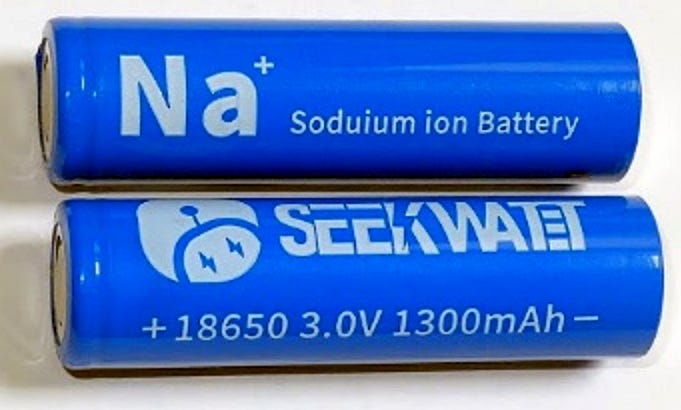
The country’s first sodium-ion battery production facility is being constructed in California. The company Peak Energy says the plant will produce batteries that can store 4 billion watt-hours of electricity annually. The batteries are predicted to cost 20 percent less than lithium-ion batteries, and shipments are planned to start in the first quarter of 2027.
As with any technology, there are advantages and disadvantages to using sodium-ion batteries instead of traditional lithium-ion batteries. Here are some of the benefits:
Sodium is abundant and easy to mine, leading to lower production costs.
Sodium-ion batteries are much safer as they do not have “thermal runaway issues”—that is, they can’t start a fire.
Sodium-ion batteries are more efficient across a wide range of temperatures. They retain 90 percent of their capacity at -40 degrees F, and can operate at temperatures up to 158 degrees F.
Sodium-ion batteries charge and discharge faster, so they respond quicker to demand changes.
Their main drawback is they have a lower energy density, so they weigh 20 percent more and take up 30 percent more volume.
The energy density issue makes sodium-ion batteries undesirable for use in battery electric vehicles, though some hybrid cars are using them since their batteries are small. For large scale storage applications—electric company size—the benefits of sodium-ion batteries far outweigh the density issue, so we should start seeing a wide adoption of them. Research is continuing to improve their energy density, so we may even start to see them used in electric vehicles soon.
***
Bruce Saller is a retired systems engineer with degrees in electrical engineering and computer science.

Battery R&D is the future of worldwide power, once the density and recharge issues are solved. One hopes that individual, corporate, and governmental investments will bring the capital component to the scientific development.