By Ranjit Singh, ADVANCE ENVIRONMENTAL COLUMNIST

I love aphorisms. The poet Archilochus gifted us one of the best ever:
“The fox knows many things, but the hedgehog knows one big thing.”
Both foxes and hedgehogs are well represented among No Lines in Nature readers. But I’ll venture to say that, like the hedgehog, we all know one very big thing. And that thing is:
Our planet and its many interwoven ecosystems are in dire straits.
Frankly, I can’t readily tell you what a “Safe Operating Space” is. But a planet operating outside of one just can’t be good, especially if you happen to riding it through the infinite void of space. At this stage, anyone who thinks otherwise is willfully ignorant, in the pay of some wicked group that profits by wrecking the Earth, or both.
And don’t bother me with foxy debates. We know offering more information to climate change disbelievers, or telling people that data centers harm planetary health, doesn’t work like it should. As scholar Elizabeth deSombre writes, “There is little evidence… that letting people know about environmental problems and their contributions to them changes behavior in meaningful ways.”1
So, no more wasting time. Our sole interest should be on turning things around as soon as possible. Because we must.
What every hedgehog needs now is a strategy.
THINKING STRATEGICALLY
Big environmental groups like Greenpeace and the Sierra Club have in-house strategy teams in the form of executives, consultants, boards of directors, etc. But much green activism occurs at the local level. There, goodhearted amateurs must contend with deep-pocketed corporations or entrenched bureaucracies. Such citizen groups often lack experience thinking strategically. Absent a formal plan, these landowners, teachers, farmers, nurses, engineers, retirees, etc., often fly by the seat of their pants. That’s not ideal for winning high-stakes environmental battles.
Drawing from a course I used to teach, this essay offers seven basic concepts to help green activists craft a strategy.
Until 2023, I held the title of “Fleet Professor” with the US Naval War College. I’ve never even stepped aboard a warship. I held that grandiose title only because for six years I taught a required graduate seminar called “Strategy and War” (previously known as “Policy and War”).
My students were mostly junior military officers. For nine months, we met once per week in the Washington, DC Navy Yard to discuss, in great detail, the bleak human history of warfare. Our task was simple: to learn strategy and operations; to understand what works, what doesn’t, and when.
Our case studies ranged widely. They included ancient Greece, the American Revolution, the Russo-Japanese War, both World Wars, Korea, Vietnam, the sprawling Global War on Terror, Iraq, and even evolving threats like cyber and drone warfare. We read Thucydides, Plutarch, and Mao. And patterns emerged from the study of so many victories and disasters.
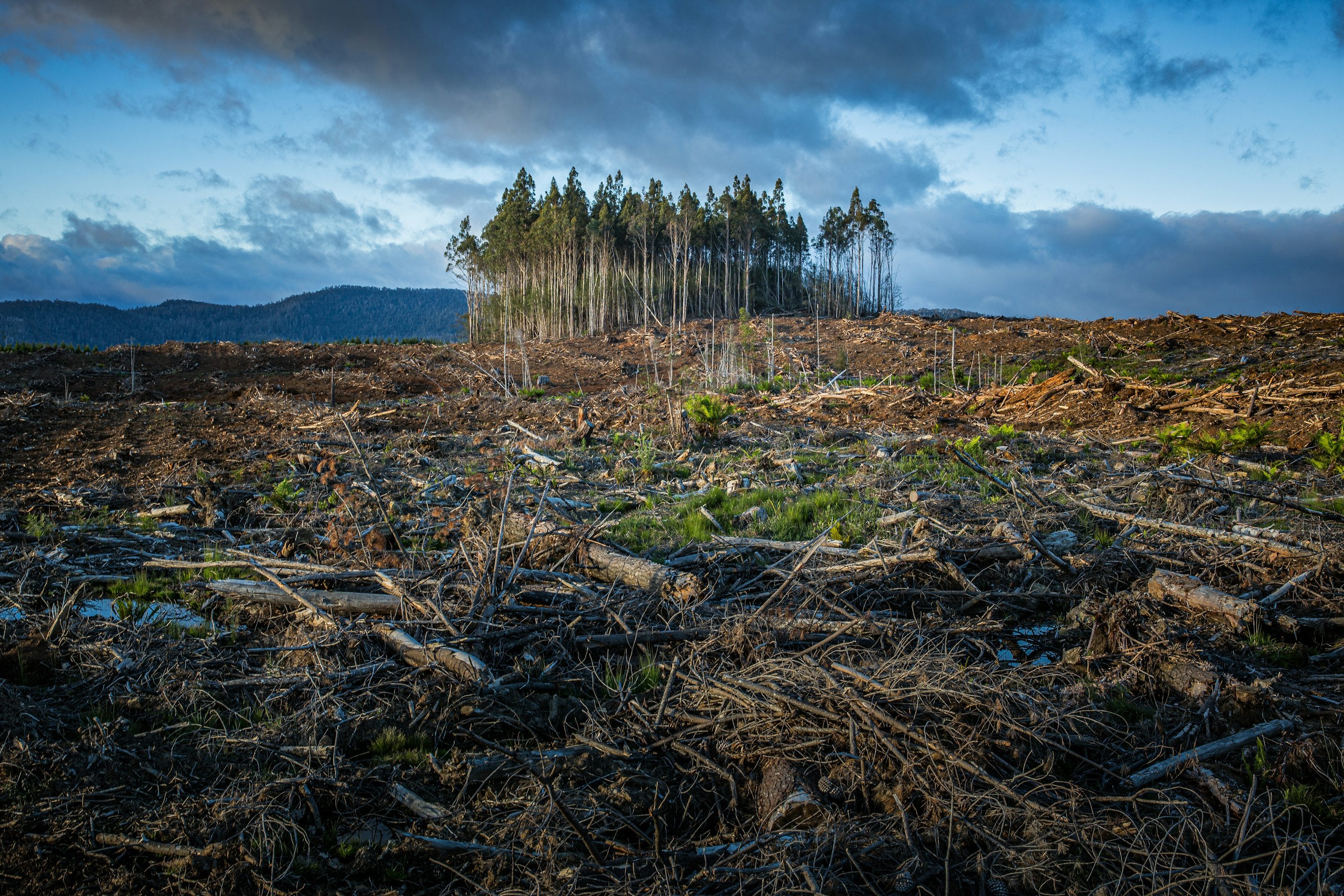
Today’s environmental movement is not facing a kinetic war between armed troops (not yet, anyway), although damage to the Earth is certainly costing lives. That said, much of what these military officers learned in seminar applies to the struggle to save the planet from further irreparable harm. All wars require clear thinking and a sensible plan. I hope green activists will review these basic concepts, discuss them, and use them as seems fit, keeping in mind that these aren’t holy texts. Strategy is as much art as science. Feel free to interpret and revise each idea as needed.
Also, in discussing environmental activism, “war” is used here figuratively — as in the “War on Poverty.” I do not advocate violence against anyone. Regarding “violence” against property — if that’s really a thing — see Andreas Malm’s definitive How to Blow Up a Pipeline: Learning to Fight in a World on Fire (which, contrary to its title, never tells you how to blow up a pipeline). You can make up your own mind on that issue.
Finally, this essay is written for activists. It isn’t an academic treatise, and the text is not burdened with citations or page numbers. Readers desiring more information, like a look at the original language and differing interpretations, are directed to the short bibliography found at the end.
SEVEN CONCEPTS
Most of these concepts are cribbed from three works.
One is by the Prussian theorist Carl von Clausewitz (1780-1831). Clausewitz’s magnum opus, On War, is the most influential study of military strategy of all time. If you’ve heard the phrase “the fog of war,” then you’ve already been exposed to his ideas. Business majors may also recognize Sun Tzu and the best-selling work attributed to him called The Art of War. This comparatively brief work is actually a collection of essays penned in China around the fifth century B.C.E. Finally, Michael I. Handel’s Masters of War: Classical Strategic Thought compares and synthesizes the works of these two core strategists as well as several others. All three books are central to the War College’s curriculum.
But why go to war in the first place?
I. “War is the continuation of policy by other means.”
Because, Clausewitz answers, you want something political. And war, like diplomacy, is one more instrument for getting what you want.
Translated from German, the quote above is Clausewitz’s best-known statement. It’s often rephrased as “War is the continuation of politics by other means.” This is your why concept. Clausewitz insists that war — from the very start — must always be for some political aim. Without a clear policy goal, you’re just wasting energy and resources, nihilistically committing violence for its own sake (and how would you even know when you’ve won?).
A clear political objective is vital because this objective, in turn, determines one’s war plans and the amount of effort to be expended.
So, know what you want first. Then shape strategy and operations around achieving that aim. The former two must always suit the latter.
For generals, the political objective may be the seizure of territory or end of a hostile regime. For eco activists, it might be compelling a government to declare a climate and ecological emergency (as Extinction Rebellion demands). The range of possible policy goals, big and small, is nearly infinite. But don’t come out swinging at government agencies, energy companies, elected officials, or housing developers and expect success if you’re still not sure what you’re trying to achieve. Focus on linkages or you’ll likely make a mess of things.
To me, that is Clausewitz’s principal lesson for anyone planning a fight.
II. Know the nature of the conflict.
Clausewitz writes:
“The first, the supreme, the most far-reaching act of judgement that the statesman and commander have to make is to establish… the kind of war on which they are embarking; neither mistaking it for, nor trying to turn it into, something that is alien to its nature.”
At base, is the environmental “war” you’re contemplating a legal one? A contest for popular support? A financial one, with activists seeking to cancel funding for a development project? Is your struggle a limited one (where, for example, you’re only trying to stop a specific action from happening) or an unlimited one (where you may be trying to stop all such actions, or even put somebody out of business)? Do you expect it to be long or short?
Environmental conflicts are complex, of course. But clarifying the type of struggle one faces is necessary before acting. It’s key to understanding the next steps. A legal conflict probably means your next step is to find counsel, perhaps for an impending lawsuit. A contest that will be decided in the court of public opinion may require organizing protests and town hall meetings. If the principal struggle involves dealmaking, is there a well-placed senator or bureaucrat who needs lobbying?
Leaders who don’t know the type of battle they’re in are more likely to adopt strategies that waste effort and scarce resources, or even prove counterproductive. Mobilizing the masses may put pressure on elected officials, for example — if that’s what’s called for. But there are many scenarios in which mobilizing angry crowds counteracts or even negates quiet, behind-the-scenes pressure or dealmaking, if that’s truly what your conflict is about. Knowing the nature of the conflict guides you towards better plans.
III. Always do a “net assessment.”
This is a modern term for an ancient practice. As Sun Tzu (aphoristically) writes: “Know your enemy and know yourself; in a hundred battles you will never be in peril.”
“To discover how much of our resources must be mobilized for war, we must first examine our political aim and that of our enemy. We must gauge the strength and situation of the opposite state. We must gauge the character and abilities of its government and people and do the same in regard to our own. Finally, we must evaluate the political sympathies of other states and the effect the war may have on them.”
Before taking action, think:
Have you undertaken a structured analysis of the elements and resources available to you in the pursuit of your objective? Have you listed your side’s financial resources, people, and expertise, and assessed your morale and willpower? Have you estimated your opponent’s motives and resources, too, and compared them to yours? Have you charted who their likely allies may be, and who in turn is likely to support you? Which groups will never help your respective causes?
Uncertainty is a given. Yet wise leaders do not engage without first candidly weighing their own strengths and weaknesses against their opponent’s. Write up your assessment on a whiteboard. It will help you decide what strategy and type of “war” best suits your goal and resources. And be ready to reassess all this, too, as the conflict continues.
IV. Know the “centers of gravity”—yours and your opponent’s.
Clausewitz borrows this idea from Newtonian physics. He believes each side in a conflict has a center of gravity, defined as a “hub of all power and movement, on which everything depends.”
Consider here the keystone of an archway. When the keystone crumbles or is removed, the entire structure collapses. That one stone is the archway’s center of gravity. The whole arch depends on it.

For Clausewitz, an actor’s center of gravity could be a specific military fortification, a vital army division, or their national capital.
Sun Tzu, in turn, doesn’t use that exact wording, but suggests that the key vulnerability for any belligerent is likely to be their war plan: “the supreme importance in war is to attack the enemy’s strategy.” Sufficiently disrupt their strategy and they may become powerless. Similarly, he emphasizes the importance of preventing the enemy from finding allies. Deny them of allies, and Sun Tzu says you may never actually have to fight at all. You’ll have won without a shot.
As an activist, you and your opponent both have such vulnerabilities. Your center of gravity may be a specific person (a charismatic or highly capable leader), the support of a well-connected ally or important social group like local landowners, or something else, like an indispensable financial benefactor. Typically in environmental conflicts a corporation’s center of gravity is profitability. Without that, they may well quit trying to build that new data center or log an old growth forest. Why bother if it won’t make them money?
The important thing is to identify the strategic Achilles’ heel. Then, as Clausewitz demands with his “principle of concentration,” concentrate all your efforts and hit your opponent’s center of gravity hard. Keep it up, too.
V. The culminating point of victory.
Maintaining offensive momentum is important (known as the “principle of continuity”), but a good strategy also requires flexibility and fine calculations. If things go well for your side, you also need to start worrying about the “culminating point of victory.”
Here, again, everything boils down to the original policy aim: “superior strength is not the end but only the means. The end is… to bring the enemy to his knees” so that you get what you want. But when does one stop attacking?
The culminating point of victory is Clausewitz’s term for the moment of peak advantage. It’s the moment when continuing to attack no longer serves the political objective. Doing so produces diminishing returns: in military terms, troops become exhausted, supply lines run too long, and flanks become exposed, therefore increasing the possibility of strong counterattack. Go past this point, and you risk everything.
What might the culminating point of victory look like in an environmental struggle? Consider the XL Keystone Pipeline that dominated the news not long ago, from the view of the developer.
The plan was to link Canada’s Alberta tar sand oil fields to refineries in the US. The builder, TC Energy, proposed the pipeline in 2008 and won all the early battles: it got political support, the necessary cross-border permits, and was even able to complete the pipeline’s initial segments. Feeling confident, TC Energy pushed its pipeline into ecologically sensitive and Indigenous lands. This sparked a profound backlash that stalled the project for years. Lobbyists mobilized, and alternative pipeline routes were considered, but it was simply too late. By 2021, the US permits were pulled and the $9 billion project was canceled.
TC Energy’s objective was clear: to make money for investors. Despite a string of early wins, that no longer seemed possible. As the National Resources Defense Council explains: “For companies considering whether to invest in a long-lived tar sands project (which could last for 50 years), access to cheap pipeline capacity plays a major role in the decision to move forward or not.” As the fight drew out, major investors like Koch Industries lost interest because the profit objective was no longer being served. That is, the pipeline’s financial “supply lines” became exhausted, and TC Energy lost its “allies.” The project also became politically toxic. Even the Dalai Lama and Archbishop Desmond Tutu opposed the idea. At some point TC Energy just went too far.
That should have been the end of the story. Unfortunately, it wasn’t. As Sun Tzu writes, “To win victory is easy; to preserve its fruits, difficult.”
Which brings us to…
VI. War termination: knowing when to end a war.
A concept closely related to the culminating point of victory is “war termination.” The trick here is finding a way to consolidate battlefield gains and turn them into durable political results. Because that is what you’re after, right?
Michael Handel states the problem in a nutshell:
“Even the most impressive military victories and resounding defeats are often only transitory. Yet this is seldom recognized by the now hubristic victor, who cannot imagine why he should deign to offer the defeated side fair and acceptable peace terms.”
It helps to recognize that ending a war is rarely a unilateral affair. Seldom is an enemy totally vanquished, and even the defeated side may have legitimate interests. If these aren’t taken into account the resulting peace is a forced peace, and will likely become unacceptable to them. That spells trouble. Handel again: “Finality in war depends on recognition of mutual interests, which is a political, not a military, process.” (My emphasis.)
The victor must therefore offer their adversary terms that are acceptable in the long run. What “fair and acceptable” peace terms look like to a pipeline executive, I have no idea (and shudder to contemplate). But if the victor doesn’t offer them, Clausewitz warns, all you really have is a temporary ceasefire. The losing side will accept the results only until it can regroup and resume fighting for its vital interests.
Clausewitz’s best advice for avoiding this situation? Break your enemy’s will to go on. (See Concept 7 below.)
Regarding the Keystone Pipeline, the enemy’s will apparently lives on, making its defeat seem temporary, indeed. TC Energy found a new ally in the Trump administration that seeks to revive the pipeline, exemplifying Clausewitz’s counsel:
“[E]ven the ultimate outcome of war is not always to be regarded as final. The defeated state often considers the outcome merely as a transitory evil, for which a remedy may still be found in political conditions at some later date.”
Elections changed the political conditions surrounding the pipeline. That war isn’t done yet.
That said, XL Keystone was never an existential issue for TC Energy. The company remains profitable even without the pipeline, recording billions in revenue each quarter. It can be patient.
There are cases, however, where activists may want to deliver something closer to an existential threat. It’s a bit of a balancing act. On the one hand, such threats risk putting one’s opponent on “death ground,” which Sun Tzu warns against: “In a desperate situation, they fear nothing; when there is no way out they stand firm.” But existential threats can also provide leverage, pushing opponents to accept a less threatening way out.
This strategy is sometimes called building a “golden bridge.” It also traces back to Sun Tzu, who advised giving a retreating enemy positive incentives to capitulate.
“To a surrounded enemy you must leave a way of escape. Show him there is a road to safety, and so create in his mind the idea that there is an alternative to death. Then strike.”
Greenpeace International used this strategy in 2006. Their aim was to end the deforestation of the Amazonian rainforest. Greenpeace launched a massive PR war against fast-food giant McDonalds because the latter’s suppliers contributed to the illegal deforestation. The strategy appeared two-fold. Greenpeace threatened McDonalds with an indefinite boycott, a potentially widespread consumer backlash akin to profitability “death.” But it also offered a way out.
Eventually, McDonald’s and other major food corporations signed onto the “Amazon Soy Moratorium.” This voluntary agreement pressures global grain suppliers to stop buying soybeans grown on deforested land. The deal was hailed as a remarkable success (Greenpeace calls it “the world’s single most successful zero-deforestation policy.”) For twenty years, it worked pretty well.
Yet financial pressures and shifts in Brazilian politics caused the moratorium’s collapse earlier this year. The incentives that had initially compelled cooperation changed.
Again, the result of war is never final. Most environmental conflicts are iterative games, played out over the long term. Savvy actors know they’ll likely face each other again some other day. And, as Sun Tzu points out, in war there are no constant conditions.
That means that even after a big win, green activists must be ready to fight again and again.
VII. Asymmetrical war
Environmental conflicts are typically asymmetrical. This is especially so at the local level. One side is strong, probably a corporation or bureaucracy laden with expertise and resources. The other is usually a cobbled-together citizen group enjoying none of these advantages. Sound familiar?
How can the little guys win?
Neither Clausewitz nor Sun Tzu spend much time on asymmetrical warfare. But all military strategists are familiar with what’s called the Fabian strategy, named after a Roman general who successfully opposed a far stronger army.
When employing a Fabian strategy, the weaker side fends off the stronger through an intentionally protracted war of attrition. The weaker side constantly harasses its enemy, inflicting minor but humiliating damage, then retreats, sensibly avoiding the sort of conventional “decisive battle” that stronger militaries prefer to fight. Eventually, the tide can be turned. This is a recipe for defeating a much stronger opponent via patience, discipline, and willpower.
George Washington (nicknamed the “American Fabius”) lost several set-piece battles to far better trained and equipped British troops before deploying this hit-and-run approach for most of the War of Independence. Only after years of delay could his troops risk a conventional battle like Yorktown, which effectively ended the war. Chinese communists employed this long term strategy, too, eventually grabbing power in China in 1949. So did the North Vietnamese. And the Taliban. Properly applied, it works.
A major complication, though, is persuading your own people that avoiding direct conflict with the enemy and intentionally elongating the war is the right thing to do. After all, you’re not winning any battles. You just look weak and afraid.
Perhaps the best justification ever given for staying with an unpopular Fabian strategy was offered by none other than Alexander Hamilton, Washington’s aide-de-camp. In a 1777 letter to a supporter, Hamilton explained the rebels’ approach by linking it directly to their “infinite” war aim — American liberty. His defense of Washington’s avoidance of head-on battles and desire to prolong the conflict is worth quoting at length:
“I know the comments that some people will make on our Fabian conduct. It will be imputed either to cowardice or to weakness: But the more discerning, I trust, will not find it difficult to conceive that it proceeds from the truest policy, and is an argument neither of the one nor the other. The liberties of America are an infinite stake. We should not play a desperate game for it or put it upon the issue of a single cast of the die…
On our part, we are continually strengthening our political springs in Europe, and may every day look for more effectual aids than we have yet received. Our own army is continually growing stronger in men arms and discipline…
Their [British] affairs will be growing worse—our’s better;—so that delay will ruin them. It will serve to perplex and fret them, and precipitate them into measures, that we can turn to good account. Our business then is to avoid a General engagement and waste the enemy away by constantly goading their sides, in a desultory teazing way.”
Washington’s forces shun conventional battles because that would risk liberty for “a single cast of the die.” Delay allows the Americans to attract European allies and grow stronger. On the other hand, British forces, Hamilton assures his friend, are losing morale and will prove more likely to take foolish risks “that we can turn to good account.”
Regrettably, many environmental fights threaten to be short and sharp. When a billionaire developer wants to put a data center near your house, for example, you and like-minded friends are probably at a serious disadvantage. The developer brings deep pockets, technical and lobbying expertise, a PR machine, and more to a permitting process that may last only a few weeks or months — unless you can find a way to prolong it.
So buying time is likely your first priority. Delay. Avoid any type of formal showdown that favors the well-resourced. You want to exhaust your opponent. Be elusive. “Shoot” from behind trees. Gum up the works. Go guerrilla. In your particular context, that could mean delaying public meetings, showing up uninvited, requesting sensitive records through the Freedom of Information Act (FOIA) and publishing them, and tracking and calling out even the tiniest violations of official procedure. Befriend journalists and share info your opponent doesn’t want made public. Anything to sap their willpower.
This may not look or feel like winning. Supporters will get frustrated over the lack of decisive victories. But, like Hamilton, you must beg for patience and persuade them what your group is doing is the best available strategy. Indeed, given the asymmetry of forces it may be the only available strategy that offers any chance of victory. As Mao Zedong, leader of the Chinese revolution, wrote, “There is no magic short cut.”
CONCLUSION
Many of these concepts sound like common sense. They aren’t. The current US war with Iran was launched in February without a clear political objective, and it shows. Putin invaded Ukraine in 2022 by attacking the country from all sides at once instead of focusing on a vital center of gravity. Now, he’s stuck in a demoralizing stalemate. With due respect to Sun Tzu, winning is hard.
There’s far more advice to be found in these classic texts on strategy. Both Clausewitz and Sun Tzu espouse useful ideas on leadership, the value of surprise and deception, and so on. At times, they also contradict themselves. I’ve presented here only what I hold to be the most pertinent ideas for environmental activists, adapting them (a bit) with an eye towards such applications.
I’ll end with Sun Tzu’s opening lines, on the stakes of war. I believe they apply equally well to the urgent need for environmental policy change today:
“War is a matter of vital importance to the State; the province of life and death; the road to survival and ruin. It is mandatory that it be thoroughly studied.”
Study strategy, and take from it what you need.
Then act.

These three books have long been central to the Naval War College’s curriculum:
Samuel B. Griffth, trans. Sun Tzu: The Art of War. (Oxford University Press: 1963). Paperback first published 1971.
Michael I. Handel. Masters of War: Classical Strategic Thought. (Frank Cass Publishers: 2001, 3rd edition).
Michael Howard and Peter Paret, eds. & trans. Carl von Clausewitz: On War. (Princeton University Press: 1976). Paperback first published in 1989.
***
Ranjit Singh teaches in the Department of Political Science and International Affairs at the University of Mary Washington. He’s also an active environmentalist. His “No Lines in Nature” Substack blends history, science, and philosophy to explore our relationship with the natural world world. You can find it HERE, and you can find an earlier version of this essay HERE.