
By Phil Huber, ADVANCE COLUMNIST
A year ago, Defense Secretary Pete Hegseth called hundreds of generals and admirals to Quantico. What they heard was less a war council than a televised lecture with more brass in the room.
The message was clear enough. The military would be tougher, fitter, less “woke,” and more focused on warfighting. Hegseth announced tougher physical standards, tighter grooming rules, and less mandatory administrative training. President Trump followed with a wide-ranging speech that wandered through domestic politics and suggested American cities could serve as “training grounds” for the military.
There is nothing wrong with demanding high standards. Soldiers, sailors, airmen, Marines, Guardians, and Coast Guardsmen should be fit for duty. They should meet the demands of their jobs. They should know how to fight, win, and come home alive.
But the military is not made stronger by mistaking a haircut for a strategy.
Now comes another Hegseth “State of the Force” speech, reportedly scheduled for September 30 at the Pentagon. The audience will not be the senior military leadership assembled at Quantico. Commands have been asked to nominate handpicked troops who meet body-composition standards, have “impeccable” grooming and uniforms, and are judged to be top performers with integrity, discipline, and good judgment.
That may produce a fine-looking audience, perhaps the best-groomed crowd in Northern Virginia. But it will not answer the more important questions:
Are our units ready?
Do we have enough trained people, missiles, ships, aircraft, repair parts, and allies?
Can we deter China from coercing Taiwan while also facing Russia in Europe and a widening war with Iran?
Those are the questions that decide wars—not whether another roomful of troops can illustrate a political point.
The good news—and its limit
The Army deserves credit for solving a serious recruiting problem.
It exceeded its Fiscal Year 2025 active-duty target, bringing in 62,050 recruits against a goal of 60,500. That is welcome news. An all-volunteer military cannot function without young Americans willing to serve.
The administration naturally takes credit. It is fair to say that open support for the military and an emphasis on standards may encourage people to talk to a recruiter. But the real story began earlier.
In 2022, the Army began the Future Soldier Preparatory Course. It gave otherwise promising applicants academic coaching or fitness and body-composition training before basic training. It did not erase standards; it helped applicants reach them. Congressional researchers found graduation rates of nearly 95 percent for the fitness track and more than 92 percent for the academic track.
By 2024, nearly one in four new Army recruits had gone through a pre-accession preparatory course. The Army also improved recruiter selection, used data better, rebuilt its delayed-entry pool, and spent more intelligently on advertising and incentives.
That is practical institutional reform. It is not glamorous, and it will never fit neatly on a campaign hat. But it works.
Still, recruiting is only one part of readiness. A young person who signs up today will not become a seasoned NCO, cyber specialist, aircraft maintainer, submarine technician, medic, or platoon sergeant by Thanksgiving. The services need recruits, but also experienced people, training time, working equipment, repair capacity, family support, and leaders free to give unpleasant advice.
A recruiting rebound is a good start. It is not a national defense strategy.
The people behind the uniforms
The Pentagon has cut civilian employees while declaring that it is rebuilding military strength. That should worry anyone who wants a force able to deploy, sustain itself, and bring people home.
The Government Accountability Office found that the Defense Department’s civilian workforce fell by roughly 78,000 people in 2025, almost 10 percent of the workforce. GAO also found that the department had not adequately assessed the effects of those reductions on readiness, workload, and mission execution.
These are not people sitting in cubicles inventing new ways to lengthen forms. They include engineers, contract specialists, logisticians, depot workers, medical employees, child-care providers, installation managers, and people who keep military communities operating.
GAO also found that the reductions made it harder to staff critical support positions at remote and isolated installations. That affects housing offices, health clinics, schools, spouse-employment programs, and other services that determine whether military families can get through another move, deployment, or crisis.
We ask military families to live with separations, unpredictable orders, and the possibility that a loved one may go to war. The least we can do is make sure somebody answers the phone at the housing office.
If we want good people to stay, their families cannot be treated as an afterthought. A service member whose spouse cannot find work, whose child cannot get care, or whose housing problem goes unanswered hears “readiness” at the kitchen table.
What China sees
China is watching all of this. So is Russia.
Beijing does not need to defeat the United States everywhere. It needs only to make an American response to a Taiwan crisis slow, expensive, politically divided, and uncertain. China can use geography, missiles, cyberattacks, space disruption, economic pressure, and political warfare to separate Taiwan from the United States—and the United States from its allies.
America’s greatest danger is not a shortage of courage. The danger is whether we can sustain a high-intensity fight across the Pacific.
The Center for Strategic and International Studies recently concluded that, despite progress, the United States would struggle in a prolonged war with China unless it expands production of munitions, air defenses, long-range strike weapons, and other essential capabilities. Wars are won not only by brave people and magnificent machines, but by fuel, spare parts, skilled labor, repair facilities, and the ability to replace what is lost.
RAND has offered a similar warning about the space-defense industrial base. It found shortages of engineers, technicians, and specialized workers needed to rebuild U.S. military space capabilities after a major conflict. Satellites do not grow back like grass after a summer rain, and the people who design and build them take years to train.
Yet we are spending enormous attention on beard rules, waistlines, and carefully selected audiences. Those issues may have their place. But they must not crowd out work on munitions, ship repair, air-defense production, drones, cyber resilience, and industrial capacity.
A military can have immaculate grooming standards and still run short of Patriot interceptors.
Allies are not decorations
America’s greatest strategic advantage is not merely the size of its defense budget or the quality of its troops. It is our alliance network.
Japan, Australia, South Korea, the Philippines, NATO countries, and other partners provide access, bases, repair facilities, intelligence, logistics, and political legitimacy. In a Pacific war, they are not optional extras. They may be the difference between operating as a coalition and trying to carry the whole burden alone.
That is why the Iran war should trouble us.
When the United States asked allies to help secure the Strait of Hormuz, many resisted. Germany said it had not started the war and would not provide forces. France and Britain sought a ceasefire and a clearer political path before joining a maritime coalition. Japan and Australia also showed little interest in sending ships.
Those countries are not suddenly enemies. They are telling us something more uncomfortable: They do not want to be drafted into a conflict after decisions have been made without them.
That should be a warning light for the Pacific. Allies will fight beside us when their security is directly at stake. But they are less likely to follow an American President who treats consultation as something to consider after the microphones are turned on.
Pew Research found that, across 36 countries, a median of only 23 percent had confidence in Trump to do the right thing in world affairs. In many allied countries, the share of people who see the United States as a reliable partner has fallen sharply.
A treaty matters. Trust is what makes it work on a bad day.
The hard test ahead
Another Quantico-style meeting could be useful if it were a serious readiness conference. Hegseth could bring senior leaders together to discuss munitions production, Pacific logistics, air and missile defense, space resilience, drone warfare, shipyard delays, technical recruiting, and strain on military families.
That would be worth the airfare.
But if the event is another political performance—another reminder that the boss wants a certain appearance, applause line, and ideological vocabulary—it will do little to make America safer. It may do the opposite.
The military’s duty is not to flatter the President or the Secretary of Defense. Its duty is to provide candid professional advice and faithfully carry out lawful orders under civilian control. Officers swear an oath to support and defend the Constitution, not to an individual officeholder.
That distinction matters now more than ever. A commander in chief needs generals and admirals willing to say when plans are failing, stocks are low, allies are wavering, and risks are rising. A roomful of people who fear delivering bad news is not a command team. It is a very expensive echo chamber.
America still has the strongest military in the world. Its people remain its greatest strength. But strength is not automatic, and it is not preserved by slogans.
If we stay on the present course—cutting the civilian backbone, treating allies as hired help, confusing political loyalty with professional duty, and spending more time on cultural theater than hard readiness—we may discover too late that looking tough is not the same thing as being prepared.
***
Phil Huber is a retired Army Reserve colonel, federal civil servant, and consultant who writes on civic education. He lives in Fredericksburg.

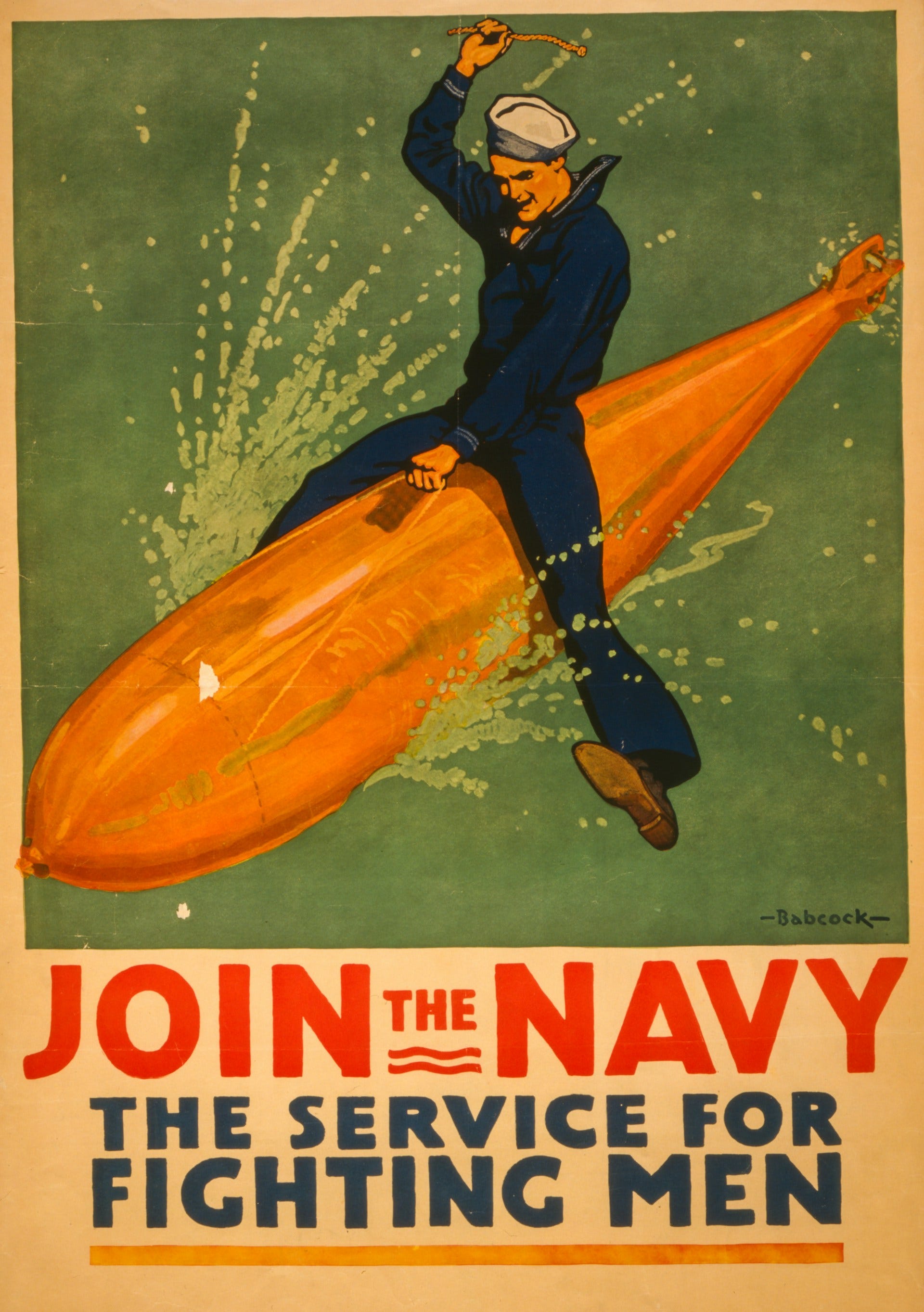
Instead of staging these Trump-style rallies in his ‘28 presidential campaign, Hegseth should pay more attention to the appalling conditions aboard Navy aircraft carriers.