
By Phil Huber
ADVANCE CONTRIBUTOR
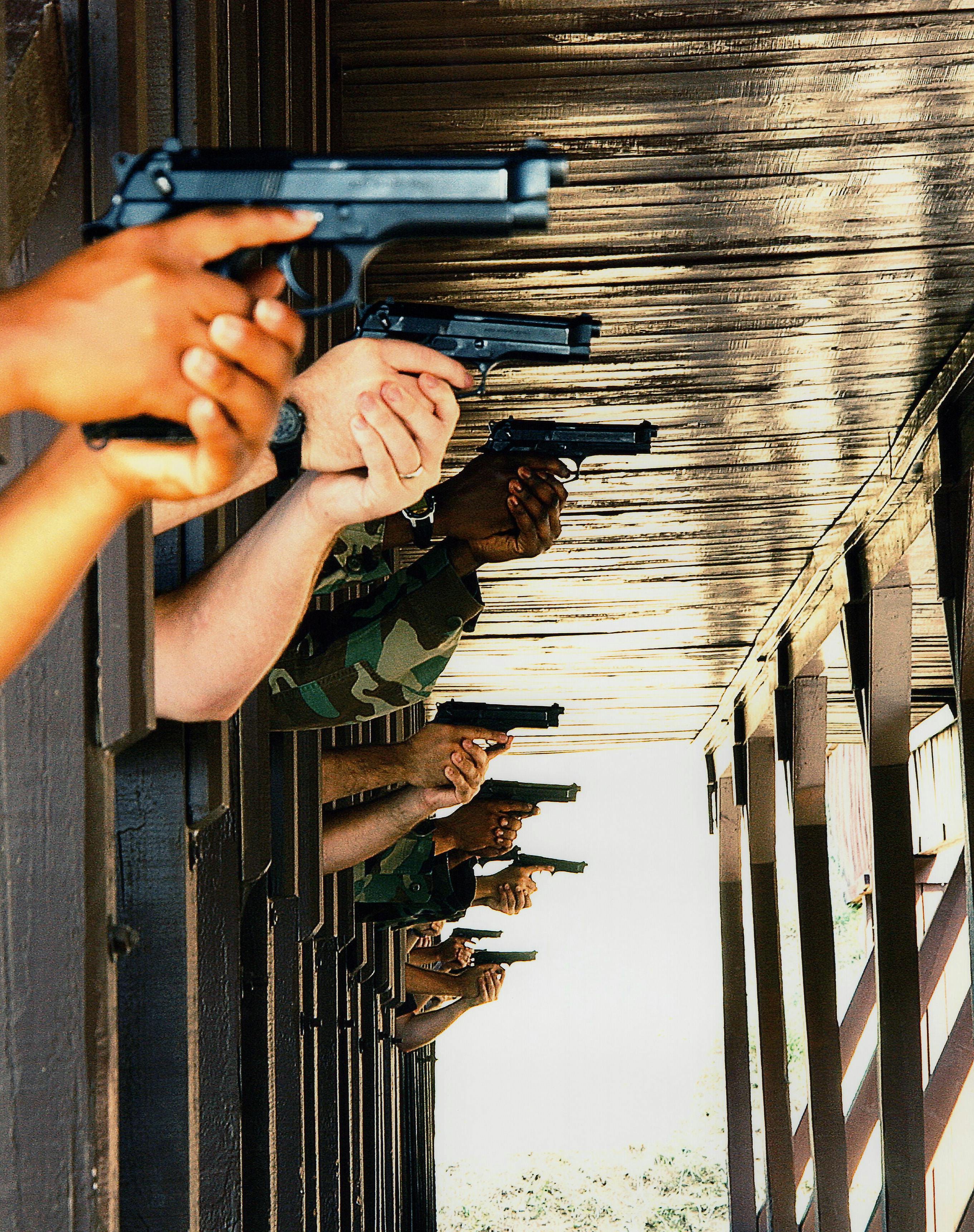
There are many like me who remember a very different National Rifle Association than the one Americans argue about today. As I approach my 79th birthday, I find myself reflecting on that change—not as an outsider, but as someone whose early relationship with the NRA shaped a lifelong respect for firearms and responsibility.
I joined the NRA in the late 1950s and remained a member into the early 1960s. Back then, my connection to the organization came through American Rifleman magazine, which I eagerly read each month. The focus was not partisan politics or cultural anger. Instead, it emphasized marksmanship, firearm safety, and the disciplined, responsible use of guns.
For a young person growing up in post–World War II America, the NRA offered structure, training, and a sense of achievement. I participated in the Marksmanship Qualification Program, earning badges from Pro-Marksman through Expert. Each badge I proudly had sewn onto my jacket felt like a rite of passage. Those awards represented more than shooting skill; they symbolized discipline, responsibility, and respect for firearms.
As I grew older, my life moved in other directions, but those lessons stayed with me. They followed me into military service, where I further developed my marksmanship skills. The fundamentals I learned—sight alignment, trigger control, and strict safety habits—proved invaluable. In uniform, weapons proficiency is not about bravado. It is about professionalism, accountability, and protecting lives. The NRA of my youth reinforced those values.
Over time, however, the organization changed. The NRA I had known as a steward of responsible gun ownership shifted toward a very different mission. Instead of placing safety and training at the center of its identity, the NRA increasingly became defined by gun-rights politics. Debate over the Second Amendment is a legitimate part of American democracy, but the modern NRA moved away from teaching citizens how to use firearms responsibly and toward treating nearly every form of regulation as an attack on constitutional rights.
That shift is particularly evident in the NRA’s defense of AR-style rifles and similar semi-automatic firearms. The organization has consistently opposed restrictions on these weapons and portrayed them as ordinary firearms, even as public debate has increasingly focused on their repeated use in mass shootings. For those of us raised in an NRA culture centered on caution, safety, and responsibility, it can be difficult to reconcile that absolutist approach with the deaths of children, shoppers, churchgoers, and neighbors, and with the grief those tragedies leave behind.
This transformation was not simply an evolution; it represented a departure from the organization’s original purpose. The NRA was founded in 1871 by Union veterans William C. Church and George Wingate, who were concerned about poor marksmanship they had observed during the Civil War and sought to improve shooting skills among civilians. For much of its history, the organization was known primarily for training, education, and safety.
In recent years, that departure from its roots appears to have caught up with the NRA. Earlier this year, the organization sued its own charitable arm, the NRA Foundation, accusing it of trademark misuse and unfair competition. The foundation, meanwhile, has moved to distance itself from the NRA and rebrand as the “1791 Foundation,” named for the year the Bill of Rights was ratified. The dispute remains in litigation, but it has exposed a growing divide between political advocacy on one side and charitable education and training on the other.
The NRA’s declining membership is another part of that story. According to recent news reports, the organization has lost roughly one million members since its 2018 peak, despite continuing to publicly claim five million members.
Firearms are widespread today, yet many gun owners have never received serious training or absorbed a strong culture of safety. Instead of education, marksmanship, and responsible ownership, though, the NRA has become increasingly associated with confrontation, absolutist messaging, and internal controversy.
For someone who remembers a very different NRA, the split between the main organization and its foundation is revealing. It suggests that even within the NRA’s orbit there is recognition that an educational and charitable mission focused on training and safety still has value. The 1791 Foundation appears to be attempting to reclaim the ground the older NRA once occupied: firearms safety, marksmanship instruction, and responsible gun ownership, particularly for young people and new shooters.
I have no illusions. A new name alone will not restore the culture I experienced in the 1950s and 1960s. Time will tell whether the 1791 Foundation remains true to that older ethic or eventually adopts the same political habits that transformed the NRA. Still, I am cautiously hopeful.
Governor Abigail Spanberger has signed legislation banning the future sale and transfer of certain AR-style rifles and high-capacity magazines. Unfortunately, several commonwealth attorneys and sheriffs—including the Spotsylvania County Commonwealth Attorney—have already announced they will not enforce it. In a moment when the NRA continues to urge resistance while facing membership losses and a public split with its own foundation, Virginians deserve to know that there is at least one organization claiming to return to the older model of firearm education, safety, and responsibility.
Gun owners who care about training and safe firearm use now have another option: supporting the educational work of the 1791 Foundation rather than sending their dollars to the NRA.
If the 1791 Foundation can model the best qualities of the original NRA, it deserves a fair hearing from those of us who remember that earlier era—and from younger Americans who never experienced it. In communities like Fredericksburg, where many residents value both constitutional rights and public responsibility, that would be a welcome change.
***
Phil Huber is a retired federal civil servant, a retired U.S. Army Reserve colonel, and a retired minority owner of Marstel-Day consulting firm in Fredericksburg. He joined the NRA as a boy in the late 1950s and earned his first marksmanship patches through its training programs. He now works on civic education and is a member of the Fredericksburg Democratic Committee.