
By Bruce Saller
ENVIRONMENTAL CENTS
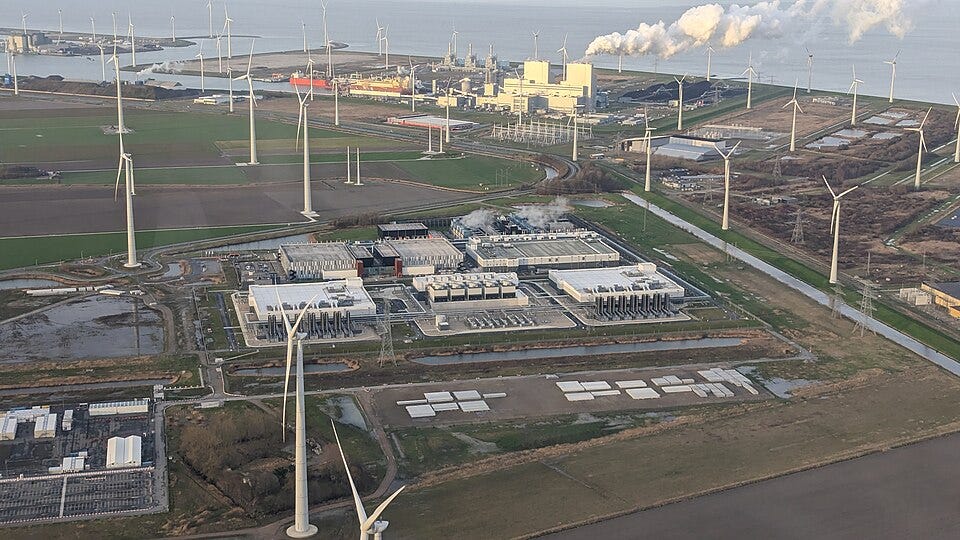
According to a recent report to the Virginia State Corporation Commission, between 2021 and 2023, our regional electricity conglomerate—PJM Interconnection—adjusted their projected long-term electrical generation growth from just over 1 percent per year to 6 percent per year.
The reason: a surge in demand from data centers around the Commonwealth and beyond, which is already causing significant disruption in the power generation market. All the next generation Small Nuclear Reactors are still in development and won’t be available for commercial use until the 2030s, so most of the additional generation will need to be provided by natural gas turbines and renewable sources.
Which is going to cost us, if it’s even possible to meet the increased demand, because as things currently stand, and for the foreseeable future, there aren’t enough natural gas turbines to go around.
Here’s how it works: Prior to 2022, a provider that had one hundred 300 megawatt natural gas turbines—each with a lifespan of 50 years—would need to replace two end-of-life turbines and add just one to cover the 1 percent growth in demand every year.
Since 2022, though, with more and more data centers coming online with their drastically increased demand for electricity, that same provider now needs six new turbines every year to cover growth. The math is simple: eight new turbines annually instead of three. Unfortunately, all the other providers are in the same boat, and turbine manufacturers can’t increase production fast enough to meet the demand—no big surprise considering the enormous size of these precision devices: 55’ x 20’ x 20’ and 500 tons.
The rising demand has already caused a turbine delivery backlog of between 5 – 7 years and a price increase of 195 percent from 2019—from $205/kilowatt to $600/kilowatt.
Here are a couple of possible scenarios for how this will affect existing customers:
1. The provider somehow manages to obtain the necessary eight 300 megawatt gas turbines to keep up with demand (unlikely). Even if the data center industry pays for five of the turbines, which is no sure bet, other customers, including us, will have to shell out an extra $1.2 billion collectively on our electric bills to cover the cost of the other three turbines.
2. The provider gets their hands on four 300 megawatt gas turbines, with delivery of the other four promised at a later date (more likely). The provider then needs to make up the difference in power demand from a combination of keeping the old, less-efficient turbines on-line, installing additional renewable energy, and purchasing additional power. Figuring out how the costs would be divided between the data centers and the rest of us is more difficult to figure out in this scenario—other than to say that electricity is going to cost more for you and me from now on.
In all cases, the provider will be using more natural gas which will also cause fuel costs to be higher.
And that’s not all.
There are also increased transmission, distribution, and operational costs that have to be factored in. Our bills have already gone up nearly 20 percent from last year with a new fuel surcharge added to a previously-approved 9 percent base rate increase. The Virginia legislature just passed a new law establishing a higher electrical rate for data centers, but there’s still a great deal of uncertainty about how that rate will and should be calculated
Instead of trying to separate out all the costs, I suggest that we set our rates by extrapolating from the rates between 2010-2022, letting the data centers pay for all additional costs. Our electrical rate was 9-10 cents/kilowatt-hour from 2008-2022, increasing to 14 cents/kilowatt-hour in February 2026, so you can see the large impact data centers have had on our rates.
Convincing the legislature and State Corporation Commission to make Data Centers pay their fair share will be the hard part.
***
Bruce Saller is a retired systems engineer with degrees in electrical engineering and computer science.


The thing is that data centers are selling a service that is in demand and customers willing to pay for it. If costs for operating data centers goes up, those costs will be passed on to customers like any other businesses that ends up with increased costs.
SMRs will not be cheaper electricity. It will be more costly than gas or coal and much more costly than wind and solar. Wind/solar are not always available so not primary sources but when they ARE available, they are much less costly than peaker gas plants and SMRs.
But at the end of the day, data centers are not going away because basically they are the world we live in, not just our own phones or internet but virtually every business we go to, uses data centers for their transactions. Your doctor, dentists, car repair, Walmart, Amazon, restaurant, etc, etc ALL depend on data centers now. If they were not selling services in demand, they'd go broke. It's the opposite, it's unmet demand that is driving more of them.
We need to face up to the realities instead of playing luddite ostrich games.