By Steve Rabson, GUEST COLUMNIST
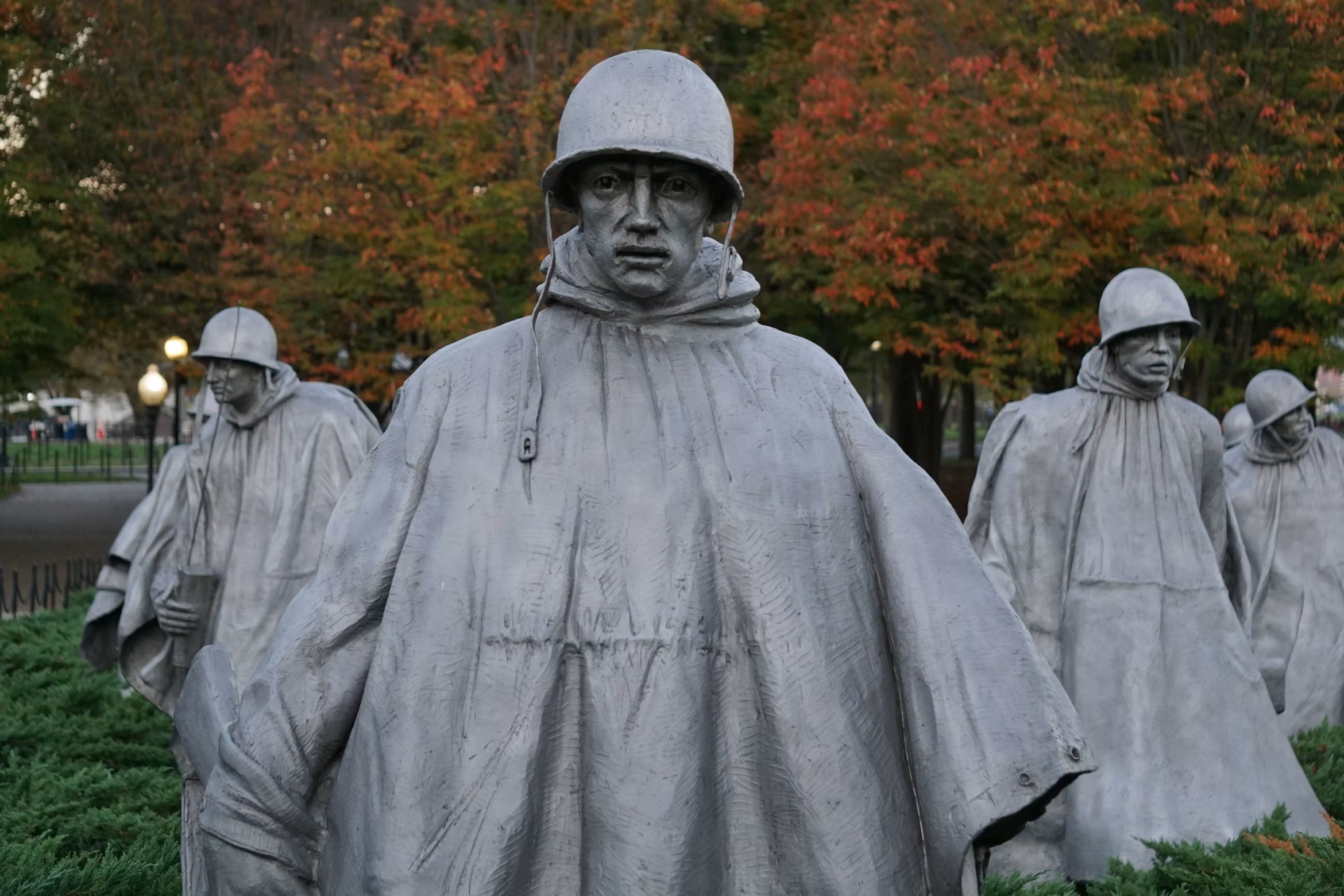
I was in first grade when the Korean War started. It was June 1950 and my family was on summer vacation, staying at a rented cottage on Lake Ontario in upstate New York. My father and uncle were around 30 years old and both had served in World War II. When we heard the news about the war on the radio, they wondered if they would be drafted. My grandmother was particularly worried because her first son, my uncle John, died in April 1945 when his plane crashed in Mindanao province of the southern Philippines. All the wreckage had burned, leaving only the crew’s dog tags, so it was never known whether the crash was caused by enemy fire or engine trouble.
After World War II, my father finished graduate school at the University of Michigan. He was teaching mathematics at Purdue during the Korean War. In order to circumvent the Constitutional requirement that only Congress could declare America.at war, President Truman called U.S. intervention in Korea a “police action.” After we returned home from that summer vacation, my parents listened to the morning news by Cecil Brown every day on the radio. He reported from Korea on short-wave broadcasts, so the sound echoed with background noise, and his voice sounded growly, like he had laryngitis.
Brown was sharply critical of South Korean President Syngman Rhee for his corrupt and dictatorial administration. The U.S., leading a U.N. coalition, had successfully pushed the North Korean army out of South Korea, which it had invaded at the start of the war. Now Rhee pressured the U.S. for U.N. forces to cross the border at the 38th parallel and expand the war into North Korea, hoping for a unified Korea under the South Korean government in which he would be president.
In October, the U.N. coalition invaded North Korea, forcing the North Korean army into further retreat, and occupied the capital Pyongyang. Under the command of General Douglas MacArthur, the U.N. forces continued advancing north to the banks of the Yalu River along the border with China, despite warnings from Chinese leaders that this would bring China into the war. In late November, the Chinese launched a major counter-offensive with the North Korean army. It pushed U.N. forces back down the peninsula into South Korea, and occupied the capital Seoul in January of 1951.
The next spring, my parents invited the math majors who were graduating from Purdue to our house for a dinner party. There was much talk about the war. Everyone offered their sympathies and best wishes to one of my father’s students from South Korea who would enter the army as soon as he returned there.
The war was still dragging on during summer vacation in 1952 when our family took a camping trip to the Smoky Mountains. In July, at a state park in Kentucky, we listened to the baseball all-star game in Philadelphia on a portable radio. My parents cheered when Jackie Robinson, the first Black player in the major leagues, hit a home run. Later that month, at a campground in Tennessee, we heard the Republican national convention broadcast from Chicago. My parents were upset when MacArthur gave the keynote address. There was talk of nominating him for president. As the commander of United Nations forces in Korea, he had spoken publicly against the U.S. policy of a limited war and advocated expanding operations into China to blockade the coast with the option of using nuclear weapons. After months of criticizing Truman’s war policy in the press, he sent a letter to the Republican leader in the House calling for total victory. Truman finally fired him for insubordination. This made him a hero among Republicans who invited him to give what became his famous farewell speech before a joint session of Congress in April of 1951, and to deliver the keynote address at the 1952 convention.
At every movie I went to see that year, MacArthur appeared in the ten-minute “News of the World” newsreels that came after the cartoons and before the main features. The newsreels also showed cannons firing from emplacements and from ships, prisoners of war being led along roads by American MPs, and crowds of civilian refugees receiving food and medical care from other American soldiers.
In the months that followed, the three armies wreaked death and devastation up and down the peninsula leading to what was called a stalemate. The war finally ended in July, 1953, where it had started, with a truce declared along the 38th parallel that divided North and South Korea. Syngman Rhee, still advocating for South Korean control of the peninsula, refused to sign the truce agreement. Among combatants, the war had taken the lives of approximately 294,000 North Koreans, 180,000 South Koreans, 157,000 Chinese, and 37,000 Americans. Total civilian deaths were estimated at 3.5 million.
The next year, one of my teachers, Mr. Wilmer, was a veteran who had recently returned from Korea. We boys were fascinated by this, and my friend Donnie asked him, using a phrase he’d probably heard in the movies, if Mr. Wilmer “saw any action.”
Mr. Wilmer got a disgusted look on his face and answered very quietly.
“You wouldn’t call it that if you’d been there.”
***
Steve Rabson is a jazz pianist, retired professor from Brown University, and current adjunct Instructor at the University of Mary Washington.