By Monimala Basu, SPECIAL to the ADVANCE
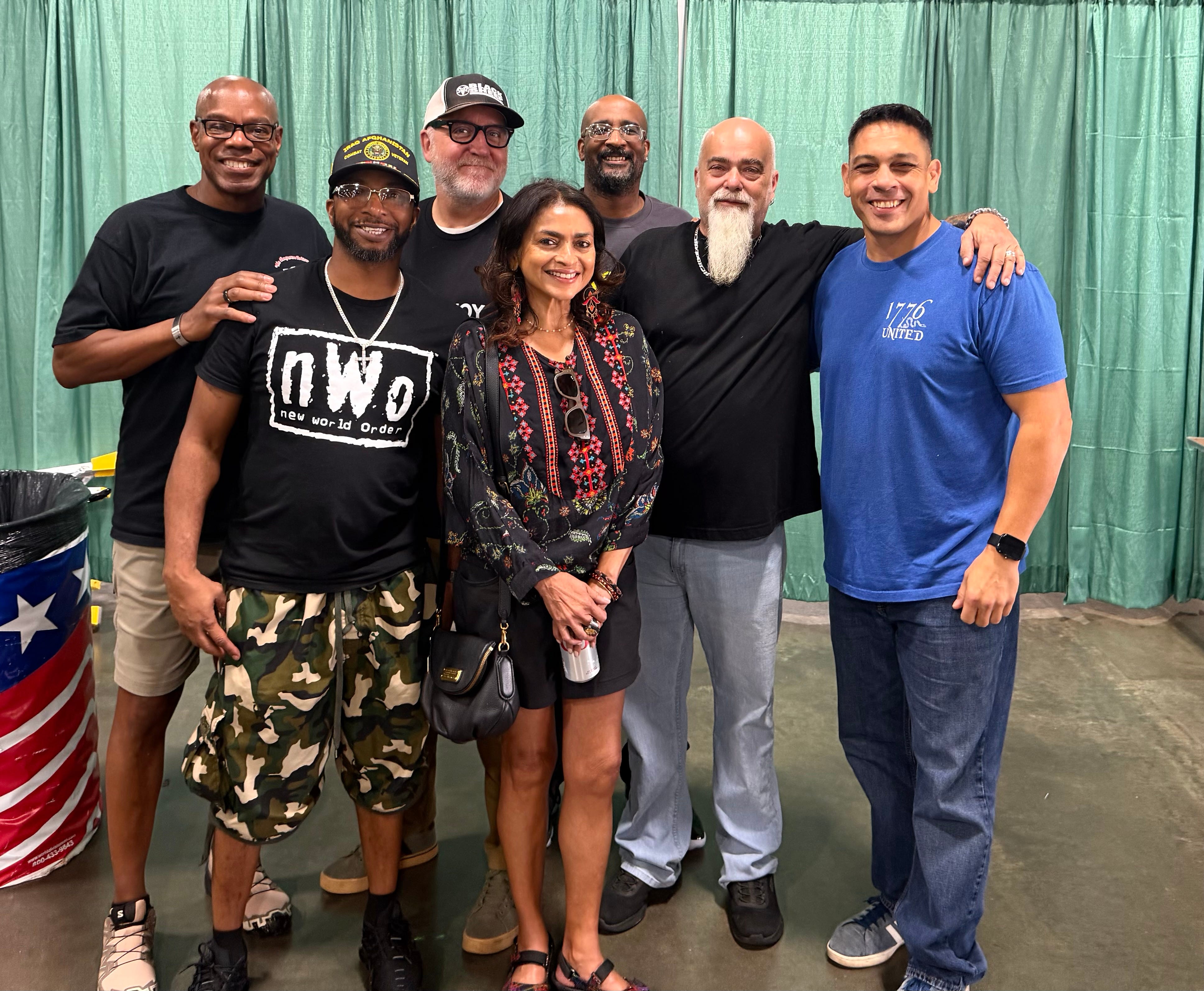
A few days back, I drove south on I-75 to Perry, home to the Georgia National Fairgrounds. I arrived on time, parked my car but then I hesitated. The nearly two-hour journey had filled me with memories and trepidation; I sat in my car for a full 20 minutes to compose myself.
Inside the enormous exhibition hall were men and women I had not seen in years. Two full decades, in some cases. They were soldiers in the Georgia Army National Guard’s 48th Brigade Combat Team and I met many of them when they were young—and perhaps too innocent for war. They were sent to the battlegrounds of Iraq.
I had gone with them, in a sense. Not as a soldier, but as a journalist.
Now they were gathering for a reunion, two decades after returning from a yearlong deployment at the height of the Iraq War. I knew there would be tears, but I did not know what to expect, really. Who would be there? What if I was out of place? I was the reporter, after all. Not a soldier. I didn’t want to feel like a party crasher.
In 2004, I was a staff reporter at the Atlanta Journal-Constitution, and the 48th Brigade’s call-up was a big deal for the newspaper because it was such a big deal for the state. It was the largest combat deployment for Georgia Guard soldiers since World War II, and small towns all over Georgia would suddenly have to function without their firemen, law enforcement officers, schoolteachers, plumbers, welders, truck drivers, doctors, nurses and bankers for almost a year and a half—first, months of training at Fort Stewart, then on to simulated desert conditions in Nevada’s Fort Irwin, and finally in May 2005, into Iraq, mostly around the Baghdad area. One of the brigade’s first responsibilities was to take over Mahmudiyah, Yusufiyah and Lutifiyah, towns in an area south of the capital that became known as the Triangle of Death because of the high number of U.S. casualties.
I volunteered to be a part of the AJC team that was charged with covering the 48th Brigade from training to the day they returned. I remember long conversations with veteran reporter Ron Martz, a former Marine who had covered the military for years and wishing I could absorb all his knowledge through osmosis. I learned how to read military ranks by memorizing online charts and still, in those first days, I would mistakenly call a captain a lieutenant. I did not come from a military family; my father was a pacifist who despised the very idea of an army. I had no idea what military life was like.
But I had been covering the Middle East since 9/11, and I felt a certain sense of obligation to bring the news of the war to the AJC’s readers. I signed up, rather naively, because I cared about the plight of the Iraqi people, victims of a war I never thought was justified.
I had already been to Iraq twice when photographer Bita Honarvar and I made our way to Baghdad in July 2005. A Vietnam-era C-130 transported us from Ali Al Salem Air Base in Kuwait to the Iraqi capital. The plane twisted and turned its way through a corkscrew landing to avoid incoming fire; we were advised to sit on our flak-jackets to prevent a bullet in the butt.
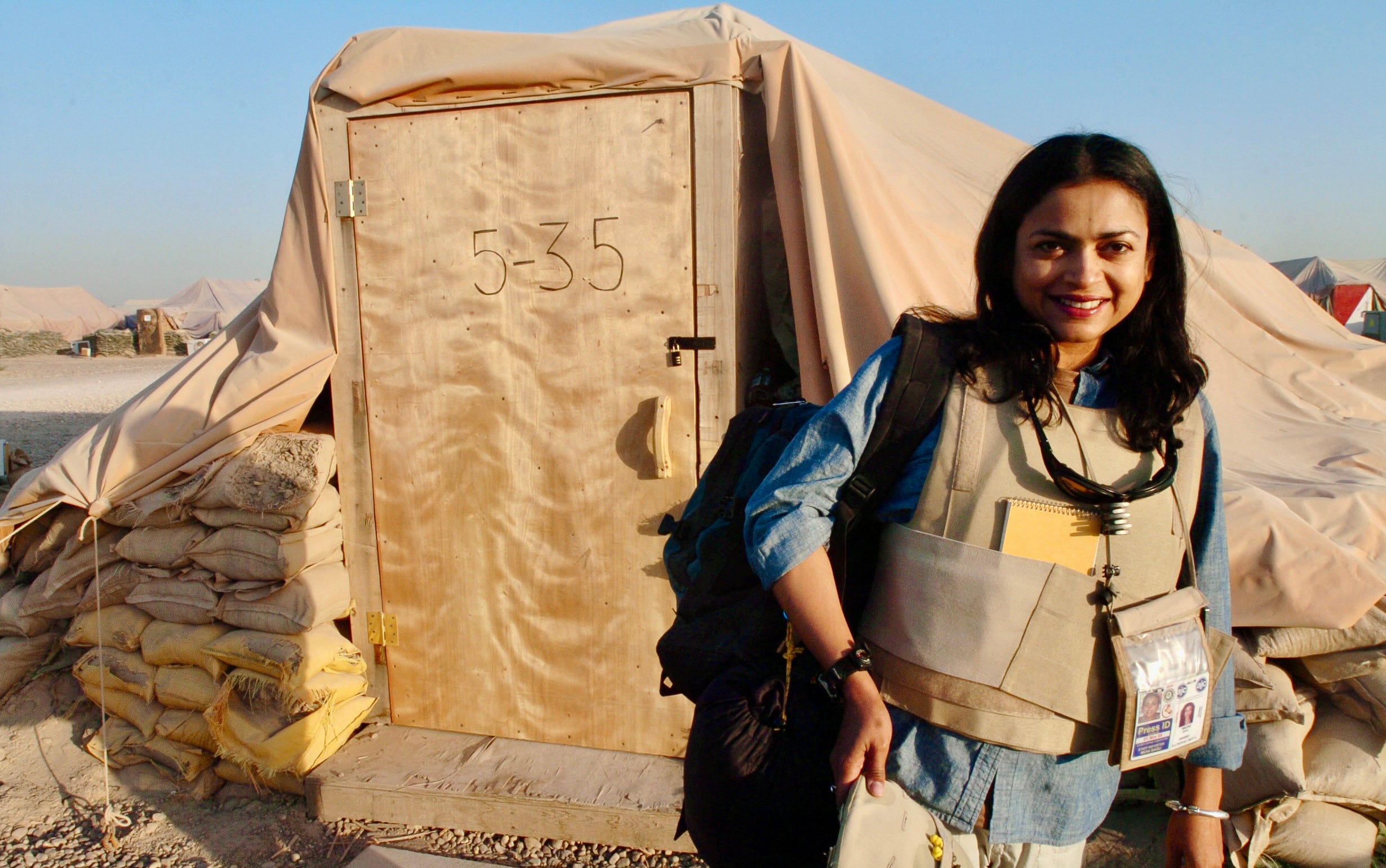
Baghdad in the height of summer is not pleasant in peacetime. Amid war, it was that much more hellish. After a long wait at the airport, Bita and I made it to what the Americans had named Camp Stryker, to a two-man tent planted in gravel, surrounded by sandbags. Number 5-35. That was to be my home for the next few months. We slept on Army cots and trudged across the base to a women’s shower tent in our full battle rattle. By the time we made it back to our tent, we were already sweating again.
We had not been in Iraq for even a day when 48th soldiers began dying. Four soldiers who were in the last Humvee in a three-truck convoy rolled over a massive bomb planted in the road. One week later, four more soldiers died in the same grisly fashion. Then on August 3, three more deaths. And on August 16, another soldier, Michael Stokely, stepped on an improvised explosive device after getting out of his Humvee in Yusufiyah. Our first assignments were covering memorial services and talking to the platoon mates of the men left behind.
I did not know then that I would make two more trips to Iraq embedded with the 48th Brigade. Nor did I know that I would come to know Michael Stokely’s father Robert over the ensuing years, and that I would write about Mike and Robert many more times, even after I left the newspaper.
By the end of 2005, most of the 48th had moved down south to Talil Air Base near Nasiriyah and had taken on a security role. I wanted to be closer to Baghdad, and on my subsequent trips to Iraq in December 2005 and February 2006, I embedded with Charlie Company, 1st Battalion, 121st Infantry Regiment.
Luckily, Charlie Company had not lost any men, though they had a few close encounters. Mostly, the deployment had been hard and long with no seeming end in sight. Then, just days before Christmas, the soldiers raided the home of an Iraqi family and discovered a baby girl who was born with severe spina bifida. She was going to die without care. She tugged at the hearts of the soldiers who brought her back to Camp Liberty. Her name was Noor, which means light in Arabic, and she most definitely brightened the lives of the soldiers.
The images of Bradley Fighting Vehicle fetching diapers and staff sergeants feeding a baby girl whose father and uncle were once suspected of anti-American activities, will never fade for me. Sometimes, it feels like yesterday when I sat for hours with Noor. Then one cloudless morning, I watched Charlie Company soldiers escort Noor and her family to the Baghdad airport and put them on a C-130 that would carry them to Kuwait, where a Delta flight waited to fly them to Atlanta.
Saving Noor offered the soldiers a chance at tangible victory plucked from the chaos of combat. They were eager to deliver good news from Iraq at a time when support for the war was waning at home. What was the United States doing in Iraq? Where was the progress?
I spent the rest of the deployment with Charlie Company. Blacksheep’s platoon sergeant gave me the moniker “Evil Reporter Chick,” with much affection, of course. At the end of April 2006, I returned home with the 48th when their deployment finally ended. I attended weddings and picnics and gatherings that first year they came home. I kept in touch with Robert Stokely and wrote about his grief for his son; how he traveled to Yusufiyah, to stand on the very spot where his son was killed; how he exhumed Mike’s body from a grave in Loganville and drove him to be buried at Arlington.
The U.S. formally ended the Iraq War and withdrew nearly all combat troops in 2011. Life went on and with a few occasional meetings with a couple of soldiers, I lost touch with the men with whom I had survived war.
All of this swirled in my head as I finally got out of my car at the Perry fairgrounds and stepped inside. Immediately I saw familiar faces. They had wrinkled and grown wider. Some had grown scruffy beards. I did not always remember their names but I knew who they were. There were tears and hugs and a lot of “Do you remember the time that…?”
There was so little for them to hold onto in the way of success in Iraq, amid a new sort of war where there were no frontlines. They engaged in urban warfare that heeded no rules of engagement. They tiptoed through booby-trapped houses and navigated roads laced with hidden explosive devices. Snipers fired from rooftops and palm trees. The soldiers could trust no one. And no one trusted them. They lived and breathed uncertainty, not knowing what the next day would bring. Their friends were dying or maybe even worse, surviving with terrible, life-altering physical and psychological injuries.
The 48th Brigade lost 26 men in the Iraq War. Their faces lit up a giant screen at the reunion. Gone but never forgotten.
It had not always been easy to cover the 48th Brigade. The Army wanted “good news” stories from the AJC; we delivered what we deemed were good “news stories.” Many of the soldiers saw me, a member of the “liberal media” as someone to avoid, another reason why I felt unsure about attending the reunion.
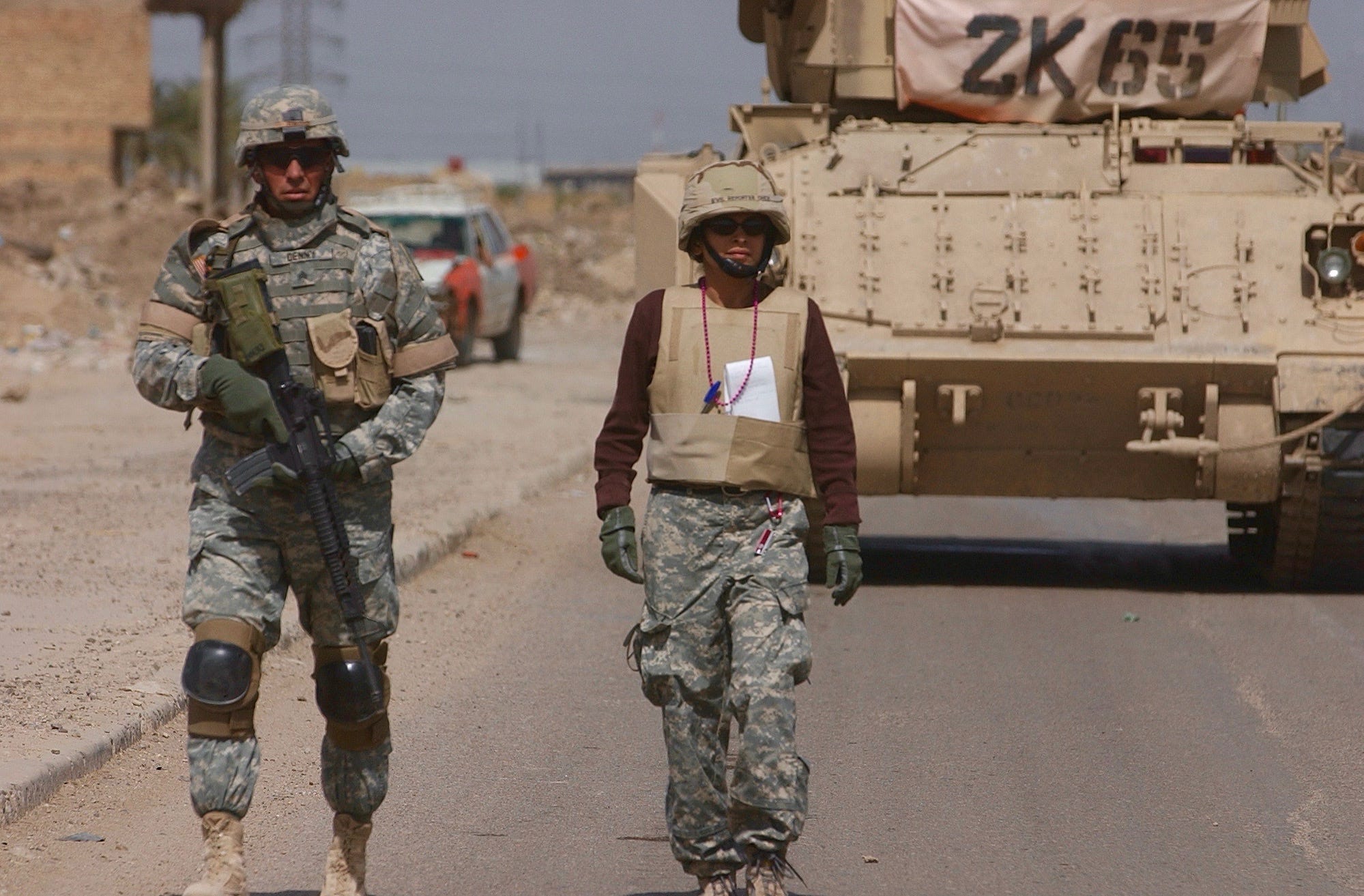
I tried my best to write only what I saw in front of me, to make sure I got things right. I considered it a privilege to be able to see the ugliness of war up front and to be able to record for posterity what it was like to be an American soldier in the land between the two rivers. I, like other embedded reporters, often felt I was walking a fine line. I was living, breathing, surviving with the men and women I was writing about. Would I be able to cover them with the same fairness that I applied to all my other subjects? When would the military read something I wrote and decide to kick me out? For instance, the brigade had not been happy with the stories I wrote about Mike Stokely’s death. The general’s office ordered a minder to follow me around everywhere, to make sure I did not stick my nose into things I was not supposed to hear or see.
I was taken aback (pleasantly) by how many of the soldiers sought me out at the reunion. Some thanked me for documenting their lives in a war that they were now able to view more critically. They could not do so back then, when they were in uniform fighting for their nation. Several asked about Noor. Had I kept up with her? Yes, I replied. I had seen her several times over the years.
But I also knew that many of them in the room that day led vastly different lives than mine. That we were probably on opposite sides of the political spectrum. That had they not been in a brigade I was assigned to cover, I would probably never have crossed paths with them at any time of my life.
And yet, there was an overwhelming sense of community in that exhibition hall in Perry. We had all seen the worst of humanity. Together. And survived.
***
Monimala Basu, a longtime friend of the FXBG Advance editor, is director of the MFA program in Narrative Nonfiction and the Charlayne Hunter-Gault Distinguished Writer in Residence at the Grady College of Journalism and Mass Communication at the University of Georgia. An earlier version of this essay appeared on her substack Word on a Wing.