By Ranjit Singh, ADVANCE ENVIRONMENTAL COLUMNIST
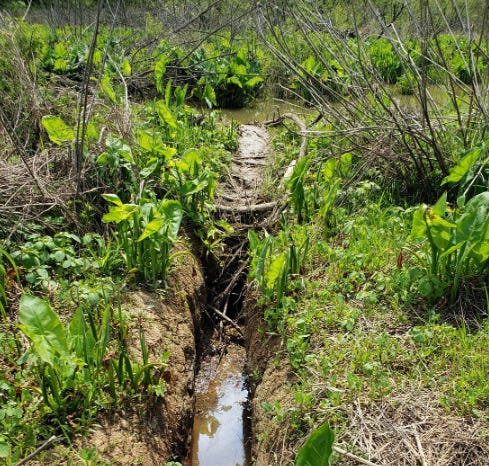
Our farm is situated just three miles east—within view of a circling hawk—of the boulder-strewn “fall line” that divides the hilly Piedmont and gently sloping Coastal Plain regions. Here, northern glaciers alternately flooded and exposed the textured land to ocean waters. Fields and woods now cover over the eroded sand and gravel the rains have washed down from the Blue Ridge Mountains seventy miles away. Following the melt of the last Ice Age sheets five to six thousand years ago, the weather turned warmer and wetter. Water then filled in the Chesapeake Bay and raised the tidal zone to the farm’s longitude.
These ancient events gifted the region with inexhaustible natural energy. Nutritive species of oaks, chestnuts, and hickories appeared where spruces, fir, and scattered woody shrubs had long prevailed.
We live atop this stunning geologic windfall. The first time my brother and I saw Potomac Creek, we ran exuberantly through hay fields that felt endless against our small selves. Thousands of generations of biota have shared our spontaneous, joyful response to such abundant life. This well-watered land begs for settlement.
Thinking about bountiful local nature brings to mind a talk given a few years ago at the University of Mary Washington by Charles “Bootsie” Bullock, Chief of the local Patawomeck Tribe. Chief Bootsie and I are of roughly the same age. In his talk, he movingly described a Potomac Creek that I recognized immediately: a place where—until sometime in the late ‘70s, perhaps—a kid could freely cross property lines in search of fish or simply a good spot to while away the hours. Adults didn’t care; we kids were mostly invisible to folks with bigger things to worry about.
That creek is gone now. Stafford County’s population has nearly quadrupled since the 1970s. Such rapid growth often disorients older residents. And today, it’s always a struggle to find access to fields, woods, and water, as property values have increased and landowners have become, for lack of a better word, meaner.
Growing maudlin over the future of Potomac Creek is unproductive. No one should be so mindless as to want to exchange the present for the past. Yet, I suspect many will agree that conservationist Aldo Leopold hit a nerve when he wrote “I am glad I will not be young in a future without wilderness.”
The simple fact is that young people today cannot roam as my generation did.
Problems of access to the land and exclusion have thoughtful people worried.
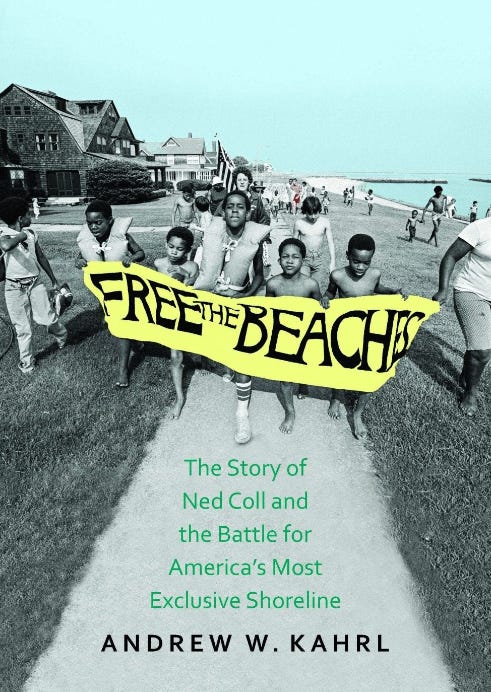
A while back, I wrote a review of UVa historian Andrew Kahrl’s excellent book Free the Beaches. Kahrl recounts the battles to overcome the entrenched divides that kept Connecticut’s “Gold Coast” shoreline inaccessible to many people. Even local residents couldn’t stand in the sand if they belonged to the “wrong” racial or economic group. I began my review with a lesson
I’d drawn from the book: “You can tell an awful lot about a place by looking at its beaches.” Kahrl taught me to observe very carefully who’s playing in the sand.
I apply that lesson to my homeplace, too. At times, it’s good for all of us to ask:
What can we tell about our region by looking at who has access to local nature? To clean water and green, open spaces?
We’re always living in the wake of our forebears’ decisions. I’m no Marxist, but it’s fair to say that on Potomac Creek, for countless generations until quite recently, nothing influenced people’s status and equanimity more than their relationship to the land. In a traditionally rural society like ours, good land was the primary means of production and wealth. So if you knew someone’s property lines, you pretty much knew, with only the mildest hyperbole, who they were and where they stood in the community.
The gravity of land ownership has never quite faded away. While conducting research in Stafford County, I found that people with deep local roots frequently break into tears when discussing their land, even with a complete stranger. Often, the land we hold feeds our sense of self.
And Potomac Creek runs through a state where land relations have always been fraught.
“Carry Me Back to Old Virginia,” the official state song from 1940 until 1997, begins with the lyrics:
Carry me back to old Virginny,
There’s where the cotton and the corn and tatoes grow,
There’s where the birds warble sweet in the spring-time,
There’s where the old darkey’s heart am long’d to go.
The song’s blithe nostalgia for chattel slavery overwhelms the senses (in a later verse, the enslaved singer improbably yearns to greet his “massa” in the afterlife). Regrettably, its racism also buries an implicit but more universal message: the sweetness of fecund land. The lyrics laud the Virginia soil’s ability to nurture valuable crops and offer habitat to wildlife like songbirds. Such land is perhaps the most coveted resource in human history.
Yet, as the old state song suggests, for most of its existence Virginia has also been a place where access to land runs hand in hand with the urgency of skin color.
My family faced this reality as soon as we moved here. Arriving from Indiana, my parents began looking for a place to rent in Fredericksburg, across the river from Stafford County. My white German mother saw a newspaper ad and met with the landlord. When my Asian father appeared later to see the house for himself, it quickly became unavailable. That was the year the Supreme Court issued Loving v. Virginia, a decision that found the state’s ban on interracial marriage unconstitutional. Three years old, I was about to enter the area’s first racially integrated preschool.
If we look carefully, we can see how this conscious ordering and reordering continues to affect where our feet touch the soil.
Recent arrivals usually absorb the unwritten rules of their new home pretty quickly. In our daily errands, we see the open spaces where Spanish-speaking residents feel free to gather and relax, like Falmouth Beach. Or where Afghan families like bringing their families—Pratt Park comes to mind. The reasons are manifold, but people become spatially sorted less by law than by custom.
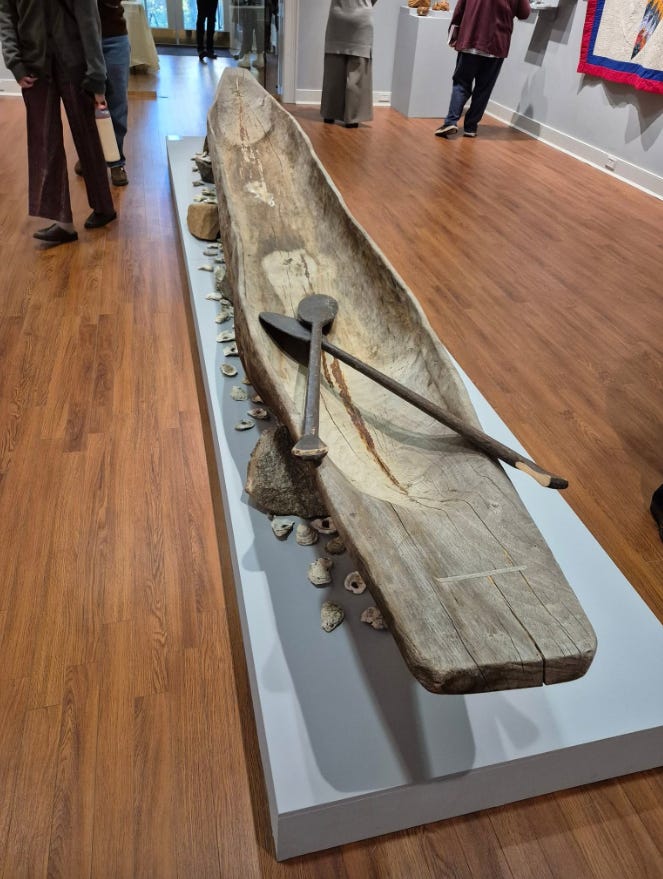
And in his talk at the university, Chief Bootsie gratefully acknowledged that Stafford County lets his White Oak-based tribe lease property along the Rappahannock River. They’ve been able to build their museum and cultural center there.
Such arrangements aren’t necessarily safe, though.
Just in the last year, the county abruptly revoked, then reapproved, a smaller lease along the Potomac River. At issue was an ugly disagreement over the tribe’s legitimacy. Backed by College of William & Mary experts on Native Americans, the Patawomeck tribe received official recognition from the General Assembly in 2010. Such recognition allows, for example, tribal members to hunt the land and fish the waterways without a state license. Yet a handful of locals argued effectively—if unpersuasively—that the tribe simply doesn’t exist.
What does this mean?
The Native tribe after whom the English named the Potomac River still lacks a secure foothold on the place of their ancestors. That’s because the state sees the Patawomeck as part of the natural order—but not every local does.
***
Ranjit Singh teaches in the Department of Political Science and International Affairs at the University of Mary Washington. He’s also an active environmentalist. His “No Lines in Nature” Substack blends history, science, and philosophy to explore our relationship with the natural world world. You can find it HERE. You can find an earlier version of this essay HERE.