By Steve Watkins, ADVANCE EDITOR
[Introduction and First-chapter excerpt from DEAD OR IN JAIL, a memoir.]
HOW TO 1972 UNDERGROUND HIGH SCHOOL NEWSPAPER: AN INTRODUCTION
Call it THE FREE PRESS in all capital letters. Start publishing in spring of your senior year. Print the First Amendment in oversized type to make sure even the most myopic North Carolina school administrators get the message: Congress shall make no law respecting an establishment of religion, or prohibiting the free exercise thereof; or abridging the freedom of speech, or of the press; or the right of the people peaceably to assemble, and to petition the Government for a redress of grievances.
Fill the pages inside with as much incendiary material as you can write or steal:
An article you lift from The Great Speckled Bird, an alternative newspaper out of Atlanta—a gonzo piece about them naming a Georgia high school after Walt Whitman, not knowing they’re celebrating the most famous gay person in American history.
A couple of passages from The Handbook for Conscientious Objectors you get from peace activists at an Allman Brothers concert in Greenville.
An editorial calling for an immediate end to the Vietnam War, and another editorial blasting the policy of teachers smoking at their desks between classes—not because you’re anti-smoking, but because it’s not fair that students have to herd themselves into the one designated smoking area outside no matter if it’s raining or freezing, and there’s never enough time to finish your cigarette, while certain teachers are still blowing smoke rings in their rooms after the tardy bell rings for the next class. Name names.
A poem you write that borrows heavily from e.e. cummings and that you sign “steve kma,” your nom de plume, the “kma” standing for “kiss my ass.” Take it as a compliment when a kid reports back that a teacher read it to his class and said there was no way you could have written it, and you must have plagiarized the poem as well.
Another poem, this one by your friend Steve Pridgen that is so personal and haunting and beautiful it makes you wonder how well you know him even though you call yourselves best friends.
Have your girlfriend Callie volunteer to type the first issue, and the second, but not the third on wax stencil paper to be secretly printed on a hand-crank mimeograph machine in the backroom office of a United Methodist Church official by the official’s sympathetic wife, a friend of your mom’s who hates the war as much as you do—and insists that you include your full names on the masthead, with none of that “kma” nonsense.
Sell out your first issue by lunchtime, though you hear stories about teachers snatching THE FREE PRESS out of kids’ hands and throwing it in the trash, clearly a case of illegal censorship, and great publicity besides.
Be prepared for the fallout.
Keep publishing because speaking out is existential. The war is still going on and guys are getting drafted and sent to Vietnam to kill and get killed. You’re facing the draft yourself, 18 on your next birthday, living in the nexus of the Marine World—20 miles west of Cherry Point, the largest Marine air base in the world, 45 miles north of Camp Lejeune, where they train kids to be those killers, and where a radio station played “The Ballad of Lt. Calley” over and over in celebration of the My Lai murderer, who was convicted the year before (and effectively pardoned by Nixon three days later) for ordering and leading the massacre of hundreds of Vietnamese villagers, all old people, mothers, children, even babies.
Be disgusted. Be furious. Use Franz Kafka’s spelling for “Amerika.”
Write about how everything is in flames—figuratively, and at times literally. Your racist school didn’t integrate until 1970, 16 years after Brown v Board of Education. There was a bloody race riot when you were in 11th grade, and almost another in the fall. Write about those. Write about the anti-war protest at Cherry Point where teenage Marines aim their loaded weapons on you and your friends. Write about trying to integrate the whites-only dances at the Elks Lodge.
Write about bringing coffee and doughnuts to the police station one night as a goodwill gesture, and finding out that the cops dumped the coffee in the parking lot and tossed the pastries in the trash.
Cover it all in your short publishing life—the segregated dances, the near riot, the protest, the police state, the racism and sexism and militarism and bullying. Call for the legalization of pot. Demand an end to the death penalty. Urge them to replace John Milton’s Paradise Lost in the English curriculum with Kurt Vonnegut’s Slaughterhouse Five, or The Children’s Crusade: A Duty-Dance with Death.
Swear there won’t be any conformity in THE FREE PRESS ever--and no euphemisms, either. You’re going to call bullshit wherever you see it, and shout it as long and as loud as your voices will carry.
Read Catch 22 as an instruction manual for how to survive until graduation, then follow Yossarian:
“The knife came down, missing him by inches, and he took off.”
Chapter One: THROW YOURSELF LIKE SEE AS YOU WALK
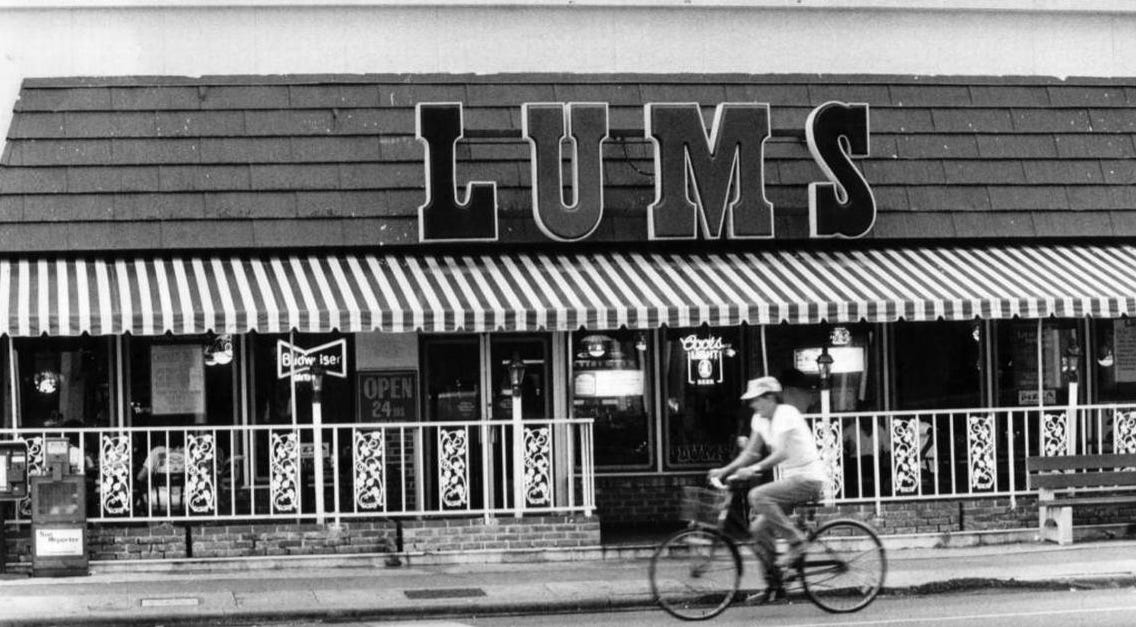
I walked to Lum’s at lunchtime and ordered a beer-soaked hot dog and chocolate milk in a frosted mug. It wasn’t far, just a couple of shade-less blocks from the high school. They let us go off-campus for lunch senior year, starting that first day, so long as we were back in time for fourth period. We lived in New Bern then, at the confluence of the Trent and Neuse Rivers in the coastal plains of eastern North Carolina. Dad had moved us there from north Florida the year before, and I still didn’t know too many people. I’d been too depressed to make friends. It was 1971 and my brother Wayne had just left for college—to Western Carolina University in the mountains, as far from New Bern as he could get and still be eligible for in-state tuition.
All my life I’d been Wayne’s little brother. Anxious, weird, mouthy. Difficult. He’d been in half a dozen fights over the years taking up for me when I wised off to somebody bigger. Now that he was gone and the family scattered--Dad driving an hour each way to another phosphate mining job he hated, Mom running a Head Start program in a minority neighborhood called Craven Terrace—I’d been thinking about starting over, reinventing myself, if such a thing was possible. Plus, I’d found out just before school started that an older girl I was in love with back in Florida had gotten engaged to the lead guitarist in a Cream-inspired rock group called The Mind’s Eye that competed for gigs in Gainesville with the early Tom Petty band Mudcrutch. She might as well have died, because my heart did the minute I opened her letter and got the news.
Throw yourself like seed as you walk, and into your own field, the Spanish poet Miguel de Unamuno wrote a hundred years ago.
Don’t turn your face, for that would be to turn it to death.
And do not let the past weigh down your motion.
Not that I knew from Unamuno back then. But it spoke to the moment.
Three girls from high school came into the restaurant a few minutes after I sat down. I doubted they noticed me, plus Lum’s kept it so dark in there you could hardly read the menu. I thought about going over to their table and introducing myself—being bold, asking if I could join them, throwing myself like seed as I walked, and into my own field--
But then the past weighed down my motion and I went back to self-consciously eating my beer-soaked hot dog and drinking my chocolate milk in a frosted mug while trying to look like the kind of guy who sat by himself in Lum’s at lunchtime the first day of his senior year of high school not because he had to but because he wanted to. The girls, oblivious I was sure—to me, to anything outside their breezy conversation--chattered away as if they’d been friends their whole lives, which turned out to be the case. I’d probably been going to school with them all along, but since I’d mostly kept my head down after moving to North Carolina, I hadn’t paid much attention to anything, or anyone, around me. Plus, whenever I did look up, shitty things seemed to happen.
***
I’d been casual friends with a girl in 11th-grade English, rewriting her assignments and sympathizing when she complained about her insensitive boyfriend. She came in one day in tears and told me they’d had a big fight, and this time they were finished for good. I spent the next half hour consoling her in the back of the classroom, sitting next to the windows that looked out onto the courtyard. Somebody must have seen us there because word got back to the boyfriend that she and I had been talking.
He stopped me in the hallway between classes.
“Quit messing around with Eleanor,” he snarled.
I wasn’t sure who he was at first—this hulking guy I’d never seen before--but quickly figured it out. “I’m not messing around with Eleanor,” I said. “We’re just friends.”
He shoved me against the wall, punched me in the face, then said it again: “Quit messing around with Eleanor.”
I was too stunned to say anything back. He grunted, said “Good,” then stormed off with his football buddies.
I stumbled to my next class and was still woozy when the teacher called me to the front of the room and said there was someone in the hall who needed to speak to me. It was Eleanor, upset after she’d heard what her boyfriend had just done.
“I’m so, so sorry,” she said. “He’s such a monster. I’ll never speak to him again.”
They were back together two days later.
***
It didn’t take long to finish my solo lunch at Lum’s. I wiped my chocolate mustache, checked my shirt for mustard stains, and tried to be nonchalant on my way to the register to pay. One of the girls looked up from their table as I walked by.
“Hey, do we know you?” she asked, pointing a French fry at me in case there was any doubt.
“Probably not,” I said. “I’m new here,” which wasn’t true.
She was small like me, smaller even, with a pretty, round face and shoulder-length blondish-brown hair that might have had something to do with peroxide. She looked younger than she was, also like me—a 10th grader, maybe, instead of a senior. We could almost have been twins—except for the peroxide, and except for her teeth, which were slightly off-color. Not that the drunk dentist we saw when I was a kid hadn’t done a number on mine. She’d been sick a lot as a baby, and the discoloration was from tetracycline they’d had her on for chronic infections. That’s what she told me later. She’d also been allergic to cow’s milk and formula, and didn’t breastfeed, so they bottle-fed her goat’s milk. I read somewhere not long ago that the ancient Romans mixed goat’s milk with urine to whiten their teeth--something they must not have known about in New Bern when the girl was little.
She squinted, as if trying to bring my face into sharper focus. She didn’t wear glasses, but her driver’s license, which she also showed me later, required her to sit on a pillow so she could see over the steering wheel.
“Now I remember,” she said. “Centenary Methodist. We went to your house one time. On Front Street.”
This surprised me. We did live on Front Street, next to the Neuse River, in a big colonial-era house we rented from a rich lady at church whose own place was next door.
“That social thing the church did,” the girl continued. “People went to different people’s houses for dinner. Every house had a different course, and yours was one of the houses.”
“Oh yeah,” I said. “That.” Mom had signed us up as one of the hosts for a Progressive Dinner the church put on not long after we moved to town. She said it would be a nice way to thank people in the congregation for their warm welcome, but I suspected it was part of her and Dad’s plan to take over yet another Methodist church, something they’d done every time we’d moved in the past.
Mom baked lemon meringue pies and made me wear a collared shirt and tie and stand on the porch to greet people when they labored up the steep flight of brick steps to the front door. Wayne already had a job at McDonald’s so wasn’t around for the embarrassment. I remembered a pack of girls in summer dresses sweeping past me as if I was invisible, and as if they were just stopping by on their way to somewhere more interesting.
This girl must have been one of them.
She told me her name then—Callie--and gestured to her friends, who hadn’t spoken. “This is Dana, and this is Meredith. We’re seniors, but Meredith doesn’t go here.”
Dana gave me a half smile like the Mona Lisa—if the Mona Lisa had been blonde and tan and wore her hair in French braids with a flower tucked behind one ear, and if the Mona Lisa’s dad had run a hardware store. “I’m Episcopalian,” she said, which might or might not have been meant to explain something about the Progressive Dinner, which Dana might or might not have attended.
Meredith smiled, too, but I never saw her again or found out what church she attended. She went to boarding school in Raleigh, and was only around for lunch that day because her school didn’t start for another week and her parents hadn’t shipped her off yet. Cassie, Dana, and Meredith had all grown up together, which was true for just about everybody I met in New Bern.
“So what’s your name?” Callie asked as the others looked on.
For reasons I couldn’t explain—but maybe I could: maybe I was finally throwing myself like seed as I walked, and into my own field—but for whatever the reason, I lied and made up a name, and not a very good one.
Frederick.
Maybe I thought it would sound more exotic than “Steve.” As far as I was concerned, any name sounded more exotic than “Steve.” Or maybe it was just the first thing that came out of my mouth, and I could just as easily have said “Jay Gatsby.” There’d been a few Freddys around when I was a kid, and there was the actor Fred MacMurray from the TV show My Three Sons and all those Disney movies, and Fred Gwynne from The Munsters and Car 54, Where Are You? But I’d never known any actual Fredericks. There weren’t any famous ones anybody ever mentioned except Frederick the Great, whoever he was. Still, why not River, or Elton, or Jeremiah? I kicked myself for not coming up with something better, but too late.
I was already somebody else.
***
Steve Watkins is editor of The Advance and author of 16 books. You can read weekly installments of Dead or in Jail beginning today on his Pie & Chai Magazine substack.