By Phil Huber, ADVANCE COLUMNIST
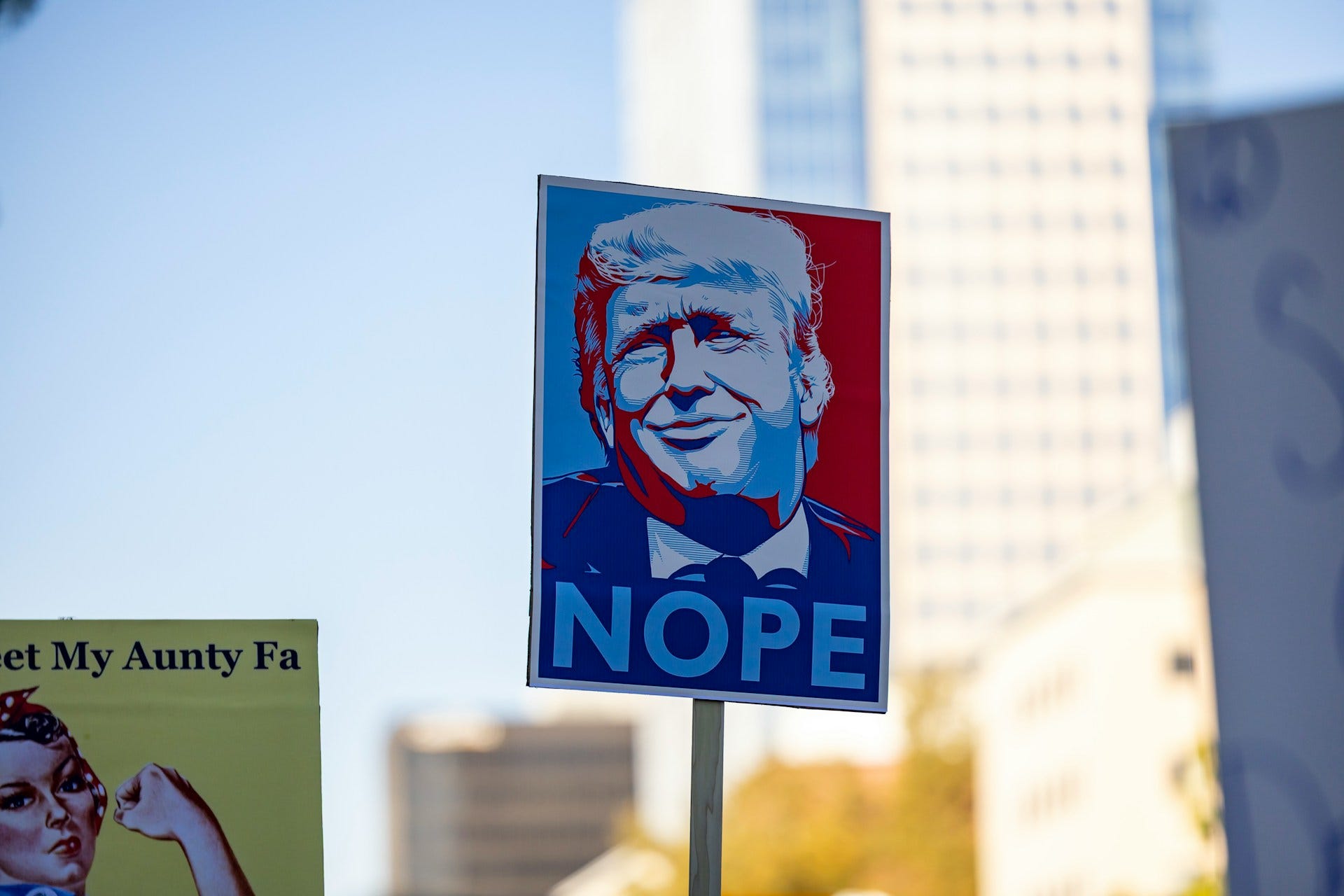
Donald Trump has discovered the ideal election: one the Constitution prohibits, against an opponent who is not running, with the winner announced in advance.
Naturally, he won.
In a November 12 interview with Stephen A. Smith, Trump said he would beat Barack Obama “easily.” Obama was “highly overrated” and “a divider,” he explained. Trump described himself as someone who brings people together. Presumably, the people arguing about that statement do not count.
Before ordering commemorative hats, perhaps we should consult the election clerk, some presidential scholars and a pollster. None enjoys Trump’s advantage of already knowing the answer.
First, give Trump his due. He won two presidential elections. His 2024 raw vote total exceeded Obama’s totals. But comparing totals across different elections does not tell us how those voters would choose between the two men. Different opponents, turnout and circumstances make that a more complicated question than the boast allows.
Now consider the Electoral College, which actually awards the presidency.
Obama won 365 electoral votes in 2008 and 332 in 2012. Trump received 304 electoral votes in 2016 and 312 in 2024. Trump’s 2016 state victories entitled him to 306, but two electors voted for someone else. Even crediting him with all 306, both Obama victories were larger than either Trump victory.
Does that prove Obama would win? No. But checking an opponent’s record before declaring an easy victory remains acceptable practice. They still do it in sports.
Next, the presidential scholars.
The 2024 Presidential Greatness Project ranked Obama seventh and Trump 45th—last. Siena College’s 2022 survey placed Obama 11th and Trump 43rd. These surveys assessed presidential performance, not electoral appeal, and neither evaluated Trump’s second term. Nevertheless, this is a substantial gap to dismiss with “highly overrated.”
Perhaps the professors were too liberal.
The Greatness Project anticipated that objection by reporting partisan breakdowns. Its Republican respondents ranked Obama 15th and Trump 41st. That subgroup contained only 15 respondents—not remotely a national Republican referendum. Still, consulting the Republican scholars did not produce quite the rescue operation Trump might have ordered.
Then there are actual voters.
Newsweek reported that a July 2025 Daily Mail/J.L. Partners survey of 1,013 registered voters favored Obama over Trump, 52 percent to 41 percent, in a hypothetical matchup. An earlier Overton Insights survey also favored Obama, 53 percent to 47 percent. These were national snapshots, not Electoral College forecasts, and they are not current polling.
But “easily” was apparently having technical difficulties.
What about today? The New York Times’ polling average, updated November 15, put Trump at 36 percent approval and 61 percent disapproval. RealClearPolling’s average was somewhat kinder: 38.6 percent approval and 59.1 percent disapproval. Neither measures how voters would choose between Trump and Obama. But neither makes “easily” look like a conclusion reached after careful consultation with the numbers.
Obama, meanwhile, enjoys the considerable advantage of not currently governing. A real campaign would require current positions and expose him to renewed scrutiny. Nostalgia is a pleasant campaign headquarters, but eventually somebody asks about policy.
So, no invented percentages here. We have enough imaginary certainty already.
For comic relief only, consider the entirely fictional Trump Institute poll: one respondent, one winner, no undecideds. The margin of error was someone else’s fault.
Finally, the Constitution. The 22nd Amendment prohibits anyone from being elected president more than twice. Both men have reached that limit. This rematch needs more than a moderator and a television contract. It needs a constitutional amendment.
The point is not that Obama must win an election that cannot happen. It is that confidence does not become evidence merely because a president supplies it.
When Trump says “easily,” citizens are entitled to ask, “Based on what?”
That is not partisan hostility. It is checking the score.
***
Phil Huber is a retired Army Reserve colonel and former federal civil servant who writes about civic education, public accountability and national security. He lives in Fredericksburg.