
By Phil Huber, ADVANCE COLUMNIST
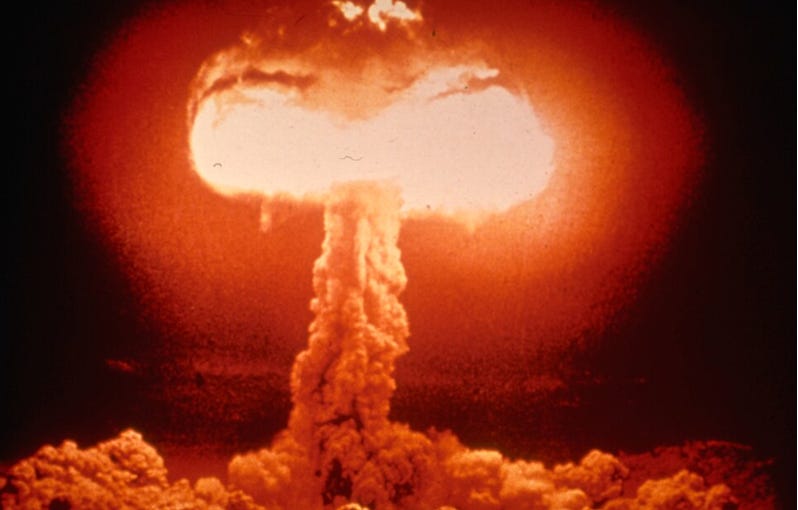
On October 15, I watched Tony Schwartz, who helped write The Art of the Deal, express concern that Donald Trump might use nuclear weapons. That got my attention.
I did not take his warning as a prediction. But after years in military and federal service, I cannot regard the possible consequences as just another subject for political argument. “Surely he wouldn’t” is not a safeguard.
What might Trump do in his final two years?
Of course, the answer is “subject to.” The uncertainty is not whether we have constitutional checks. It is whether the people entrusted with them will do their jobs.
That brings me back to George Washington.
No constitutional amendment required Washington to leave after two terms. He chose to go home, establishing a precedent that endured for generations. He demonstrated that the presidency belonged to the republic, not its occupant.
Washington was not unconstrained. Congress, the Constitution and elections limited his authority. But his willingness to restrain himself helped give those limits meaning.
We cannot build our security around expecting every president to make that choice.
Some of the strongest warnings about Trump come from people who helped run his first administration. Former chief of staff John Kelly described his preference for authoritarian government. Former defense secretary Mark Esper warned about using the military against domestic opponents and the prospect of fewer restraints in a second term.
I take those warnings seriously because these men were not watching from the sidelines. They had responsibilities inside his administration. That does not make every judgment correct. It does make dismissing them as ordinary partisan criticism too easy.
Nor should we confuse political weakness with presidential harmlessness. Losing congressional allies can obstruct legislation without eliminating executive authority.
That makes November’s elections consequential—but not conclusive. Voters are not merely choosing a party majority. We should ask whether those we elect will defend Congress’s authority when that means confronting their own president.
If Democrats win the House while Republicans retain the Senate, House committees could investigate misconduct and expose abuses. The House could block legislation and refuse agreement on spending. But the Senate could continue confirming Trump’s nominees.
Reverse the arrangement and the restraints change. A Democratic Senate could reject nominees and investigate. A Republican House could shield Trump from impeachment. Neither chamber could enact laws alone.
Democratic control of both chambers would combine those powers. But Trump would retain his veto, and removing him through impeachment would require two-thirds of senators present—not merely an opposition majority.
Republican control would leave Congress’s constitutional powers intact. Whether Republicans exercised them would remain a political choice.
Here is where I lose patience: having the power to restrain a president is not the same as being willing to use it. I want candidates to tell us what would make them challenge a president of their own party—not promise courage only when the other party holds the White House.
The courts present another “subject to.”
The Roberts Court’s 2024 immunity ruling weakened criminal accountability for official presidential misconduct. It established absolute immunity for acts within exclusive constitutional authority and presumptive immunity for other official acts. Unofficial conduct remains unprotected.
The ruling did not make every presidential action lawful. Courts can still reject actions exceeding presidential authority. This year, the Supreme Court rejected the emergency-law authority Trump claimed for his tariffs.
But stopping abuse and holding someone accountable for ordering it are different safeguards. I want both.
Will courts enforce the remaining limits? Will Congress defend its powers? Will advisers and senior military officers refuse improper or illegal demands? Those are not abstract questions when the consequences could be irreversible.
Trump’s remaining years should also change how we examine those seeking to succeed him. We routinely ask candidates what they would do with power. We should ask what they believe a president must never do—even to win, during an emergency, or for a cause they consider righteous.
As a voter, I want more than an assurance that a candidate can be trusted. I want to know what limits that candidate accepts—and what in the record makes the answer believable. I owe candidates whose policies I favor the same scrutiny.
Those questions should follow us through the next two years, from this administration’s conduct to the next candidates’ promises. The answers should affect our votes.
Washington showed that a president could choose restraint. We must choose leaders who will—and demand institutions that hold when they will not.
***
Phil Huber is a retired Army Reserve colonel and former federal civil servant who writes about civic education, public accountability and national security. He lives in Fredericksburg.

I disagree with both of them, I think Pres. Trump has more "common sense" than to do that.