
By Phil Huber
ADVANCE CONTRIBUTOR
Donald Trump likes to tell us he is “the most powerful person that has EVER walked this planet,” greater than any king, conqueror, or dictator in history. A man who truly possessed that kind of power might project calm confidence. Trump instead sounds like someone who just spotted his own reflection in a funhouse mirror and decided it was a presidential portrait.
If you really want to understand Trump, don’t look at the portraits of great leaders. Look at the toy aisle. He isn’t Caesar. He’s a ventriloquist’s dummy with a Wi‑Fi connection.
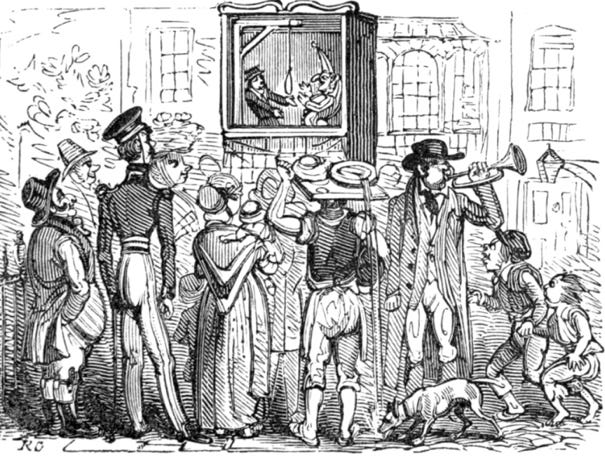
Across history and pop culture, we have known a certain type of puppet: gaudy, noisy, slightly menacing, but empty behind the painted eyes. Take Punch, of Punch and Judy fame, a 17th‑century English puppet who whacks his way through every scene, proud of his own cruelty. The show is performed by a single puppeteer hidden inside the booth—since Victorian times called the “professor” or “punchman”—and often assisted by a “bottler” outside, whose job is to work the crowd, introduce the act, and pass the bottle to collect the money. The audience sees only Punch, shrieking, and swinging. The professor and the bottler control the story and pocket the proceeds.
That’s the model. Trump is not the puppeteer; he’s the show. In our politics, the “professor” and the “bottlers” are the oligarchs and other influential enablers who script the drama, hype the performance, and cash in while the crowd stares at the puppet.
And like every good puppet show, there’s a scriptwriter in the wings. In Trump’s case, one of his favorite scripts about himself—that he is more powerful than Attila the Hun, Genghis Khan, Napoleon, Stalin, Mao, and Hitler—was not written by a constitutional scholar or historian. It was written by Dave King, a businessman best known as Hall of Fame golfer Gary Player’s longtime caddy, who handed Trump the flattering “analysis” at Mar‑a‑Lago after talking it over with Player on the course. Trump then touted King as a “historian” and waved the memo as proof that he stands above the world’s worst dictators.
Follow the strings. They do not run to some grand vision of America. They run to billionaires, corporate interests, and media moguls who see Trump as the perfect front man: loud, shameless, allergic to facts, and utterly dependent on their money, platforms, and legal rescue missions. The modern puppeteers are the oligarchs who write the checks and shape the agenda. The bottlers are the talk‑show hosts, political operatives, and consultants who work the crowd, sell the story, and collect the proceeds in ratings, influence, and fees.
Trump’s public delusion—that he is more powerful than any ruler in history—is not an eccentric quirk. It is a business model. It reassures his patrons that he will do what no normal president, grounded in law and history, would dare to do. A president who remembers that he is one in a line of leaders—Clinton, Bush, Obama, Biden—knows that power is borrowed, limited, and accountable. Those four men had the same basic tools Trump boasts about: the nuclear arsenal, the global economy, the diplomatic corps, the intelligence community. They used that power to build alliances, contain adversaries, cautiously manage crises, and—however imperfectly—respect the notion that the presidency is a constitutional office, not a throne.
Trump looks at the same office and sees a stage. A place where he can declare himself “greater than anyone else” and hope the crowd doesn’t notice the hands in the shadows, quietly tugging the strings. He imagines himself a “great dictator,” but real dictators—however monstrous—at least understood where their power came from. Trump doesn’t rule; he’s leased.
His oligarch patrons and influential boosters know their investment. They get tax cuts that explode inequality, deregulation that lets polluters and profiteers run wild, judges who protect corporate power, and a foreign policy that treats autocrats as partners and democrats as problems. In return, Trump gets the illusion he craves: the sense that he is feared and adored, a golden idol on a hollow base. They feed his insecurity with lavish praise, flattering “rankings,” and friendly media ecosystems that say, in endless variations, “You are the greatest of all time.”
It works because Trump needs it. A leader with a brain might ask: “How do my results compare?” A leader with a heart might ask: “How are ordinary people living?” A leader with a soul might ask: “Will future generations say we strengthened democracy, or sold it?” Trump asks only one question: “Did they clap for me?” That is all his backers require. A man with no brain, heart, or soul is a low‑maintenance asset.
The irony is too rich. Trump declares himself greater than any president who came before him, while proving every day how small he is compared with them. The last four presidents faced terrorism, financial crises, pandemics, and wars. They made mistakes—sometimes grave ones—but they understood that outcomes matter more than applause lines. Trump measures success in cable segments and crowd sizes. He brags about power, then shrinks from responsibility, insisting that any failure is somebody else’s fault: the “deep state,” disloyal generals, judges, immigrants, or “fake news.” The puppet is angry at the scenery.
The danger is not that Trump is a uniquely brilliant would‑be tyrant. The danger is that he is an unusually willing instrument. If you believe there should be no limits on your power, and if you have no internal brakes—no brain to question, no heart to hesitate, no soul to resist—then the only limits are external: courts, laws, journalists, and voters. Those are exactly the limits his puppeteers and bottlers are working to weaken.
So, when you hear Trump boast that he is more powerful than any ruler in history, don’t imagine Washington, Lincoln, or FDR. Picture a gaudy marionette on a darkened stage, strings stretching off into the shadows, held by oligarchs and their chorus of enablers—and flattered by a golf caddy who decided to play court historian. He is telling you exactly what he is: not a strongman, but a frontman.
The real question is whether we, the citizens, irrespective of party will keep buying tickets to this puppet show—or finally walk out and demand a government that serves the people, not the puppeteers and bottlers behind the booth.
***
Phil Huber is a retired Army Reserve colonel, a federal civil servant, and a retired consultant who writes on civic education. He lives in Fredericksburg.