By Stephen J. Farnsworth, ADVANCE CONTRIBUTOR
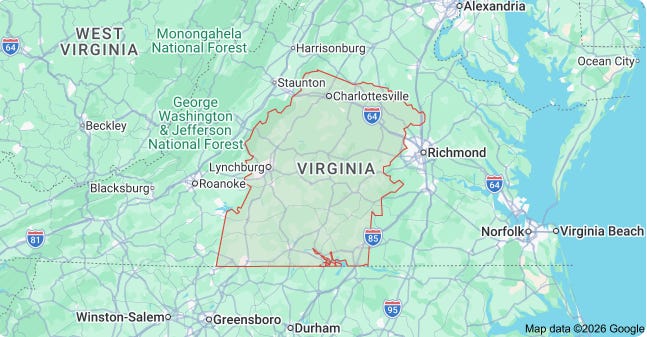
One of the biggest surprises of Virginia’s 2026 midterm election cycle has been the unexpectedly tough battle over the Commonwealth’s Fifth Congressional district, a largely rural stretch of land extending from Charlottesville to the North Carolina border.
While political activists and donors expected strong contests and massive campaign spending for Republican-held seats in Virginia Two in Hampton Roads and Virginia One, which includes the Northern Neck and part of the Richmond suburbs, the previously politically sleepy Fifth district in Virginia’s agricultural and evangelical heartland has long seemed a terrible political investment for Democrats. After all, U.S. Rep. John McGuire (R) won the seat by 15 points in 2024, and Donald Trump carried the district by 12 points two years ago.
But 2026 is not 2024. McGuire is running for re-election against Tom Perriello (D), who served a single term in Congress in a somewhat differently designed Fifth District more than a decade ago. They have raised a total of more than $6 million for their campaigns. Another $4 million in so-called independent expenditures—money not formally connected to either campaign—has also landed in the district so far, making this a more than $10 million congressional contest.
The fact that Virginia Five has drawn such donor attention speaks to the challenging environment Republicans are facing this fall. Uncertainties about this district are part of President Trump’s political challenges across rural America, as Republicans engage in neck-and-neck contests with Democrats in what had been reliably red places like Kansas, Iowa, and Alaska. While inflation and the costs of food and energy are problems everywhere right now, rural voters are particularly sensitive to price shocks as well as to the on-again off-again hammering of inconsistent trade policies.
At its core, farming requires long-term planning. Decisions about what to plant, where to plant, how much to plant, how much fertilizer to buy, when to expand the herd, when to cull it, and what equipment one needs going forward all rely on guesswork about what might come next. One can lay awake at night wondering about these and so many other agricultural unknowns. What will the price of beef be 12 months from now? How will the market for dairy look next spring? If you must reduce your fertilizer budget, can you grow enough produce to cover the farm’s expenses?
As businesses go, in other words, farming is often an extremely uncertain one. When a farmer has a year marked by a great corn crop, for example, so do many other farmers and corn prices fall. When you have a bad year, few farmers can take advantage of the temporarily higher prices because just about everyone faces lower yields.
And if you guess wrong on these dimensions, the bank might have something to say about a missed payment on a farm loan.
President Trump’s inconsistent trade policies have made a bad economic situation particularly challenging for farmers, who rely far more heavily than average Americans on affordable diesel, gasoline, and fertilizer. Across rural America, farmers this fall are howling about the pain Washington policies are bringing to rural America.
What’s more, when farmers suffer financially, so do many businesses in rural communities that rely on spending by farmers to keep their own businesses afloat.
For a decade now, white rural voters have been among Trump’s most loyal supporters. Worried that he might be losing them, the president has focused his latest midterm message on farmers, promising that prices for fertilizer, fuel, and farm equipment will soon fall. In recent days, Trump also backed off some of the high tariffs he previously imposed against Canada to help farmers obtain goods at lower costs from north of the border. He promised a rapid end to the impasse in Iran in the wake of Iran’s entirely predictable response to American military attacks: throttling the passage of oil and other goods through the Strait of Hormuz. The president even sought to lower diesel prices by reversing himself regarding sanctions directed against diesel fuel from Russia, even as Russia continues to pummel Ukraine.
Trump lately has come to realize that America’s latest wars and his trade policies may cost Republicans considerable support from rural voters suffering intensely from high energy prices and the topsy-turvy markets for agricultural products. Whether enough rural Virginia Five voters will turn from Republicans to shift the conservative district blue remains to be seen.
***
Dr. Steve Farnsworth is professor of political science emeritus at the University of Mary Washington and the author or coauthor of nine books and dozens of research articles on U.S. and Virginia politics. He is the son and grandson of dairy, beef and poultry farmers. His website is stephenfarnsworth.net.