
By Phil Huber
ADVANCE CONTRIBUTOR
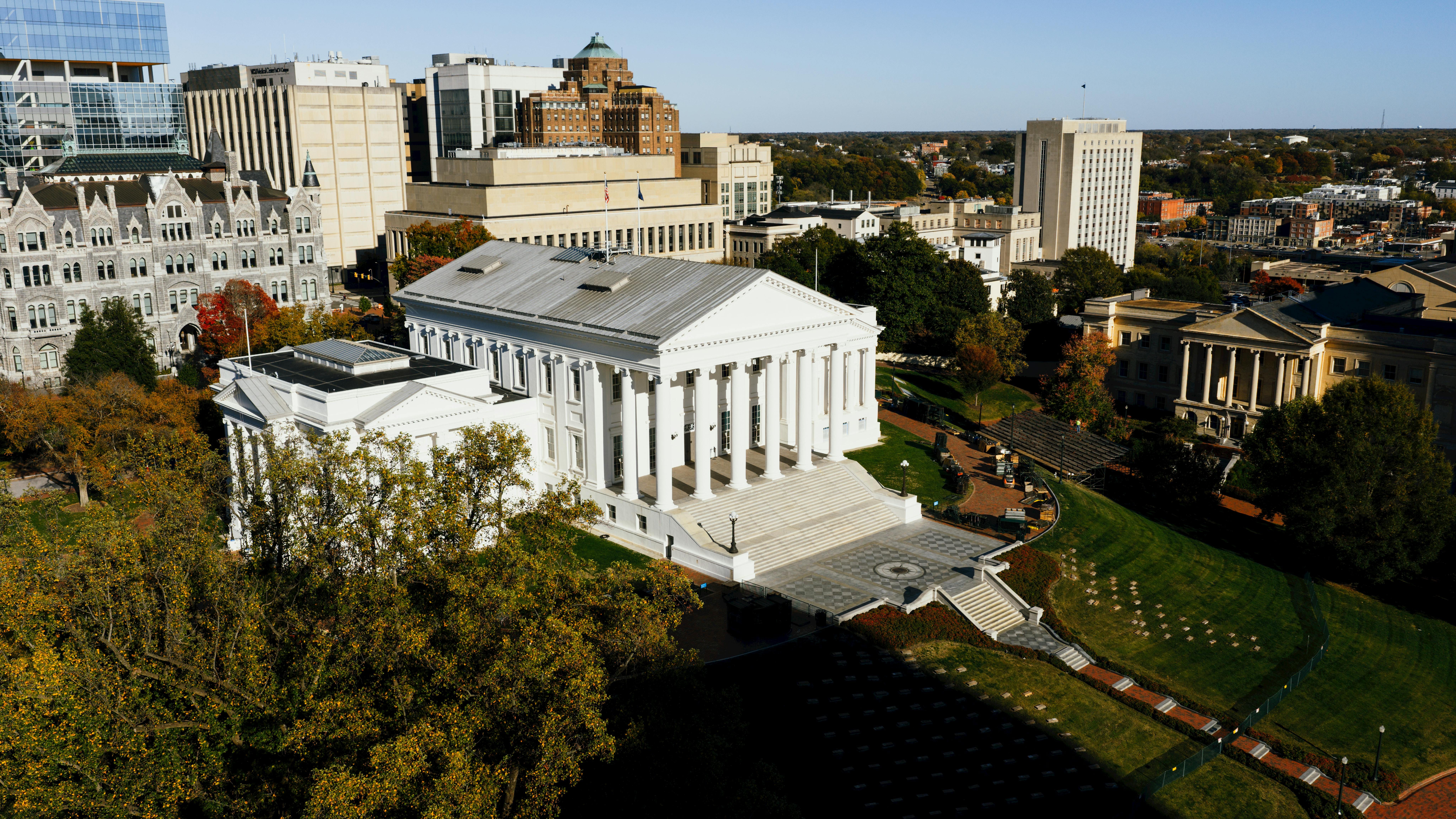
Virginia has always punched above its weight in defining what America is supposed to be—and that is exactly why today’s budget brinkmanship in Richmond is so troubling for our region and for the nation.
From the Revolution forward, Virginians helped draft the operating system of the republic. Leaders from this Commonwealth framed core ideas like inherent rights, popular sovereignty, and religious freedom that were woven into the Declaration of Independence, the Constitution, and the Bill of Rights. Our state has long been a place where the country tried to work out what self‑government means in practice—through glory and through grievous failure.
In the past few years, Virginia once again looked like a proving ground for American democracy, this time in partisan politics. Democrats won back full control of the General Assembly and then swept the statewide offices, including the governor’s mansion, in races that national observers treated as a bellwether for how to win in a closely divided, fast‑changing state. Virginia became a case study in how to build durable coalitions: compete everywhere, talk about practical issues, and respect voters enough to show up.
Communities along the I‑95 corridor, including Fredericksburg and its neighboring counties, have been integral to that story. In statewide contests decided by single‑digit margins, every engaged region matters, and this corridor has repeatedly helped tip Virginia toward candidates who defend democratic norms and functional government.
That is exactly what makes the current budget stalemate so dangerous. With less than three weeks to go before the fiscal year ends on June 30, Virginia is approaching what can only be called a ridiculous shutdown—an entirely self‑inflicted crisis triggered not by economic collapse, but by political brinkmanship and an intraparty fight over tax policy. While schools, health care providers, local governments, and public‑safety agencies look anxiously at their calendars, Richmond is sending a simple, corrosive message: We can’t get the basics done.
Republicans are already weaponizing this, painting “Democratic supermajority dysfunction” as Exhibit A in a broader argument that Democrats cannot be trusted with the machinery of government. If that narrative hardens here, it will not stay in Richmond. It will echo through House districts that ring our region, up and down the I‑95 spine, and ultimately into the 2028 presidential map, where Virginia’s electoral votes remain competitive enough to matter.
For localities in our area, the stakes are immediate as well as symbolic. City and county schools, social services, and infrastructure depend on a predictable flow of state dollars set in the biennial budget. A shutdown—however partial—would land hardest on the families and small businesses that see state government not as an abstraction, but as the source of paychecks, contracts, and classrooms. And it would undercut the very case Virginia Democrats have been making nationally: that they know how to govern competently in a purple state.
Virginia once modeled to the world how a republic could be born. More recently, it has modeled how a diverse, closely divided state can still choose pragmatic, pro‑democracy leadership. To allow a needless budget crisis to tarnish that record now would be more than a partisan misstep; it would be a disservice to our history and a warning sign for the rest of the country.
The founders from this soil taught us that institutions endure only when we treat them with care. In 2026, that means this: Democrats in Richmond must prove they can govern as well as they campaigned—because in Virginia, the whole nation really is watching.
At this moment, Virginians should be calling their legislators and the governor to insist that they quickly resolve their budget differences and spare the Commonwealth an unnecessary crisis in governance.
***
Phil Huber is a retired U.S. Army Reserve colonel and retired federal civil servant and a retired consultant in the Fredericksburg region. He writes on civic education, democratic governance, public policy, and Virginia politics.
At this point in time I am woefully unprepared to comment thoughtfully. After due consideration I will be back. Until then I will ask for useful working solutions with definite dates and ideas to revisit the thornier issues.
The author's suggestion, "A shutdown—however partial—would land hardest on the families and small businesses that see state government not as an abstraction, but as the source of paychecks, contracts, and classrooms," merits scrutiny. One might inquire whether this near-definition of state government truly captures a complete picture. For example, might not one purpose of state government be to mediate, even moderate between the desire, needs, and preferences of we the people versus those entities that profit by denying such desires, needs, and preferences?