
By Phil Huber, ADVANCE COLUMNIST
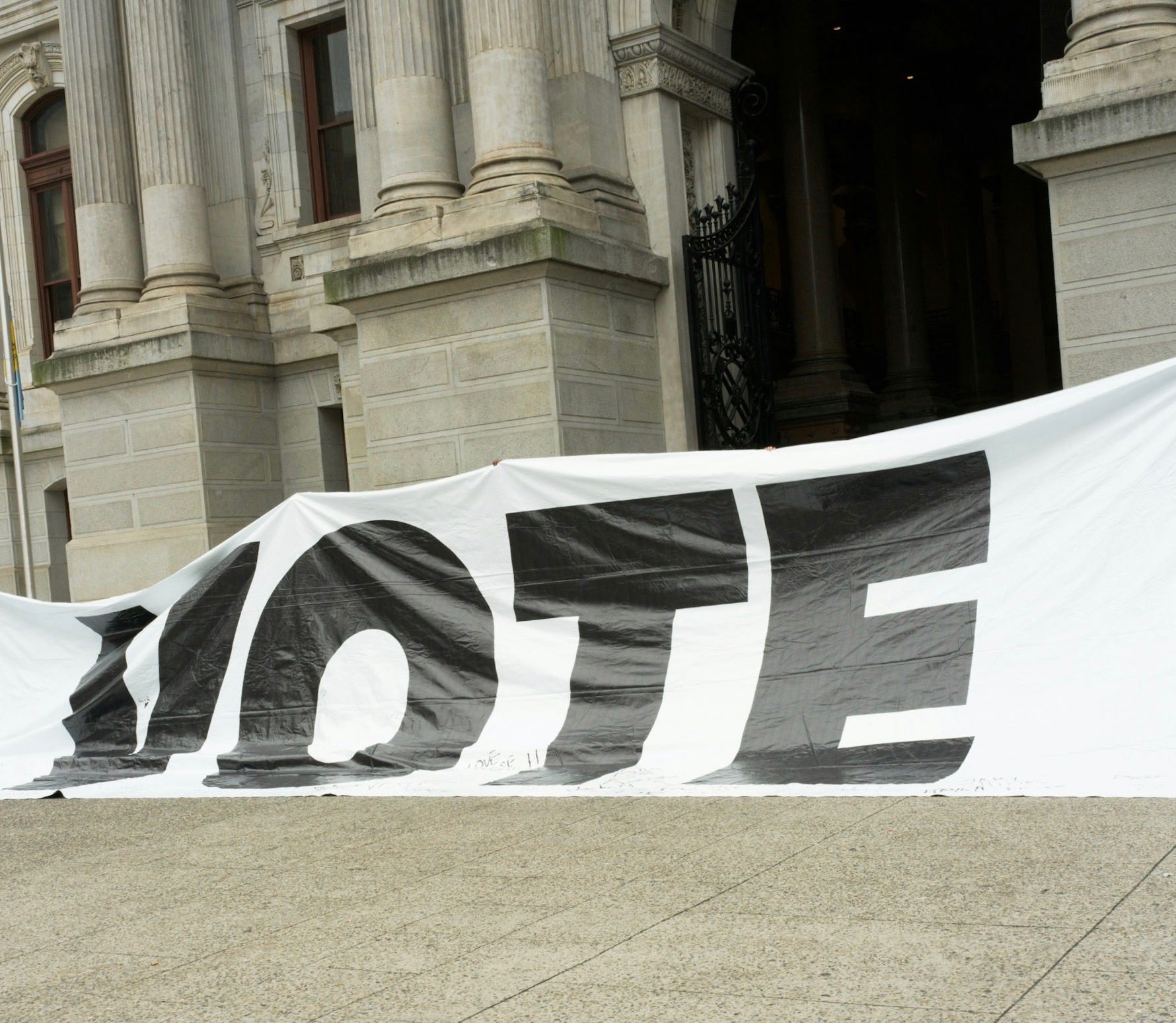
I took an oath more than once in my career. Each time, the words were the same: to support and defend the Constitution of the United States against all enemies, foreign and domestic. I said those words as a young officer, and again years later, both in uniform with the Army and as a federal civil servant. That oath doesn’t expire when you retire, and it carries no partisan label. So let me say something plainly to my neighbors here in the Fredericksburg region: The machinery that protects your right to vote is being dismantled, piece by piece, on purpose. This isn’t a metaphor. It resembles a military campaign, with a strategic plan, an operational buildup, and tactics already landing in real communities. Look at the evidence; the facts carry their own weight.
Start with the plan. Project 2025, the transition blueprint published before the last election, laid out in its chapters on the Justice Department and the Federal Election Commission exactly how this would work: Turn the DOJ’s Civil Rights Division away from protecting voters and toward prosecuting local election officials instead, and revive an 1870s-era civil rights law, Section 241, as a weapon against ordinary people who help others register or vote. It called for revoking a 2024 executive order that had opened voter registration access to an estimated 3.5 million people a year, and for hollowing out the FEC, the body that polices campaign finance and election disinformation. Since then, two presidential executive orders, one in March 2025 and another in March 2026, tried to put the White House directly in charge of how elections are run. Multiple federal courts have already ruled both unconstitutional. A plan on paper became a plan in motion.
Now look at the machinery being built to carry it out. Roughly 75 career officials who worked on election protection have been fired or pushed out, replaced by more than ten people who have publicly questioned the legitimacy of the 2020 election.
At least eight federal programs built to secure elections have been gutted, including the election security team at the Cybersecurity and Infrastructure Security Agency, the Justice Department’s Public Integrity Section, and the FBI’s Foreign Influence Task Force.
In January 2026, the FBI raided the Fulton County, Georgia elections office and seized roughly 700 boxes of 2020 ballots, an operation Fulton County has since challenged in court.
The Justice Department has sued more than 30 states demanding their complete, un-redacted voter rolls, including Social Security numbers, driver’s license numbers, and dates of birth.
Judges have thrown out every DOJ case decided on the merits, eleven for eleven, yet the DOJ keeps appealing each loss. A federal judge separately ruled it unlawful for the administration to match Social Security data against voter rolls through the DOGE initiative. And the FEC has been left with only two sitting commissioners after a Democratic commissioner was fired, below the quorum needed for enforcement of any kind for the entire 2026 cycle. This is not neglect. It is a system being deliberately disarmed.
And then there’s the ground level, where this becomes real for actual voters. In Colorado, Tina Peters, the county clerk convicted on multiple felony counts for tampering with voting equipment, had her nine-year sentence commuted this past May after sustained White House pressure on the governor. She served barely a quarter of her term. The message to anyone tempted to interfere with a future election is unmistakable: You may get away with it.
In North Carolina, newly Republican-controlled county election boards moved fast, shutting down the on-campus early voting site at Western Carolina University and forcing students to arrange rides or walk miles to cast a ballot. Nineteen counties cut Sunday “Souls to the Polls” voting, a tradition especially important in Black churches.
Trump ally Steve Bannon and others have repeatedly floated stationing ICE agents at polling places, and the White House has refused to rule it out. During a Minnesota special election this January, researchers documented a real chilling effect on turnout in mixed-status immigrant communities even though no ICE agents actually showed up. By this May, nine states had passed new voting restrictions requiring a passport or birth certificate just to register.
None of this happened by accident, and none of it will be undone by accident either. My career in uniform and in public service was not spent watching the right to vote get quietly starved of its protections. Whether you’re an independent, a moderate Republican, a Democrat, or someone who doesn’t follow politics closely, this affects you regardless of who you plan to vote for.
Check your own registration status now, well before Election Day. Volunteer or work the polls if you can. Watch for and report anything that looks like intimidation or an improper purge. An oath to the Constitution doesn’t mean much if we let the machinery of self-government be dismantled while we look the other way.
Where to Learn More and Take Action
Brennan Center for Justice (brennancenter.org)—Tracks every voting restriction, court ruling, and executive action in real time, with plain-language explanations of what each means for voters.
Democracy Docket (democracydocket.com)—The definitive legal tracker for voting rights litigation across all 50 states, updated as cases are filed, decided, and appealed.
ProPublica (propublica.org)—Published the landmark April/May 2026 investigation documenting how 75 federal election-protection officials were removed and replaced by election deniers ahead of the midterms.
The Civics Desk (thecivicsdesk.com/election-interference-timeline)—Maintains a comprehensive, sourced timeline of every administration action targeting elections since January 2025, organized chronologically with links to primary sources.
Civil Rights Coalition (civilrights.org)—Produced the most thorough public analysis of Project 2025’s specific provisions targeting voting rights, organized by type of action.
Voting Rights Lab (votingrightslab.org)—Tracks voting legislation in all 50 state legislatures in real time, showing which restrictive bills are advancing, stalled, or signed into law.
***
Phil Huber is a retired Army Reserve colonel, a federal civil servant, and a retired consultant who writes on civic education. He lives in Fredericksburg.

A fair number of people I talk to seem to be scared to volunteer at the polls and I understand that, because it feels like something bad could happen there. However, in my 10+ years of volunteering, the worst thing that ever happened was when an elderly man silently gave my then-16 year old daughter and me two slips of paper on his way out from voting. Each one had a circle with the words DEMOCRAT OR DUMOCRAT in the middle, crossed out. (Yes, the term existed before the current WH occupant started using it).
Overall, voters want to get their business done and stride, scuttle, or shuffle in and out of the polls. There may be a "Thank you for being here!" or a glare, but nothing more. Fellow volunteers (both sides) are either jovial and chatty or simply avoid one another. Nothing bad has ever happened and as long as good people keep stepping up to help, I hope nothing ever does.
Oh, and I still have my slip of paper. I wish I had the wherewithal to ask the elderly chap why he felt the need to passively bully a teen and her mom. But I'm glad he did, to be honest. It revealed a lot, and reminds me, whenever I look at it, of why I continue to volunteer.
I am not the least bit concerned about any law enforcement official being at or near any voting place. Indeed, as a citizen I welcome them. Each and every illegal vote disenfranchises a citizen.