
By Lauren Bock,ADVANCE CONTRIBUTOR
Michael admitted he had a problem. A Tate’s cookies and Haagen-Dazs ice cream kind of problem. Yet his Eastern European wife Svetlana saw another issue woven into Michael’s lifelong weight struggle.
‘I don’t understand you fat Americans,” she said to me defiantly in the clinic exam room one day. “You sit in your car and drive to dinner, rush through your meals, and then sit in your car to drive home and sit on your rear and watch TV.” Her arms and legs were crossed, her gaze condescending, but she was right—and she knew it.
Michael was no stranger to me. We had been working together for several years, primarily discussing his food addictions. From stockpiling Girl Scout Cookies to buying Halloween candy even though he hasn’t had a trick-or-treater visit his porch for several years, he clearly had an issue with food. As Svetlana pointed out, though, food wasn’t his only challenge. There was an infrastructure-problem compounding the food-addiction concerns.
If you feel as though you’re swimming upstream in your health and wellness efforts like Michael, your environment may be partially to blame. Up to 60 percent of health outcomes are related to where we live, work, and play, according to experts at Harvard’s School of Public Health. In other words, your environment and community may matter more than your genetics or clinical care—a phenomenon sometimes referred to as Zip Code Health Disparity.
What causes such disparities? As Svetlana pointed out, living in a community that encourages (or forces) you to walk or bike to the grocery store, work, place of worship, or restaurant can radically change how you live. After all, how many quarts of Haagen-Dazs could Michael possibly carry if he were forced to walk to and from the grocery store?
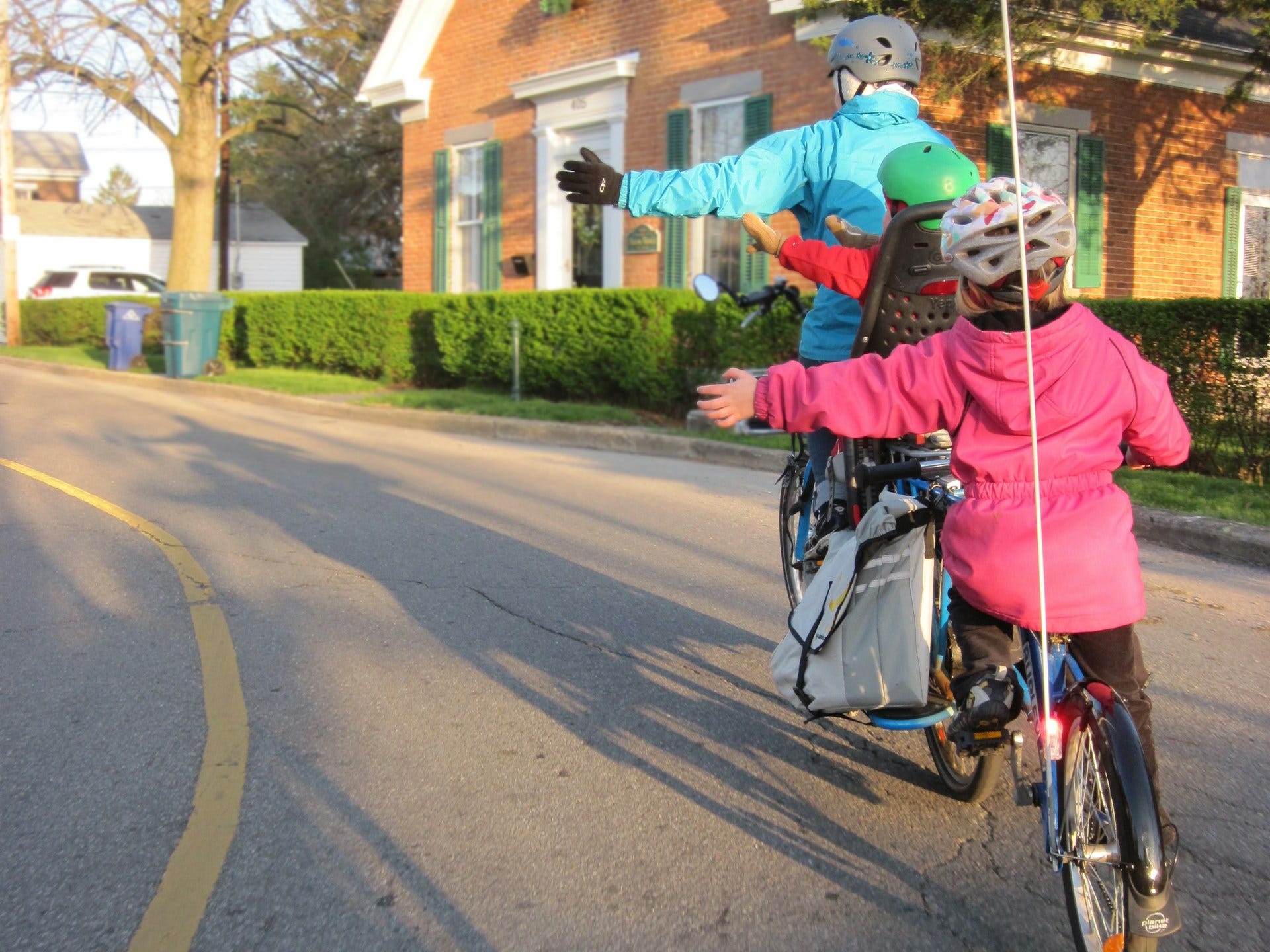
Visualize living in a town where bikes are the primary mode of transportation. Picture how different it would feel if you rode your bike to work—or at least rode your bike to the train station before catching the VRE to DC.
If you think that your I-95 commute is taking years off your life, you’re unfortunately correct. A patient once told me that her continuous glucose monitor detected her blood sugar spiking while she sat in traffic on I-95. She was not snacking on chips or drinking soda. She was merely sitting in traffic, cortisol and blood sugar surging.
When my children were young, we were stationed in Oak Harbor, Washington. I distinctly remember learning that the public schools didn’t offer bus transportation to children living within one-mile radius of the schools. Rather, students were expected/”systematically encouraged” to walk or ride their bikes. Imagine doing that with your children (or grandchildren) to drop them off at school! Perhaps classroom behavioral issues and childhood obesity might improve as a result.
This is not mere speculation. In Naperville, Illinois, an experiment known as “Zero Hour PE” resulted in significant physical, academic and behavioral changes among 19,000 adolescents. In this experiment, the school day began with structured, personalized workouts prior to the start of classes. Within weeks, students and teachers noticed positive changes: less fighting, better focus, improving test scores. Since implementing the program, Naperville ranks in the top 10 for academic performance in Illinois, despite spending less money per pupil than any other high school in their district.
As we all know, change is hard. In order to make sustainable changes, systems must be in place that allow such changes to happen with less effort.
I frequently reference Blue Zones when talking to patients about lifestyle changes and creating environments that foster their health and wellness. Blue Zones are the regions identified around the world with the highest percentages of centenarians. As researcher Dan Buettner and his team found in their studies of Blue Zones, “the healthy choice was the easy choice” in these communities.
Communities that prioritize “healthy choice/easy choice” look quite different than your standard American town. I have had the privilege to visiting three of the known Blue Zones regions: Italy, Greece and Costa Rica.
In a Blue Zone town, Main Street is typically a walking/biking zone where vehicles are restricted. Contrary to the common fears of many small business owners, encouraging foot traffic appears to be good for business, as evidenced by crowded streets and packed restaurants overflowing into the streets.
Blue Zone streets are lively social scenes, embracing the importance of community and connection. Meals are long and slow, meant to be enjoyed for hours in the company of others, burning the social connection candle until the late evening. Patrons are seen walking the streets for a post-meal stroll, naturally regulating their post-meal insulin levels while meandering into antique shops, sipping cappuccino or enjoying gelato.
Blue Zones are often perched in hilly towns where folks “close their rings” without going to the gym. Step counts are reached as you tend your small garden, walk to the farmers’ market, or visit a neighbor.
Blue Zones value their elders, encouraging multi-generational dwellings that keep children connected to great-grandparents. Caring for aging parents is no easy feat, but the burden is lessened when shared by three or four generations in a single home.
Svetlana unknowingly referenced the concepts of Blue Zones that day in my office when she captured my attention with her blunt observations. The initial, harsh sting that I felt for Michael has morphed over time into a deeper understanding of the love behind Svetlana’s comments.
Michael needed a community that cared about his well-being beyond his weight, blood pressure, or cholesterol.
A community that “encouraged” him to walk to and from dinner or the grocery store.
A community that fostered social connections that filled an emotional void better than Tate’s cookies.
A community that valued pedestrian-pathways so that he could walk his grandchildren to school while sharing stories of his own childhood, passions, or hobbies.
We cannot all move to Blue Zones, but we can make small changes modeled after them. Bike to the farmers’ market, go for an after dinner stroll in your neighborhood, or grow a small garden on your balcony— small changes with joyful, even delicious rewards.
***
Lauren Bock is a certified Physician Assistant. From 2021 until 2025, she led a Preventative Cardiology program with Virginia Cardiology Consultants and Oracle Heart and Vascular. She was the first provider in the Fredericksburg area to be board-certified in Lifestyle Medicine. You can contact her at her Lifestyle Medicine practice BE WELL.

Thought-provoking column, Lauren. Thank you! I think even on a more intimate level -- friends/family vs full-community blue zone -- who you're surrounded by matters a great deal. I remember reading years ago that the people you're closest to can either bolster or undermine your health habits depending on their own habits, and I've found that to be true in my own life.
In Fredericksburg zoning laws alone prohibit the accessory dwellings which a multigenerational dwelling would require.