
By James Noll, GUEST COLUMNIST
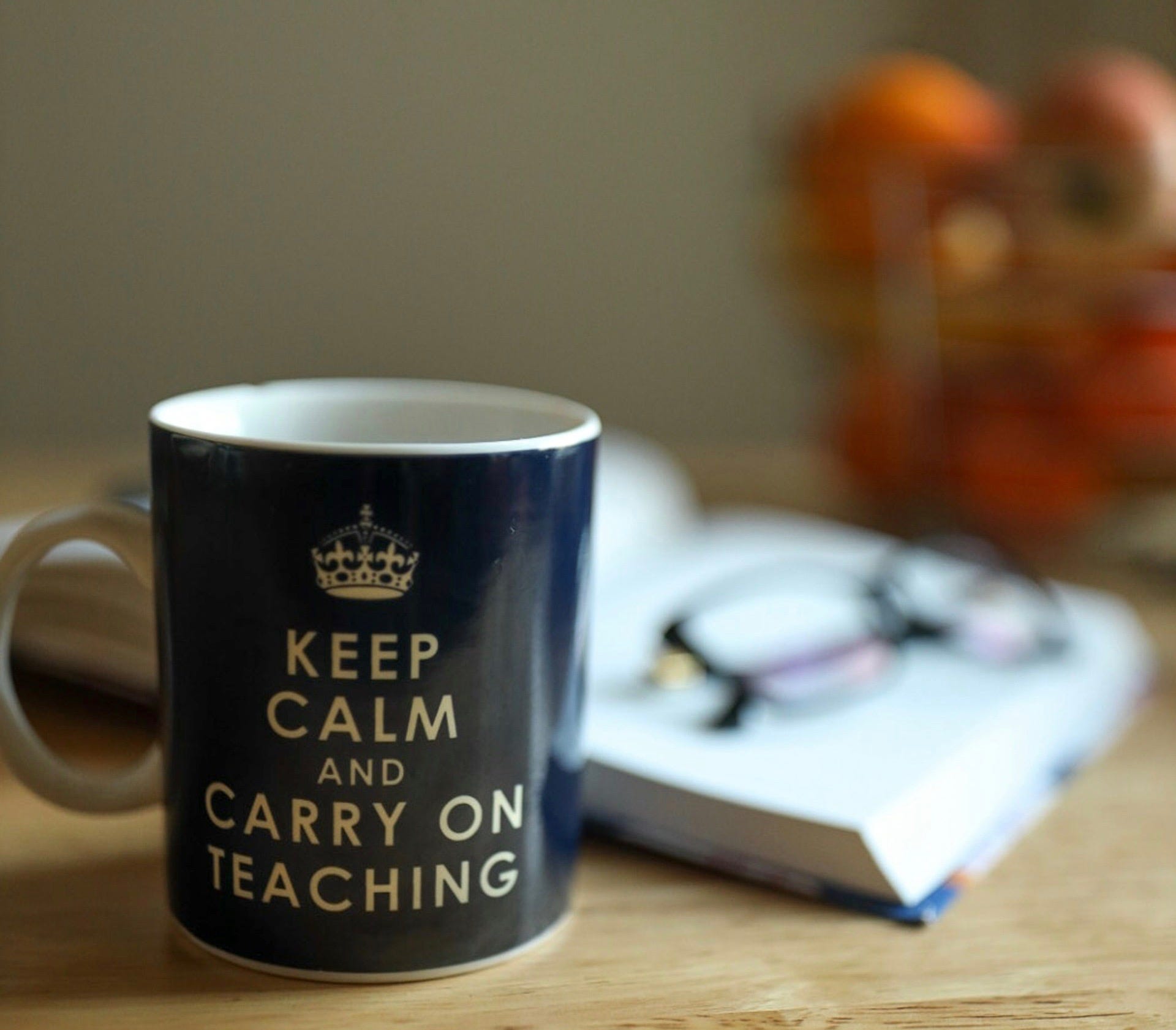
Everybody complains about their job. Overbearing managers. Unrealistic workloads. Annoying co-workers. Most, when hearing a friend kvetch about work, commiserate. But when educators do it, we’re often met with one of the following standard canards:
“Remember your why.”
“Teachers are in it for the outcome, not the income.”
“Must be nice having summers off.”
And finally, “You knew what you were signing up for.”
Let’s focus on the last one first.
In financial terms, the bargain offered to most teachers looks something like this: In exchange for a salary lower than other professional positions, we’ll enjoy guaranteed yearly raises. (How much lower? According to an article in the Economic Policy Institute, approximately 27 percent.) Worry not! For an insultingly small stipend, teachers can coach or sponsor a club. In 24 or so years, they could earn up to $88,000 a year (depending on the county). Unless a recession or a pandemic strikes, and the steps are frozen—something recruiters don’t include in their offer.
So, no. Teachers don’t know what we’re signing up for.
Nobody should reasonably expect educators to live in penury out of kindness and dedication to an ideal. “Remember your why” might make an inspiring line in a movie, but it doesn’t cover a car payment. When the promise of a fair wage evaporates, teachers have few options. We can leave the profession (and many do), we can take on side gigs, or, rather than sipping daiquiris while lounging by the pool, we can spend their summers working.
Must be nice having summers off, right?
Teaching summer school is the easiest and most accessible recourse. Districts offer a variety of programs at all levels, from pre-school to high school. I’ve taught summer school three times in my 24-year career: two credit recovery classes and one for students trying to get ahead (or catch up).
The rules on paper are strict. If students fight, they are expelled. Refusing to do the work, however, is generally tolerated. All teachers have to do is notify admin and the parents or guardians.
If a student is absent more than three times, they are expelled. Three class tardies equals an absence. This is generally followed, too, but I’ve experienced admin who, when a student reached the limit, said “Let’s give the kid a break.”
Each day is broken down into four one-and-a-half hour blocks. There is no planning period, unless the 20-minute lunch counts. The last year I taught summer school, I had to include a half day of the county’s online credit recovery program (IYKYK), so I reserved blocks 2 and 4 for that. More recently, I’ve heard that summer school is all online. Students complete their learning modules while the teacher resets quizzes and tests.
The summer school experience used to be moderately valid. Students barely put any effort into their work during the year. Over the summer, that didn’t change much. Now that summer school is primarily an online multiple choice guess game, it provides little to no value at all, though interestingly enough, I learned a lot when I taught it. Because of the abbreviated course structure, I culled my lessons and tightened everything up. It helped me hone my instruction for the regular school year.
The pay for taking on a summer school class is, unsurprisingly, low. Many counties offer a flat fee that is usually well below what a teacher normally makes. Given the amount of stress and possible burnout that extra month or month and a half in the classroom creates, it isn’t worth it. If anything, it’s just another example of how the community preys on the goodwill of its educators, expecting them to perform a job everyone supposedly values while actively undervaluing the people performing the job.
So what crazy shenanigans do teachers get up to over the summer? If we’re not trying to earn more money to make up for our low wages, probably not a lot.
We can’t afford it.
***
James Noll is a writer, musician, and (of course) teacher. He lives in Fredericksburg, Virginia. You can reach him at www.silverhammerstudio.com.

YES! to James Noll's Morning Read and to Michael Brian O'Keefe comment! THE REALITY of teaching and learning. My two daughters also attended a local Catholic school, which has since closed.
The Daughters of Wisdom from New York came to Fredericksburg in 1948 to witness to school desegregation in Virginia. They met their mission in 1998. and left.
During that time, I was also teaching in Spotsy Co PS. and sometimes criticized as a public school employee for sending my children to Catholic school. I'd respond: It came down to being immersed in Faith traditions, moments, and memories, like my parents sacrificed to do with four daughters.
As an itinerant Speech-Language Pathologist with Spotsy Co PS, I had several elementary schools on my caseload. Itinerant. Traveling between schools.
Spotsy Co PS was in the transition, back then, to 'push-in' therapy in the classroom, rather than 'pull-out' sessions, especially for students with Language or Social Communication Disorders.
So I spent some hours in the classrooms working with students and collaborating with their teachers but also observing Teaching Excellence. I'd take in what was being taught and then supplement my daughters' Catholic school educational experiences with what was 'evidence-based best practice' being taught in Spotsy schools.
I did the same 'supplementary' teaching at home by using materials from Fairfax Co PS that my sisters sent to me from their children's FCPS assignments.
By my eldest daughter's fifth-grade year, in which the school was not addressing a 'mean girl' bully taunting her for her petite size, I suddenly pulled both of them out of the school on a Friday in May, and enrolled them the following week in Spotswood ES.
They still recall with fondness stellar educators, Mrs. Carolyn Burleson's after-school book club (unpaid) in analyzing history through American Dolls and Ms. Ann Jebram's study of the Monarch butterfly's Spring return to Virginia, (unpaid), in which they learned to identify patches of milkweed hidden in the neighborhood and plot Monarch sightings.
The best ever educational experience for my daughters happened at Thornburg MS with Ms. E'juana Andrews with their enrollment in her 6th grade Band class. They never would have had this comprehensive, daily instruction, other than through public schools.
And they continued to play music with Massaponax HS Marching Panther Pride, and concert, jazz and symphonic bands in college, grad school and the Mid-Atlantic Wind Symphony.
Ms. Andrews gifted her students with the Joy of playing music. The FXBG Advance recently paid tribute to Ms. Andrews' legacy in Adele Uphaus' 5-18-2026 column 'Whenever I Play the Piano, it Will Always Be For Her ...'.
43 years in Virginia public schools and early intervention, Danville City, Rockingham Co, Fairfax Co and Spotsy Co (31 years). 16 summers in 'Extended School Year', summer school for students in special education.
So glad I retired in 2022. Teaching was everything I hoped for as a 5-yr old gathering neighborhood kids in our carport to teach the alphabet.
and I survived without getting sued by a parent.
It's a much different experience for public school educators these daze.
https://www.fxbgadvance.com/p/whenever-i-play-the-piano-it-will
My three children attended Spotsylvania County schools for middle school and high school. They had spent their elementary school years attending an excellent local Catholic school. When they transitioned from private to public school education, I was concerned that their public school teachers might offer a lesser version of the teaching excellence we experienced in private education.
Nope. Turns out that my children were gifted with an excellent education at their Spotsylvania County schools by an all-star team of teachers, and this idealist-in-spite-of-his-decades-in-education English teacher, James Noll, was one of them. My wife and I recognized right away, and throughout our partnership with our kids’ teachers at Spotsylvania Middle School and Courtland High School, the professionalism and high-character of our teachers. That our kids felt the same and loved their teachers, made for a great educational experience that served them well in the colleges, grad schools, and careers that ensued. That kind of education is a gift that keeps giving through one’s life.
This essay is a fine read; humorous yet informative, and a bit sad too, because it exposes truisms that do not reflect well on our collective citizen selves. Toward the end of his essay, James points out something that’s well worth underscoring now and remembering when we participate in the public square (particularly while voting)- that teaching is a profession that we profess to value, yet we often undervalue those who serve in that profession.
So, let me posit another truism: we fail as partners in the education of our children and each other’s children when we undervalue teachers.
Thank you James, et al.