


‘The Boys Here Have Been Stumping Virginia Pretty Well’
By Michael Aubrecht, Advance Contributor
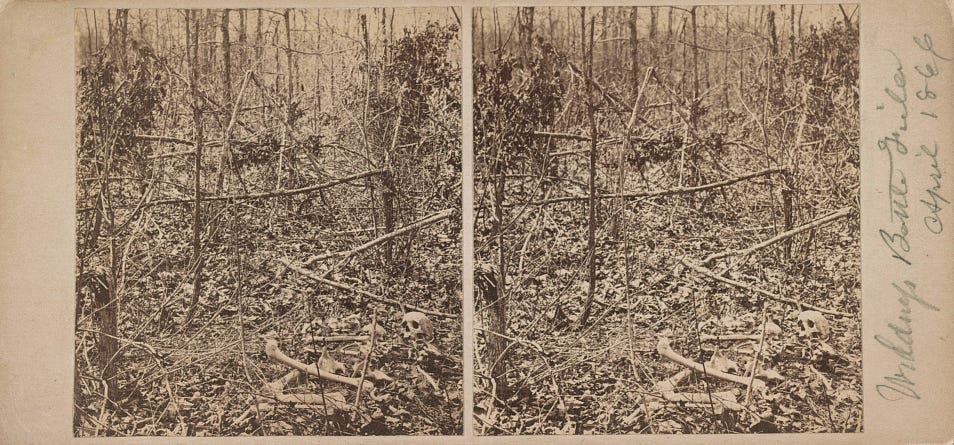
“The boys here have been ‘stumping’ Virginia pretty well. The fact is the woods have all been cut down, and fuel is very scarce. We now are gathering what we call the second crop, that is, we cut off the stumps even with the ground…. If the former residents ever return to this portion of Virginia, they won’t find a piece of timber large enough to make a respectable souvenir.”— Captain David Thomas, 27th Connecticut Regiment, U.S.A.
In the 161 years since the end of the Civil War, there have been countless studies conducted by historians on the military, political, social, and psychological effects of the conflict. One topic that rarely receives consideration, though, is the environmental scarring of the land. Maybe that’s because modern battlefields are magnificent sites of natural beauty. In the effort to maintain these sites, park custodians have inadvertently created an illusion of peace and tranquility, making it difficult for visitors to imagine the scenes of horrific bloodshed that took place on the very ground where they stand—or the vast environmental damage inflicted by the occupying armies that spread over the landscape like a swarm of locusts, devouring crops, killing wildlife, and leveling timber.
Read the full article
‘A ventriloquist’s dummy with a Wi‑Fi connection’
By Phil Huber, Advance Columnist
Donald Trump likes to tell us he is “the most powerful person that has EVER walked this planet,” greater than any king, conqueror, or dictator in history. A man who truly possessed that kind of power might project calm confidence. Trump instead sounds like someone who just spotted his own reflection in a funhouse mirror and decided it was a presidential portrait.
If you really want to understand Trump, don’t look at the portraits of great leaders. Look at the toy aisle. He isn’t Caesar. He’s a ventriloquist’s dummy with a Wi‑Fi connection.
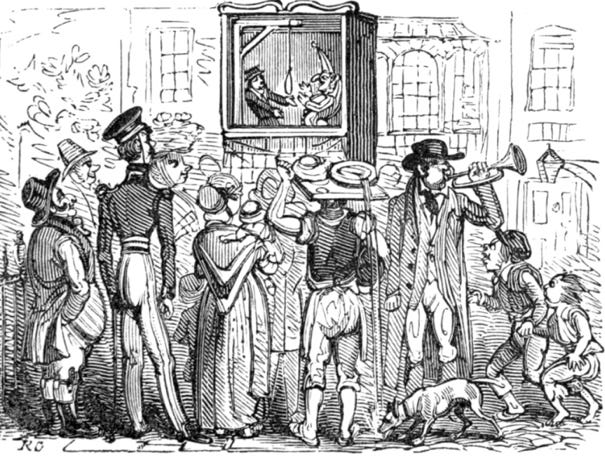
Across history and pop culture, we have known a certain type of puppet: gaudy, noisy, slightly menacing, but empty behind the painted eyes. Take Punch, of Punch and Judy fame, a 17th‑century English puppet who whacks his way through every scene, proud of his own cruelty. The show is performed by a single puppeteer hidden inside the booth—since Victorian times called the “professor” or “punchman”—and often assisted by a “bottler” outside, whose job is to work the crowd, introduce the act, and pass the bottle to collect the money. The audience sees only Punch, shrieking, and swinging. The professor and the bottler control the story and pocket the proceeds.
That’s the model. Trump is not the puppeteer; he’s the show. In our politics, the “professor” and the “bottlers” are the oligarchs and other influential enablers who script the drama, hype the performance, and cash in while the crowd stares at the puppet.
Read the full article
The American Revolution Gets Graphic
By Penny Parrish, Advance Contributor
IN REVIEW
I no longer think of graphic books as resembling the comic books of my youth. Serious literary topics are now being turned into works of art through words and pictures. It’s a fascinating way to absorb history.
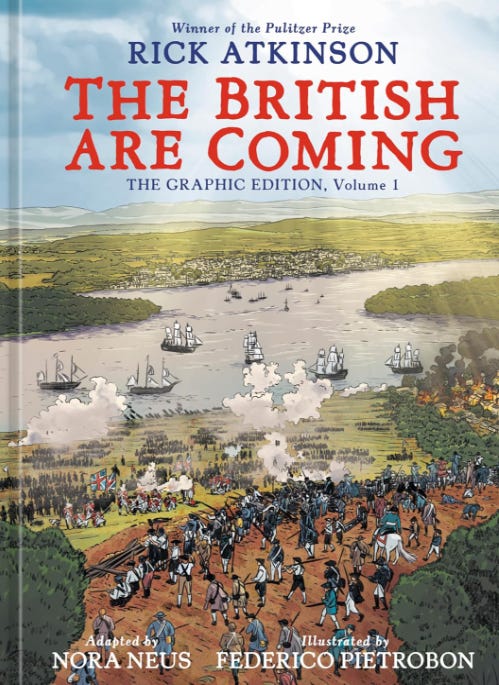
Rick Atkinson is a three-time Pulitzer Prize winning author whose Liberation Trilogy covered World War II. His current project is a trilogy on the American Revolution. The first two books are out, and it appears the third may end up being two more books, turning the trilogy into a tetralogy. The first book, The British Are Coming, was published in 2019. Now, seven years later, it has been reimagined in graphic form, just in time for our semiquincentennial.
The first page shows a night scene at Griffin’s Wharf in Boston, where a ship is being unloaded of its cargo—tea. The book ends on March 17, 1776 when Washington drives the British from Boston after a 333-day siege. In between the covers, various battles from Lexington and Concord to the war in Canada are drawn with vivid colors.
Read the full article
All the News Just Repeats Itself/Like Some Forgotten Dream/That We’ve Both Seen
VaNews/Virginia Public Access Project
Articles from newspapers throughout the Commonwealth and Washington D.C. Firewalls will block you from reading some, but you’ll at least have some idea about what’s going on from the headlines, which, let’s be honest, are all many of us have time to read anyway.
Read the full article


This article is published under Creative Commons license CC BY-NC-ND. It can be distributed for noncommercial purposes and must include the following: “Published with permission by FXBG Advance.”