
By Martin Davis
EDITOR-IN-CHIEF
Email Martin
The employment picture for 2026 graduates seeking jobs — be they people coming out of high school or college — is challenging. It is also unlike the new-job market people faced prior to 2023. Unemployment rates for graduates are up, and job openings are down, according to the HiringLab.
But that dour message is too simplistic. Newsweek annually ranks the businesses across America that are the best places for entry-level work. This year’s report acknowledges that there are “fewer job openings today in the U.S. compared to the last half-decade,” but noted that the Bureau of Labor Statistics says employers are looking 6.5 million new hires. And those new hires are reshaping the market.
“The modern job market isn't just about skills; it’s about a fundamental shift in values,” said Jennifer Cunningham, Newsweek’s Editor-in-Chief. “Younger generations prioritize purpose and well-being, while employers struggle to bridge the gap between traditional expectations and digital-first habits. To thrive, both must move beyond the noise and build a foundation of genuine trust.”
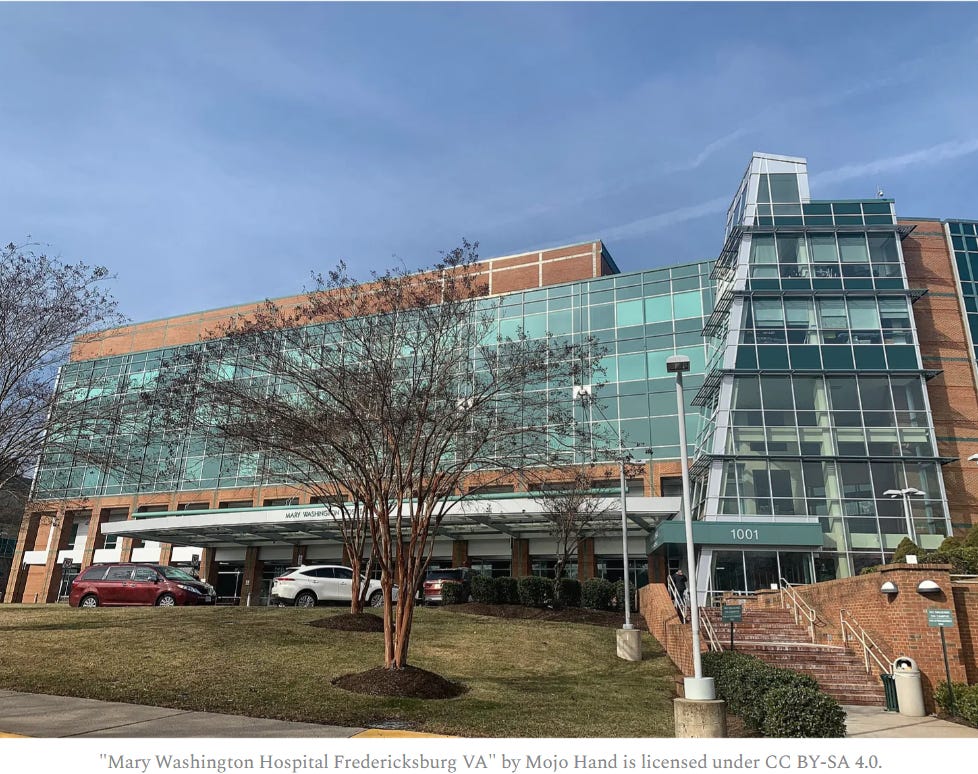
This year, Mary Washington Health Care has been recognized by Newsweek as one of America’s Greatest Workplaces for Entry Level 2026. In an interview with the Advance on Friday, Joanne Huber-Sturans — senior vice president and chief Human Resources officer — pointed to the work done on the company’s culture as a reason for the recognition.
“Within the last two years we have spent a tremendous amount of time on our culture,” she said, “setting forth a path where associates have been involved in helping reset our values, our standards of behavior, how we engage patients…. If you do not have good culture, you will not attract strong talent, you will not retain good talent. So culture is at the core of how you recruit and build your workforce.”
While culture is core to recruiting and building that workforce, so, too, is active outreach to develop that workforce.
“We have more jobs than we have candidates,” Huber-Sturans said. To fill those jobs, “we need to grow from within or provide opportunities to those individuals from the community who may need to open the door to opportunity. So we recognize the importance of extending that olive branch and to welcome whether it’s high school students or college students.”
Nursing is one of those areas where demand is outstripping available candidates. The nurse residency program has been key to helping MWHC secure the people it needs. “Last year alone,” Huber-Sturans said, we were able to “hire over 160 new grads into our nurse residency program and place them. This year alone, we are well on our way to having a significant number of nurse senior grads as well.”
Partnering with numerous schools to support nursing students’ clinical rotations is another way MWHC is working to secure nurses. By bringing these students in, it opens an opportunity to hire them when they complete their training.
Apprenticeship programs have also become part of this hiring process. Huber-Sturans said the hospital put in an apprenticeship program in respiratory therapy because that was an area of shortage. “We’re now hiring students who are apprentices in their final years of school who can come here and gain the experience … and that then helps them evolve into becoming employed post-graduation.
The point of these programs is to get people in working for MWHC before they graduate.
Another area of need is managing medical office practices. In partnership with the University of Mary Washington and its Practice Management Institution, MWHC is able to help support training people to fill these roles.
Moving Up
Not all entry-level positions at MWHC require college training. In these areas like housekeeping and food services, Huber-Sturans says, the “shortages are not as acute,” but “we need to bring folks in so that we can grow them into those jobs that do have the acute shortages.”
An example Huber-Sturans offered was the sterile processing position. This is an area of need that doesn’t require a college degree, but some positions do require certification.
“Folks internally can apply from other areas such as housekeeping or food nutrition” to become a sterile processing tech, for example. There are two levels of sterile technicians. One doesn’t require certification, the other does. Those working the noncertification jobs are trained by MWHC. They can then choose to move on and earn the credentialing.
The impact on pay can be significant.
“Our data shows that individuals who move from entry-level positions, such as Food and Nutrition Worker, into other roles within the organization experience pay increases averaging between 6% and up to 30%, depending on the position and career pathway,” said MWHC Public Relations Coordinator Tamra Wheeler.
Sterile technician is just one area where workers can move to. “We’ve seen successful internal transitions,” Wheeler said, “into roles including sterile processing, patient transport, accounts payable, and behavioral health, many of which offer on-the-job training and opportunities for long-term career growth.”
The Changing Pathways to Entry-level Employment
As the above examples show, businesses themselves are becoming more engaged with preparing workers for careers. Asked to what extent she feels the hospital is engaged in helping people earn the necessary credentials, Huber-Sturans said:
“I think we play a heavier role than ever.” Organizations like the University of Mary Washington and others “need our support,” Wheeler said.
The hospital’s support goes beyond higher education, however, as MWHC is increasingly engaged at the high-school level. Its efforts have been recognized recently by the Virginia School Board Association for its work with the Spotsylvania Technical and Career Centers’ students, and by the Caroline School System for the partnerships it has in that system.
“These are the folks that we want to come to Mary Washington,” Huber-Sturans said. “We want to keep people in our community who grew up here and want to be a part of something bigger.”
For that reason, MWHC is now also working with middle-schools to make them aware of what’s possible.
We want to get them interested, Huber-Sturans said, so “as they head into high school, where high schools such as Spotsy Tech offer those dual programs where you could go to school and also be trained as an EMS, or paramedic, or a CNA as part of your curriculum, so that you can graduate and go right into a position.”
The opportunities exist, Huber-Sturans said, especially for people who “have a true interest in working with patients and have that customer service” commitment. “Those are sometimes things you can’t always teach.”
The hospital environment does present some challenges, however, for entry-level workers. “We are health care,” Wheeler says. “We are 24/7, 365 days a year.” That means people may have to work at night because day shifts aren’t available.”
But what is challenging for some is a positive for others. There are people, Huber-Sturans said, who like the flexibility that night shifts and weekends provide. “We do offer a lot of alternative scheduling … to accommodate our workforce.”
She noted that work-life balance and overall well-being is important to many people coming in to health care. “We feel strongly that we can provide that with the various programs that we offer from the training perspective as well as our benefits, as well as the sense of well-being that we create through various programs that are offered to support associates.”


Local Obituaries
To view local obituaries or to send a note to family and loved ones, please visit the link that follows.
